


Aug 21, 2026, 08:44
Gladys Delancey: Understanding Blood Clots and Their Warning Signs
Gladys Delancey, Integrated Science Committee Chair at Georgia State University Perimeter College, shared a post on LinkedIn:
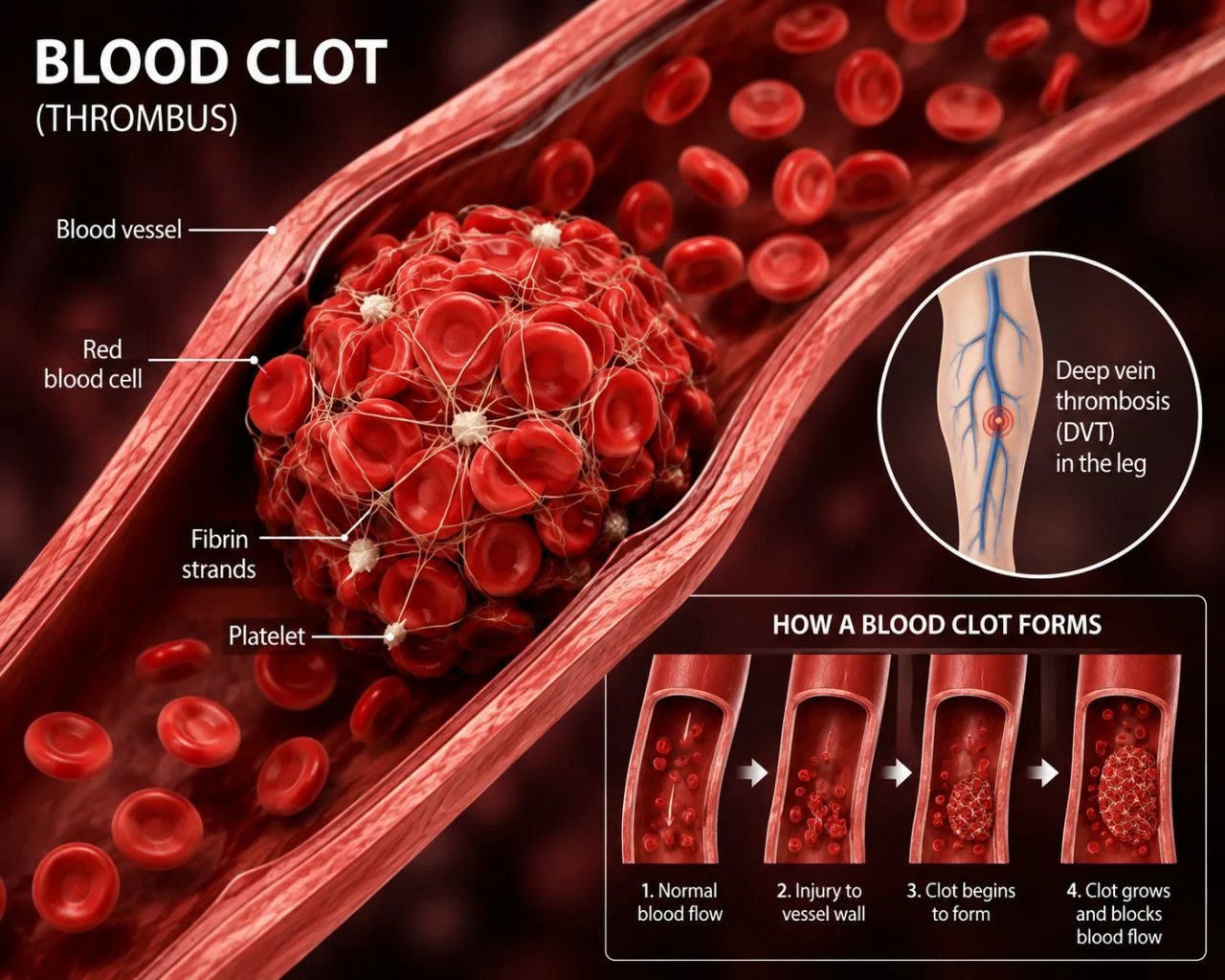
“Blood clots are clumps of blood that change from a liquid to a gel-like or solid state.
They can be helpful by stopping bleeding after an injury, but they can become dangerous if they form inside a blood vessel and block blood flow.
Types
- Deep vein thrombosis (DVT): A clot in a deep vein, usually in the leg.
- Pulmonary embolism (PE): A clot that travels to the lungs (a medical emergency).
- Stroke: A clot blocks blood flow to part of the brain.
- Heart attack: A clot blocks blood flow to the heart muscle.
Risk Factors
- Long periods of sitting or bed rest
- Recent surgery or injury.
- Pregnancy
- Smoking
- Obesity
- Cancer
- Birth control pills or hormone therapy
- Inherited clotting disorders
Symptoms
Leg (DVT):
- Swelling
- Redness or warmth
- Pain or tenderness
Lungs (PE):
- Sudden shortness of breath
- Chest pain that worsens with breathing
- Rapid heartbeat
- Coughing up blood
Treatment
- Blood-thinning medications (anticoagulants)
- Clot-dissolving medications (in selected emergencies)
- Procedures to remove or break up the clot
- Compression stockings for some people with DVT
Prevention
- Stay active and avoid sitting for long periods.
- Stay well hydrated.
- Maintain a healthy weight.
- Don’t smoke.
- Take prescribed blood thinners if recommended by your healthcare provider.
Seek emergency medical care immediately if you have sudden chest pain, shortness of breath, coughing up blood, or symptoms of a stroke (face drooping, arm weakness, or difficulty speaking).
These may be signs of a life-threatening blood clot.”
Stay updated with Hemostasis Today.
-
Nov 18, 2026, 01:45Shikha Jha: My Takeaways from the 4th GANSID International Congress
-
Nov 18, 2026, 01:34Zeeshan Ahmed Khattak: Treatment of Fever and Neutropenia in Hematology/Oncology and Hematopoietic Cell Transplant Patients
-
Nov 17, 2026, 23:45Cajetan Reichardt: LAAO vs. OAC in AF – Balancing Nonprocedural Bleeding and Ischemic Stroke Risk
-
Nov 17, 2026, 23:42Brian Tegtmeyer: Expanding Pre-Hospital Administration of Low-Titer O Positive Whole Blood
-
Nov 17, 2026, 23:41Mansi Kala: Advancing Hematology – From Evidence to Clinical Excellence
-
Nov 17, 2026, 23:40Nathan Connell: Registered for the WFH Comprehensive Care Summit 2027 in Prague
-
Nov 17, 2026, 23:38Yaariv Khaykin: Does Reducing AF Burden After Ablation Change the Need for Anticoagulation?
-
Nov 17, 2026, 23:38Amos Gitonga Mbaabu: Strengthening Care and Advocacy for Haemophilia and SCD across Southern Africa
-
Nov 17, 2026, 23:35Muhammad Sameed Altaf: A Decade of Working Together for Thalassemia Awareness and Patient Support