

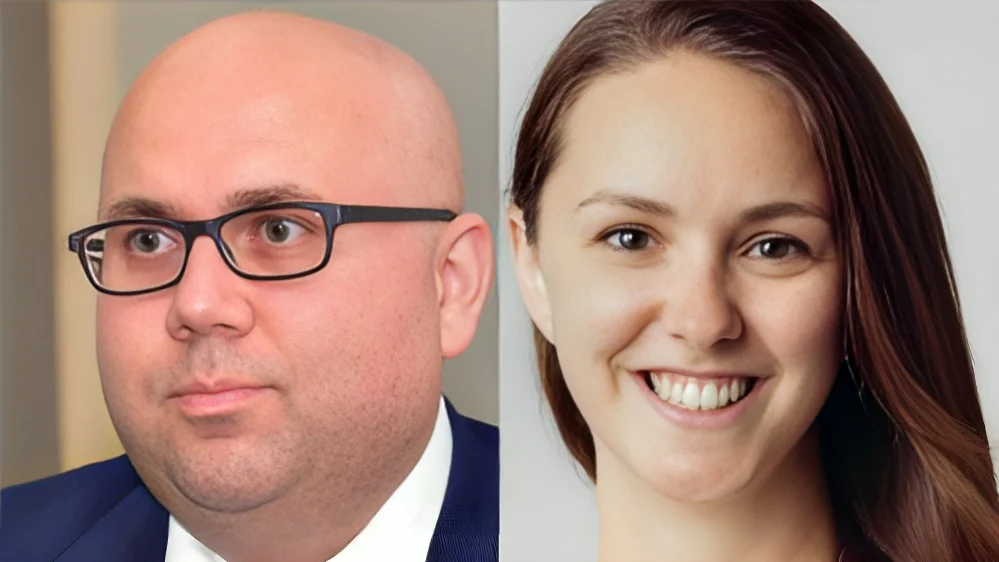
Hadi Mohamad Abu Rasheed: Strengthening the Link Between Air Pollution and Cancer Prevention Through Global Collaboration
Hadi Mohamad Abu Rasheed, Scientific Advisor and Director of Programs Qatar Cancer Society, shared Rosie Tasker’s post on LinkedIn:
”Proud to have contributed to this important piece of work with UICC, the George Institute, and colleagues across the taskforce.
For me, one of the strongest messages from this report is that air pollution can no longer sit at the margins of the cancer conversation.
It is a preventable risk factor that deserves much greater attention in cancer control, especially as the evidence continues to grow beyond lung cancer alone.
What I hope this report does is help build a stronger bridge between the cancer and clean air communities -not only to raise awareness, but to support practical advocacy, smarter policy, and stronger prevention efforts.
A big thank you to everyone involved for the collaboration, commitment, and generosity of spirit throughout this work.”
Rosie Tasker, Global Advocacy Manager, shared post on LinkedIn:
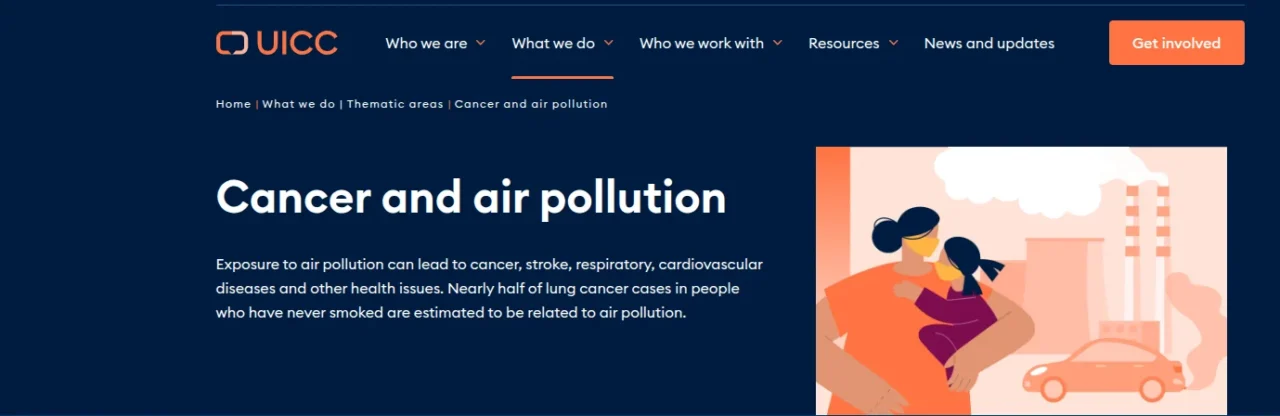
”Long-term exposure to air pollution raises an individual’s overall risk of developing cancer by 4percent, which jumps to 11percent when we start looking at PM2.5s (some of the smallest and most common pollutants out there). Of even greater concern is that higher PM2.5 exposure also increases the risk of dying from cancer by 12percent.
We’ve know for 10 years that air pollution causes lung cancer, but now we have data from 42 meta-analyses and systematic reviews that paints a much broader picture in Clean air in cancer control: An overview of the evidence:
My hope is that to helps to mobilise the cancer community to step up our work on air pollution as an overlooked but essential part of cancer control, and provides a bridge in for the clean air community to use this data to help strengthen the case. If you work in either of these spaces then this report is for you.
Working with the amazing UICC Taskforce (including Suzanne Zhou, Hadi Mohamad Abu Rasheed, Leticia Nogueira, Cheryl Peters, Isabelle Soerjomataram together with Anne, Zeba, Prashant) and the team from the George Institute (Emma Feeny, Soumyadeep Bhaumik, and others) over the past 2 years on the report has been great.
Your hard work and good humour was as solid as the evidence gathered while always thinking about the best way of getting this info out to the people who would can use it best.
Finally, a huge thanks to the Nina R., Yasmine Y. and the rest of the CAF team for their support – whether that be financial, technical or (occasionally) emotional.”
Stay updated with Hemostasis Today.
-
Sep 30, 2026, 01:52Javed Anees: DADA2 – When a Young Stroke Is More Than a Stroke
-
Sep 30, 2026, 01:51How a Venous Thrombus Becomes Revascularized – ISTH
-
Sep 29, 2026, 22:45Victor Agunyego: Paracetamol – The Most Common Drug We Underestimate
-
Sep 29, 2026, 22:42Nova Sinclair: Advancing the Future of Hematology – Meet Our 2027 Organizing Committee
-
Sep 29, 2026, 22:41Lorenz Räber: Intracoronary Imaging in PCI – Why, When, How, and Which Modality?
-
Sep 29, 2026, 22:31Selma Turkovic: Pleased to Deliver the Opening Presentation at Kingston Hospital
-
Sep 29, 2026, 22:31Miguel Teran: Ultrasound and Simulation in Arterial Blood Sampling
-
Sep 29, 2026, 22:28Mohammad Refaei: Navigating Your Career in Hematology From Training to Practice
-
Sep 29, 2026, 22:27Matteo Foschi: 10 Clinical Pearls for Antithrombotic Therapy in Secondary Stroke Prevention