


Louise St. Germain Bannon: Making Adherence Easier, More Human and More Achievable for Everyone on World Adherence Day
Louise St. Germain Bannon, Interim Executive Director, Director of Membership, Marketing and External Relations at International Society on Thrombosis and Haemostasis (ISTH), reposted from European Alliance for Cardiovascular Health (EACH) on LinkedIn:
”Today is World Adherence Day and it is one of those quietly powerful days that does not always get the spotlight it deserves.
Adherence is not just a clinical term. It is real life.
- It is remembering to take the medication that keeps you healthy.
- It is following through on a care plan when life gets busy.
- It is showing up for your health, even when it feels inconvenient or invisible to others.
For me, this day hits home because adherence is not just about patients. It is about people I care about.
Family, friends and colleagues. It is about all of us doing our part to stay well, prevent complications and live fuller lives.
The reality is simple.
Even the best treatments do not work if they are not followed. And behind every missed dose or skipped appointment, there is often a very human reason such as cost, confusion, side effects or simply life getting in the way.
So today is a reminder:
- Ask questions about your care
- Make plans that fit your real life
- Support the people around you in their health journeys
Because small, consistent actions add up to meaningful outcomes.
Here is to making adherence easier, more human and more achievable for everyone.”
Quoting European Alliance for Cardiovascular Health (EACH)‘s post:
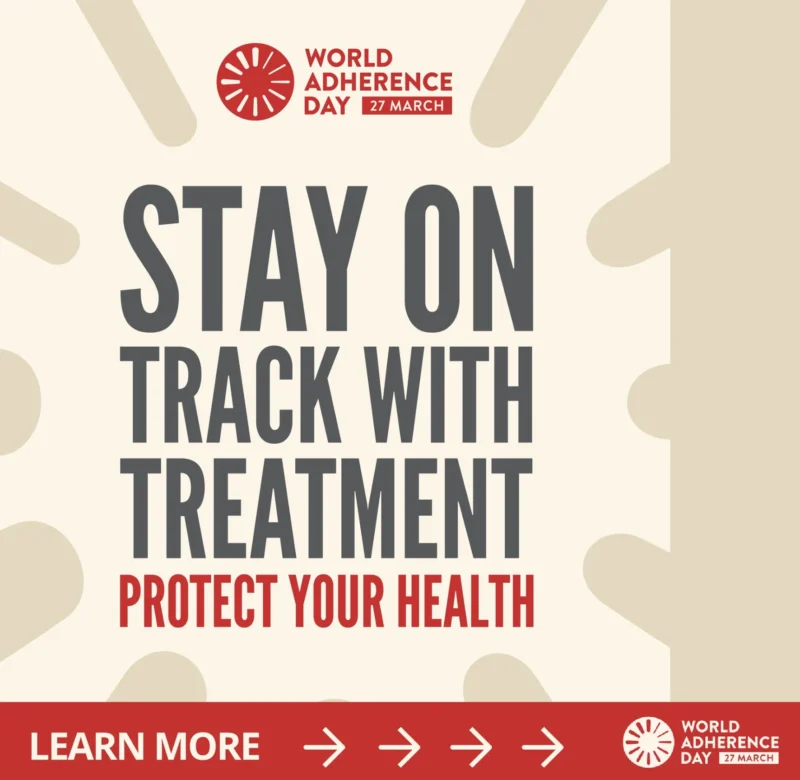
”Today, World Adherence Day, we focus on a simple but often overlooked truth: adherence is life‑saving care.
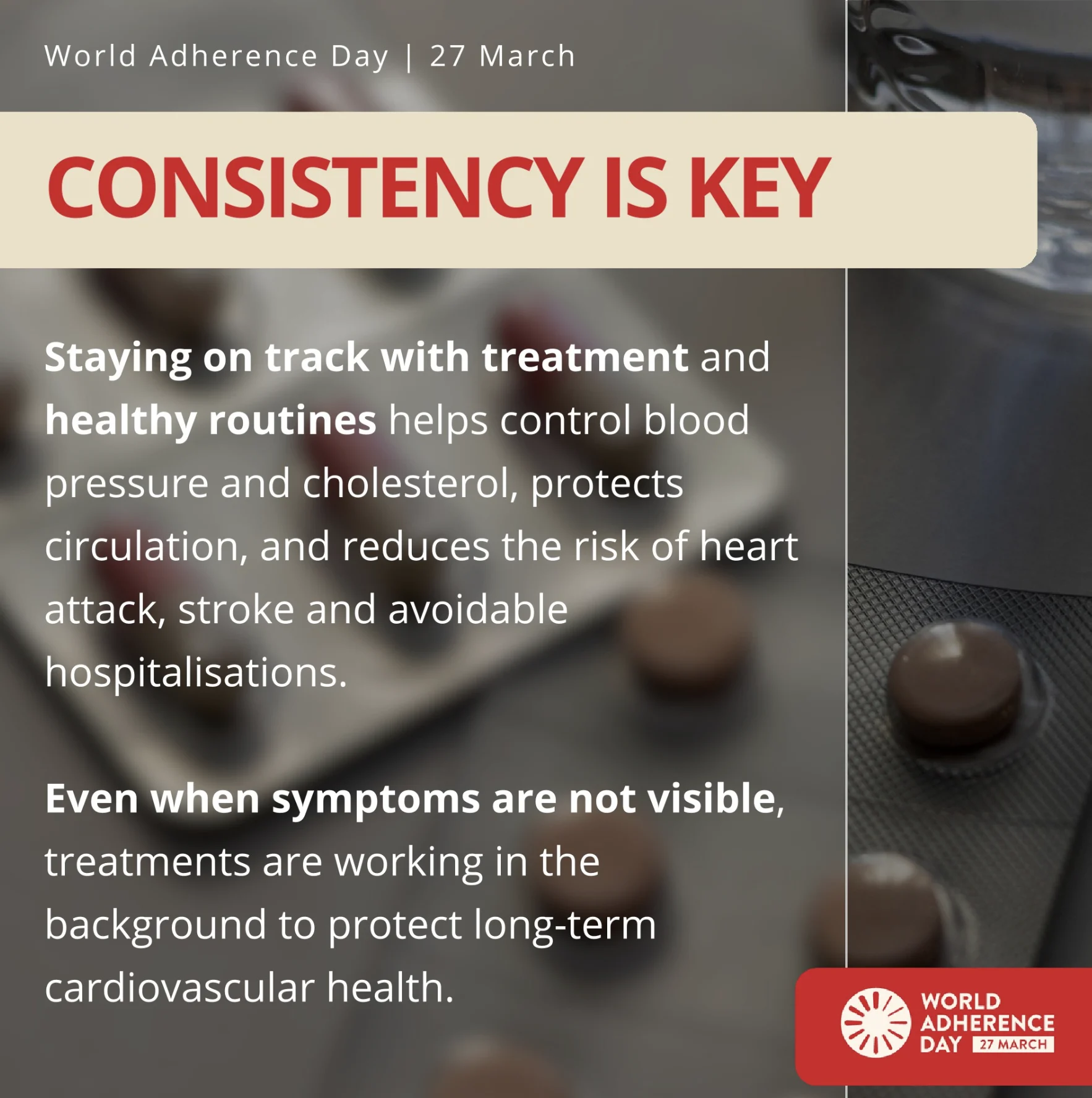
Staying on track with prescribed treatment and healthy routines is one of the most effective ways to prevent complications, reduce cardiovascular risk, and support long‑term independence and quality of life.
Yet non‑adherence remains a major and largely preventable contributor to poor outcomes across chronic conditions, particularly when symptoms are silent or people feel well.
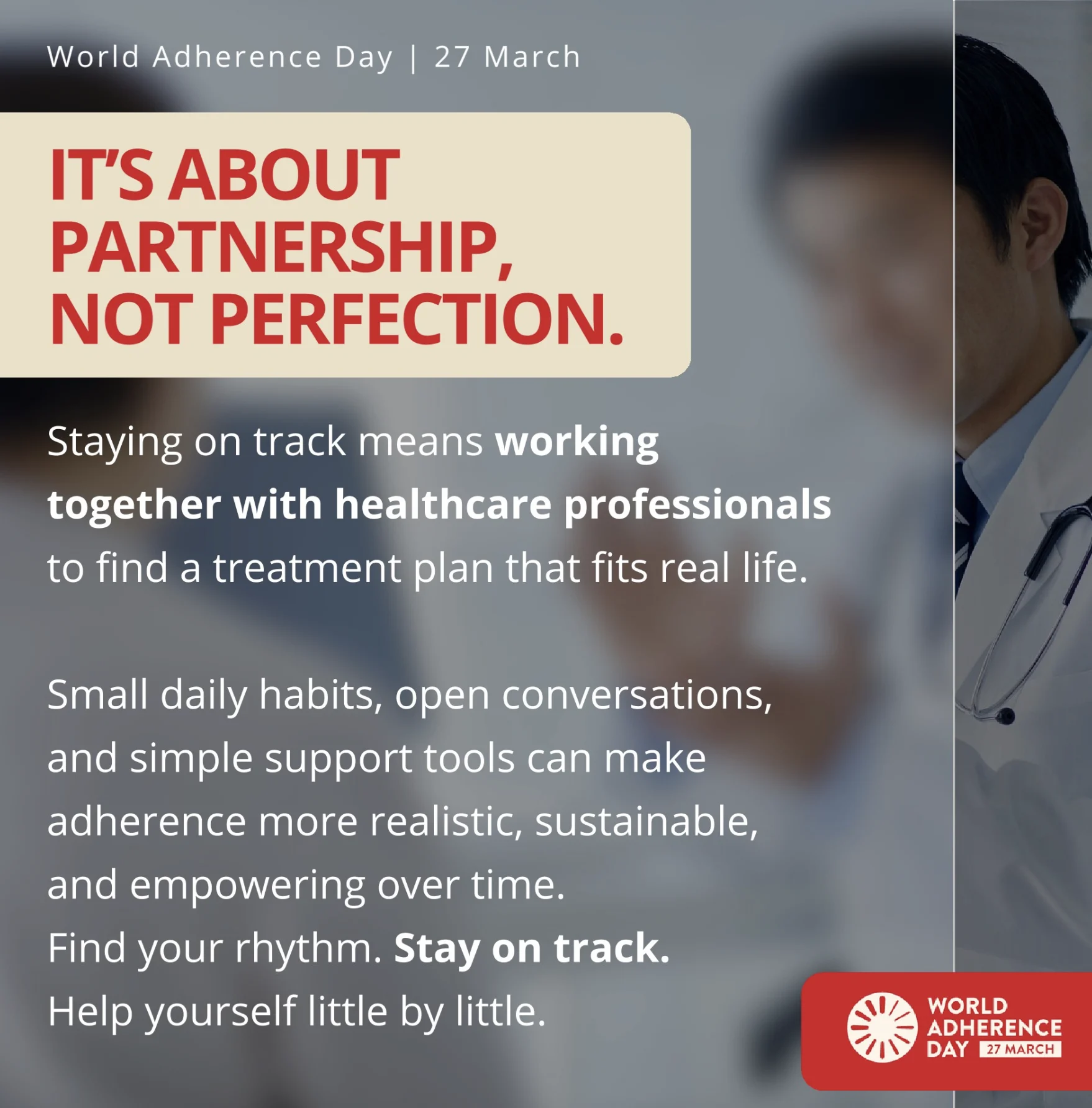
Adherence is not about following instructions blindly or being perfect every day.
It is about partnership. It means open conversations with healthcare professionals, shared decision‑making, and finding realistic routines that fit into daily life.
Missed doses, busy schedules, side effects, or emotional strain are common challenges, and they are part of real life.
World Adherence Day is a reminder that small and consistent habits can protect future health even when the benefits are not immediately felt.
Today, we join the global call from World Heart Federation to recognise adherence as a clinical priority and a shared responsibility.
Learn more about adherence and the WHF.
Stay on track. Improve your life.”
Stay updated with Hemostasis Today.
-
Sep 18, 2026, 06:48Gopal Patidar: Honoured to Contribute to the ASFA 2026 Guidelines for Therapeutic Apheresis
-
Sep 18, 2026, 05:48Julie Taylor: Navigating Tech Glitches to Deliver Engaging BBTS Presentation
-
Sep 18, 2026, 05:42Emma Copperwaite: BBTS Conference Presentation Highlights Power of Peer Support and Pushing Past Fear
-
Sep 18, 2026, 05:34Suhasini Sil: RGSSH Joins Mega Blood Donation Camp at Thyagaraj Stadium
-
Sep 18, 2026, 05:25Lisa Laun: Spleen Clears Activated Platelets to Limit Thrombosis and Inflammation
-
Sep 18, 2026, 05:16Louise St. Germain Bannon: ISTH Advocates for Enhanced Patient Safety in Blood Disorder Care
-
Sep 18, 2026, 05:08Vikas Veer: Exploring Sickle Cell Anemia at the Molecular Level
-
Sep 18, 2026, 01:35Matthew Hazell: From Platelet Refractoriness to Protecting Transplanted Organs
-
Sep 18, 2026, 01:23Apple Joy A. Valenzuela: Exploring How Neutrophil Develops from the Myeloblast to the Mature Segmented Neutrophil