


Matthew Hazell: Challenging Unnecessary Transfusion Requests – Empowering Laboratory Professionals
Matthew Hazell, Consultant Clinical Scientist at NHS Blood and Transplant, shared a post on LinkedIn:
“Challenging unnecessary transfusion requests: empowering laboratory professionals!
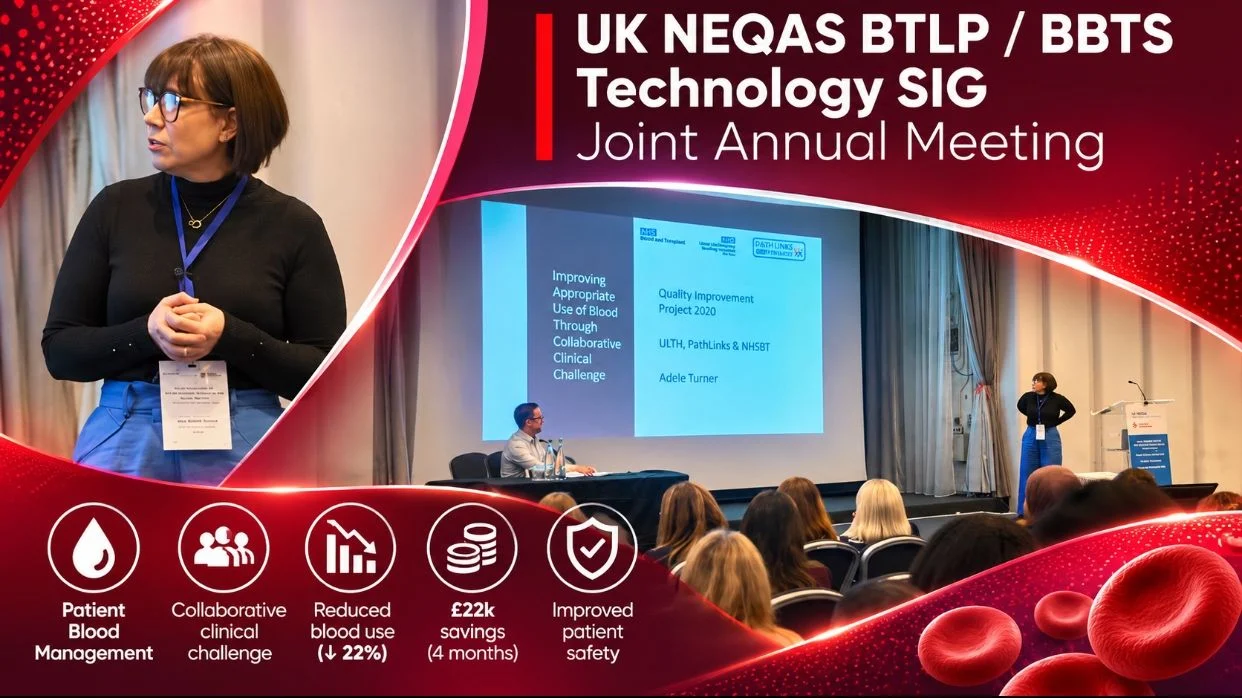
Another excellent presentation at the UK NEQAS BTLP and BBTS Blood Bank Technology SIG Joint Annual Meeting, this time from Adele Turner, exploring the role of laboratory professionals in challenging inappropriate blood transfusion requests.
Blood is a finite and precious resource. Every request deserves clinical engagement, with patient safety and Patient Blood Management (PBM) at the heart of decision-making.
The challenge:
- Issuing everything that is requested.
- Excessive ‘just in case’ requests.
- Limited challenge of clinical decisions.
- Increased stockholding and wastage.
- Unnecessary patient exposure to transfusion.
Changing the culture
Laboratory professionals are experts in transfusion science and should be empowered to act as patient advocates. Challenging requests should not be confrontational, but a collaborative discussion with clinical colleagues.
Asking the right questions:
- What is the patient’s haemoglobin?
- Is the patient actively bleeding?
- Could we transfuse a single unit and reassess?
- Has iron deficiency been considered?
- Is the patient symptomatic?
- Is the request compliant with guidance?
Building relationships through ward-based education, junior doctor induction, audit, governance and collaboration with NHSBT is fundamental to embedding sustainable change.
Implementing clear policies and decision-making flowcharts can also provide laboratory staff with the confidence to challenge requests.
The results speak for themselves!
- 22% reduction in blood issue.
- £22,000 in savings over a four-month study period.
Key lessons:
- Conversations change practice.
- Respectful challenge makes a difference.
- Education builds trust.
- Empowering laboratory professionals supports better use of blood.
My personal reflections:
Whilst reductions in blood utilisation and financial savings are fantastic outcomes, I would also be interested in exploring the wider impact:
- Has there been any change in quality incidents?
- What has been the impact on patient outcomes?
- Have repeat transfusion intervals changed?
- What has been the impact on patient quality of life?
Measuring clinical outcomes alongside operational and financial benefits could provide an even more compelling case for change.
Thank you, Adele, for highlighting the importance of empowering laboratory professionals to influence clinical practice.
We are not simply providers of blood components; we are active partners in patient care.”
Other posts featuring Matthew Hazell on Hemostasis Today.
-
Nov 28, 2026, 17:11Sharjeel Haider: Ischemic and Bleeding Outcomes With Prolonged DAPT After PCI
-
Nov 28, 2026, 16:59Mohamed Hemida: Coronary Stent Thrombosis in Cancer Patients Undergoing PCI
-
Nov 28, 2026, 16:45Aravind Palraj։ Low Platelets In Lupus Do Not Always Mean ITP
-
Nov 28, 2026, 16:36Chokri Ben Lamine: Understanding HIT and DITP Through Clinical Features, Diagnosis and Management
-
Nov 28, 2026, 15:24Seyed Mohammad Sadegh Pezeshki: Characterizing Platelet Adhesive Dysfunction in Chronic ITP
-
Nov 28, 2026, 14:52Peter A. Everts: PRP Variability and the Path Toward Precision Orthobiologics
-
Nov 28, 2026, 14:12Ahmed Kamal: RBC Morphological Abnormalities – Key Diagnostic Clues in Hematological Disorders
-
Nov 28, 2026, 14:07Hanie Salah: Can Administering 100% Pure Oxygen at 2.5 Times Atmospheric Pressure Actually Reduce Oxidative Damage?
-
Nov 28, 2026, 14:01Intissar Haddiya: Antihypertensive Treatment Lowers Major Cardiovascular Events Even in Low-Risk Patients