

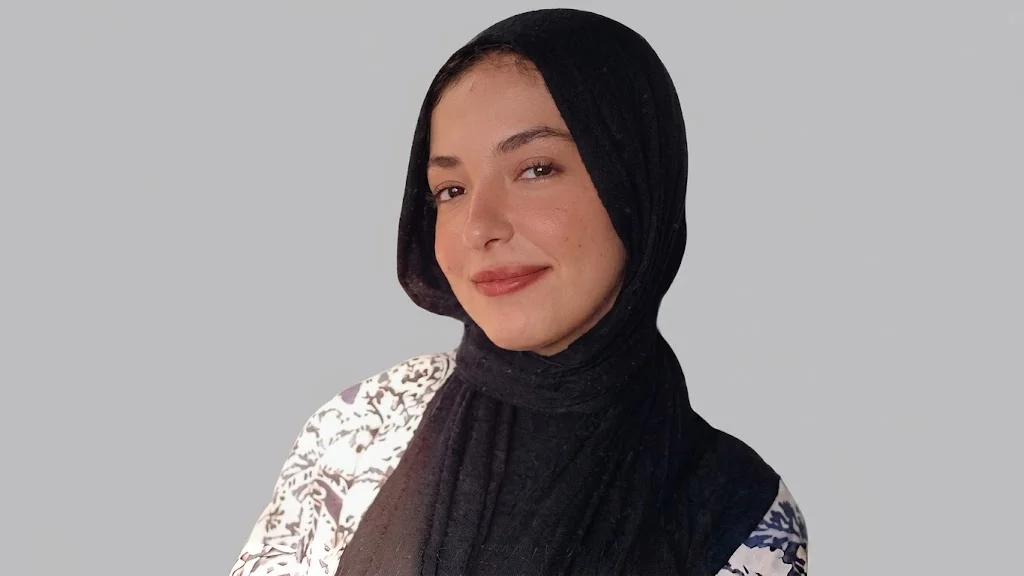
Menna Hamdy: Artificial Intelligence in DVT Care
Menna Hamdy, Machine Learning Intern at FlyRank AI, shared a post on LinkedIn:
“What can you build in just 5 days with AI?
For me, the answer was DVT Care.
During the AI Hackathon, I had the opportunity to work with my team on a medical AI assistant focused on Deep Vein Thrombosis (DVT) — a project that challenged us to turn a real healthcare problem into a practical, evidence-based AI solution.
Our goal was to build more than just a chatbot. We developed an end-to-end Retrieval-Augmented Generation (RAG) system that uses trusted medical sources such as CDC, NHS, and Mayo Clinic to retrieve relevant evidence and generate grounded answers with proper source attribution.
Throughout the five days, We focused on making the system more reliable and practical by implementing Arabic & English question handling, semantic search, source citations, out-of-scope detection, retrieval evaluation, embedding model comparison, and threshold optimization. The system was designed to stay within its DVT knowledge scope and avoid generating unsupported medical information.
But honestly, the most valuable part of these five days wasn’t only what we built — it was what I learned while building it.
From debugging unexpected errors and improving retrieval results to comparing embedding models, evaluating different scenarios, understanding failure cases, and thinking about how AI systems should be designed for sensitive real-world applications, every step pushed me to think beyond simply ‘training a model.’
Five days of learning, experimenting, debugging, failing, fixing, and building and every challenge was part of the experience.
A huge thank you to Creativa innovation hubs, Instant Software Solutions and Orange Software, for creating this opportunity and giving us the space to learn, build, collaborate, and challenge ourselves.
Five days. One real-world problem. One complete AI solution. And a lot of lessons to carry forward.”
Proceed to the video attached to the post.
Stay updated with Hemostasis Today.
-
Oct 8, 2026, 04:28Jeff Molter: Electrophysiological PIEZO1 Analysis Advances Diagnosis in Hereditary Xerocytosis
-
Oct 8, 2026, 04:23Barbara Adams Krolak: Women and Blood Clots Are We Missing the Warning Signs
-
Oct 8, 2026, 04:10Rutendo Muzambi: Hospital Admission Patterns and Care Disparities in Sickle Cell Disease
-
Oct 8, 2026, 03:50Olfat Berro: Redefining the Future of Haemophilia A
-
Oct 8, 2026, 03:35Tasnia Tarana: Heavy Menstrual Bleeding When the Cause Is Not in the Uterus
-
Oct 8, 2026, 03:28Kian Haseli: Electrophysiological PIEZO1 Analysis Advances Diagnosis in Hereditary Xerocytosis
-
Oct 8, 2026, 03:20Sthanu Subramanian: Leukopenia in Sepsis A Marker of Severe Disease
-
Oct 7, 2026, 16:44Amor Salah: 2026 NCS/SCCM Guidelines for Managing Antithrombotic-Associated ICH
-
Oct 7, 2026, 16:04NETs in Thrombosis: From Mechanism to Therapeutic Target