


Ney Carter Borges: POAF and Long-Term Outcomes After Cardiac Surgery
Ney Carter Borges, Member Cardiologist of Global Physician Association at Cleveland Clinic Florida, shared a post on LinkedIn:
“Postoperative Atrial Fibrillation (POAF) After Cardiac Surgery.
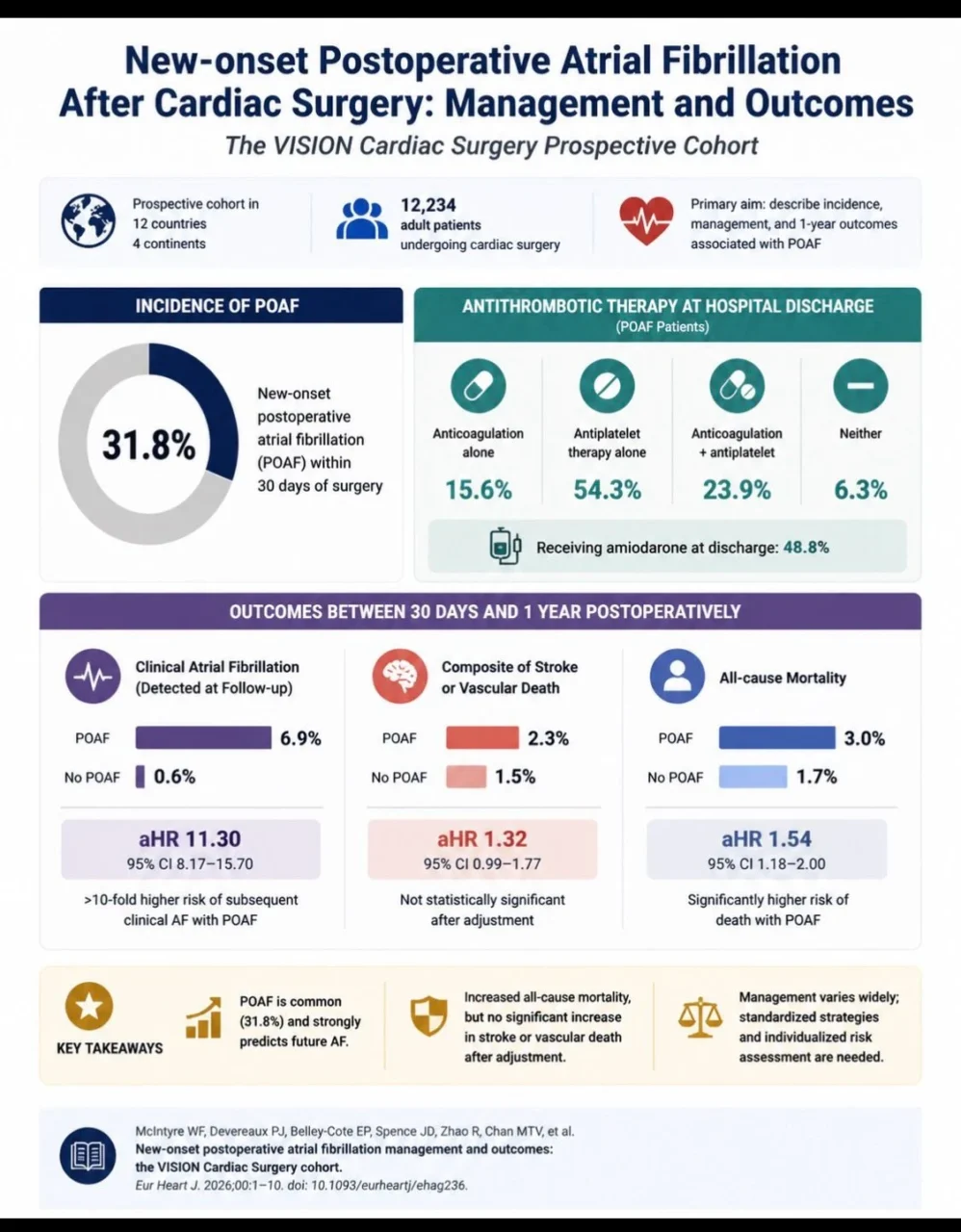
In a large prospective, multinational cohort (VISION Cardiac Surgery; n = 12,234), new-onset postoperative atrial fibrillation (POAF) occurred in 31.8 percent of patients within 30 days of surgery, confirming its status as the most frequent postoperative complication.
From a prognostic standpoint, POAF was strongly associated with subsequent atrial fibrillation: 6.9 percent versus 0.6 percent, corresponding to an adjusted hazard ratio (aHR) of 11.30 (95 percent CI 8.17–15.70), indicating a more than 10-fold increased risk.
Regarding hard outcomes between 30 days and 1 year:
- The composite of stroke or vascular death occurred in 2.3 percent versus 1.5 percent (aHR 1.32; 95percent CI 0.99–1.77), not reaching statistical significance after adjustment.
- All-cause mortality was significantly higher in POAF patients (3.0 percent versus 1.7 percent), with an aHR of 1.54 (95 percent CI 1.18–2.00).
Importantly, absolute stroke rates remained low (approximately 0.7 percent overall), suggesting that POAF may function more as a risk marker than a direct causal driver of thromboembolic events.
Therapeutic strategies were heterogeneous: only 39.4 percent of POAF patients received oral anticoagulation at discharge, while 48.8 percent were treated with amiodarone, reflecting substantial global variability in management.
Conclusion: POAF is common and clinically meaningful, conferring increased mortality and markedly higher AF recurrence, but with a modest and statistically uncertain impact on thromboembolic outcomes.
These findings highlight the need for individualized risk stratification and more standardized management strategies.”
Other posts featuring Ney Carter Borges on Hemostasis Today.
-
Sep 27, 2026, 15:49Rana Al-Hrout: Iron Deficency – Is Ferritin 15ng/mL or Less Still the Cutoff?
-
Sep 27, 2026, 15:49Ayushi Sharma: What I Thought Transfusion Medicine Would Be vs What It Actually Is
-
Sep 27, 2026, 15:48William Wallace: How Much Human Research Is Behind the Supplements We Take?
-
Sep 27, 2026, 15:46Franck Perraudin: Lp(a) Lowering Alone May Not Be Enough
-
Sep 27, 2026, 15:41Ahmed Hamandi: Sharing Real-World HSCT Experience at the Iraqi Society of Haematology Conference
-
Sep 27, 2026, 15:39Co-creating Digital Support With Young Stroke Survivors – European Stroke Organisation
-
Sep 27, 2026, 15:39Eleri Schiavone: Celebrating 80 Years of the Welsh Blood Service
-
Sep 27, 2026, 15:38Jessica Garcia: Standing Where VWD Was First Recognized 100 Years Later
-
Sep 27, 2026, 15:37Heghine Khachatryan: A Meaningful Step Forward for Inherited Blood Disorders in Africa