

Rehab Salah: An Overlooked Cause of DAT-Negative Neonatal Jaundice
Rehab Salah, Pediatric specialist at Ministry of Health & Population – Egypt, shared a post on LinkedIn:
“Hereditary Spherocytosis in Neonates: An Important Cause of DAT Negative Neonatal Jaundice
Not every case of neonatal jaundice with a negative Direct Antiglobulin Test (DAT) is physiological!
Hereditary Spherocytosis (HS) is an important, and sometimes overlooked, cause of neonatal non immune hemolytic anemia.
Recognizing its early clinical and laboratory clues can make a significant difference in diagnosis and follow up.
Key clinical and diagnostic points:
- Early neonatal jaundice: Often appears within the first 48 to 72 hours and may be severe, prolonged, or recurrent.
- Anemia may be delayed: Hemoglobin levels can become significantly lower during the first 1 to 3 months of life due to ongoing hemolysis and the physiological decline in neonatal hemoglobin.
- Absence of splenomegaly doesn’t exclude HS: Splenomegaly is frequently absent in young infants.
- Laboratory clues:
Elevated reticulocyte count.
Spherocytes on peripheral blood smear.
Increased RDW.
Elevated MCHC can be helpful, but may be normal in neonates.
- Negative DAT supports a non immune cause of hemolysis.
- Confirmatory testing:
EMA (Eosin 5 Maleimide) binding by flow cytometry is the preferred diagnostic test in most cases.
Osmotic fragility testing may be less reliable in neonates.
Don’t forget the family history!
Hereditary spherocytosis is commonly inherited in an autosomal dominant pattern, but a negative family history does not rule it out.
CBC and peripheral smear examination of parents can provide valuable diagnostic clues.
Clinical Pearl:
Think of Hereditary Spherocytosis in any newborn presenting with early jaundice, unexplained indirect hyperbilirubinemia, evidence of hemolysis, and a negative DAT even in the absence of splenomegaly or elevated MCHC.
Early recognition means appropriate bilirubin management, timely monitoring of anemia, and better long term follow up.”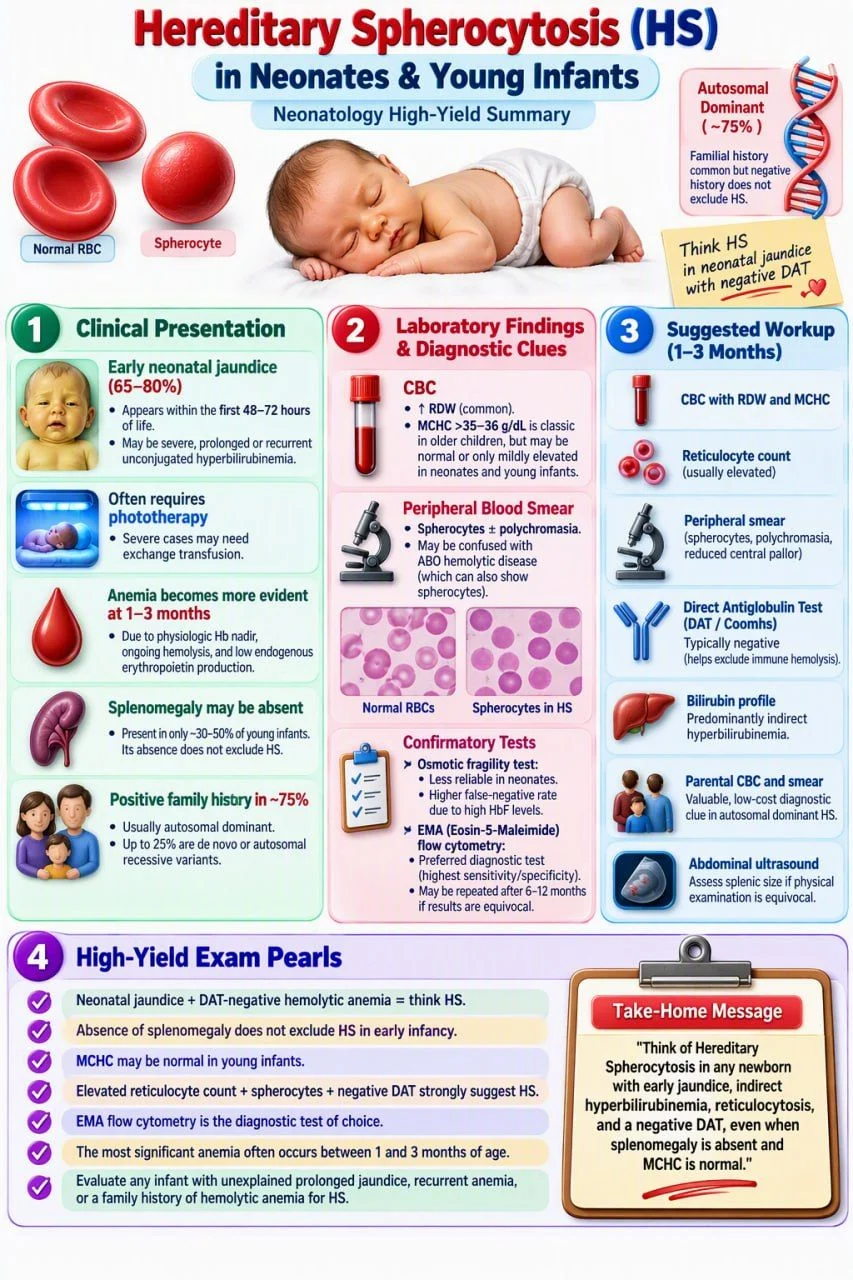
Stay updated with Hemostasis Today.
-
Nov 24, 2026, 02:56Karim Jamaleddine։ Shoulder Dislocation and DVT – New Evidence on the Low Risk of Thrombosis
-
Nov 24, 2026, 02:41Suresh S: Making Every Blood Donation Count
-
Nov 24, 2026, 02:27Josephine Olunaike: Professional Expertise and Lived Experience in Sickle Cell Disease Care
-
Nov 24, 2026, 01:33Kazuhiko Kido: Oral Selexipag Sustains Prostacyclin Therapy Following Treprostinil-Induced Thrombocytopenia in PAH
-
Nov 24, 2026, 01:22Johan Duchêne: 10 Year Effort Yields Commercially Available Validated Mouse ACKR1 Antibody Clone 6B7
-
Nov 24, 2026, 01:12Cynthia Dalveren: John Hay Students Partner with American Red Cross to Support Sickle Cell Patients
-
Nov 24, 2026, 00:59Htar Wai Shan: How the Reticulocyte Count Measures Bone Marrow Red Blood Cell Production
-
Nov 24, 2026, 00:49Sadik Kükrer: New ASH Thresholds and a Critical Look at the Latest IV Iron Meta-Analysis
-
Nov 23, 2026, 19:11Svetislav Matic: Optimizing Perioperative Patient Outcomes Through PBM and Sample Volume Management