

Reza Bavarsad Shahripour: When Waveform Patterns Tell the Story of Proximal Flow
Reza Bavarsad Shahripour, Associate Editor at Clinical Neuroimaging Journal, shared a post on LinkedIn:
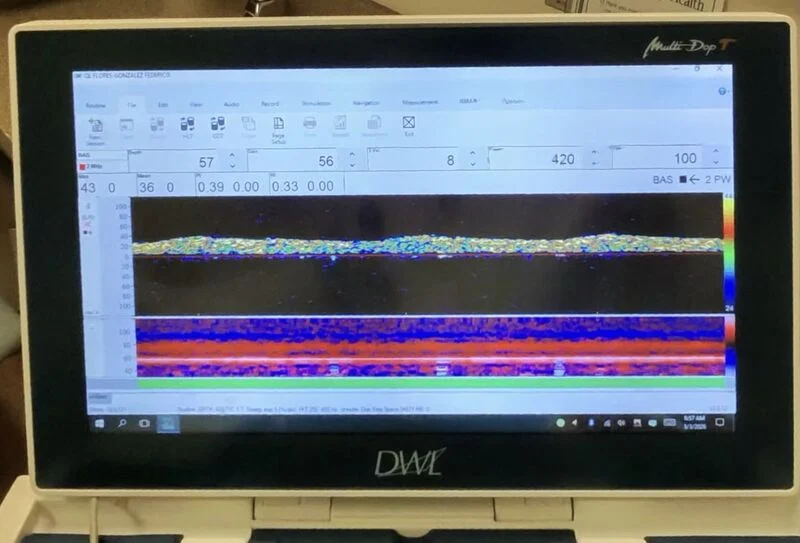
“When waveform patterns tell the story of proximal flow
Transcranial Doppler (TCD) continues to be one of the most powerful bedside tools for real-time cerebral hemodynamic assessment.
The waveform pattern seen in the middle cerebral artery (MCA) here demonstrates a blunted, low-velocity flow pattern, consistent with a low TIBI score, suggesting proximal hemodynamic compromise.
TIBI (Thrombolysis in Brain Ischemia) grading helps standardize interpretation of intracranial flow in acute stroke:
- TIBI 0: No detectable flow
- TIBI 1: Minimal flow
- TIBI 2: Blunted flow
- TIBI 3: Dampened flow
- TIBI 4: Stenotic flow
- TIBI 5: Normal flow
In this pattern, the reduced systolic acceleration and dampened waveform raise concern for proximal arterial obstruction or severe hemodynamic limitation, often reflecting large vessel occlusion or critical stenosis upstream.
What makes TCD powerful is that it does more than measure velocity – it provides insight into cerebral hemodynamics in real time, helping clinicians rapidly infer:
- Proximal occlusion
- Collateral circulation status
- Recanalization during therapy
- Dynamic flow changes at the bedside
In the era of advanced imaging, waveform interpretation remains an essential neurosonology skill that can immediately guide clinical decision-making.
Velocity alone is not enough – waveform morphology matters.”
Stay updated with Hemostasis Today.
-
Sep 30, 2026, 01:52Javed Anees: DADA2 – When a Young Stroke Is More Than a Stroke
-
Sep 30, 2026, 01:51How a Venous Thrombus Becomes Revascularized – ISTH
-
Sep 29, 2026, 22:45Victor Agunyego: Paracetamol – The Most Common Drug We Underestimate
-
Sep 29, 2026, 22:42Nova Sinclair: Advancing the Future of Hematology – Meet Our 2027 Organizing Committee
-
Sep 29, 2026, 22:41Lorenz Räber: Intracoronary Imaging in PCI – Why, When, How, and Which Modality?
-
Sep 29, 2026, 22:31Selma Turkovic: Pleased to Deliver the Opening Presentation at Kingston Hospital
-
Sep 29, 2026, 22:31Miguel Teran: Ultrasound and Simulation in Arterial Blood Sampling
-
Sep 29, 2026, 22:28Mohammad Refaei: Navigating Your Career in Hematology From Training to Practice
-
Sep 29, 2026, 22:27Matteo Foschi: 10 Clinical Pearls for Antithrombotic Therapy in Secondary Stroke Prevention