


Samwel Mikaye/LinkedIn
Mar 2, 2026, 16:01
Samwel Mikaye: Understanding Direct and Indirect Coombs Testing in Diagnosing Immune-Mediated Hemolysis
Samwel Mikaye, Medical Doctor at MSK, shared a post on LinkedIn:
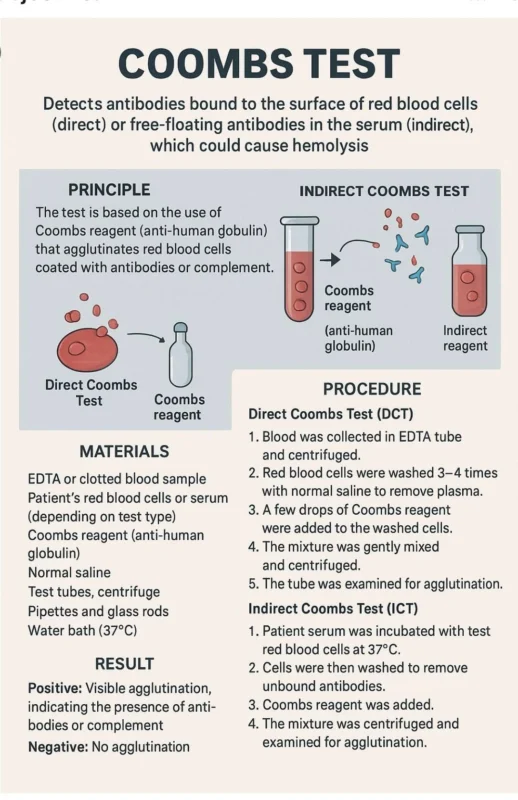
“Coombs Test (Antiglobulin Test)
The Coombs test detects antibodies or complement proteins bound to red blood cells (RBCs), helping diagnose immune-mediated hemolysis.
There are two main types: Direct and Indirect.
1. Direct Coombs Test (DAT)
Purpose: Detects antibodies already attached to the patient’s RBCs.
Principle
- Patient RBCs are washed and incubated with Coombs reagent (anti-human globulin).
- If RBCs are coated with IgG or complement, the reagent causes agglutination.
Clinical Uses
- Autoimmune hemolytic anemia (AIHA)
- Warm antibody type (IgG)
- Cold antibody type (IgM/complement)
- Hemolytic disease of the newborn (HDN)
- Mother’s antibodies attack fetal RBCsDrug-induced hemolysis
2. Indirect Coombs Test (IAT)
Purpose: Detects antibodies in the patient’s serum that can bind to RBCs.
Principle
- Patient serum is incubated with RBCs of known antigen type.
- Coombs reagent is added – agglutination indicates presence of antibodies.
Clinical Uses
- Pre-transfusion testing (detecting incompatible antibodies)
- Prenatal testing for Rh incompatibility (maternal anti-D antibodies)”
Other posts featuring Samwel Mikaye on Hemostasis Today.
-
Sep 17, 2026, 20:38Konstantinos Bistas: Reduced Circulating Tregs in Pediatric Chronic Neutropenia
-
Sep 17, 2026, 15:33Gopal Patidar: Honoured to Contribute to the ASFA 2026 Guidelines for Therapeutic Apheresis
-
Sep 17, 2026, 20:36Cosima C. Hoch: Developing a 3D Organotypic Co-Culture Model for Pleomorphic Adenoma
-
Sep 17, 2026, 20:19Riten Kumar: Boston Children’s Hospital Ranked No. 1 in Seven Pediatric Specialties
-
Sep 17, 2026, 20:17Katrina Snow: Whole Blood or Component Therapy – Which Would You Choose?
-
Sep 17, 2026, 16:30Daria Camilli: Empowering Bleeding Disorder Advocacy Through Health Economics
-
Sep 17, 2026, 16:17Mehran Ghasemzadeh: Platelet NK Cell Crosstalk in Advanced Coronary Artery Disease
-
Sep 17, 2026, 16:16Barbara Adams Krolak: Do GLP-1s Affect Blood Clot Risk?
-
Sep 17, 2026, 15:46Heghine Khachatryan: Clinical Context at the Core of Thrombosis and Thrombophilia Management