

Sandhya Selvakumar/LinkedIn
Nov 10, 2026, 05:55
Sandhya Selvakumar: Guide to Stroke Classification and Rehabilitation
Sandhya Selvakumar, Student at PPG College of Physiotherapy, shared a post on LinkedIn:
“Definition:
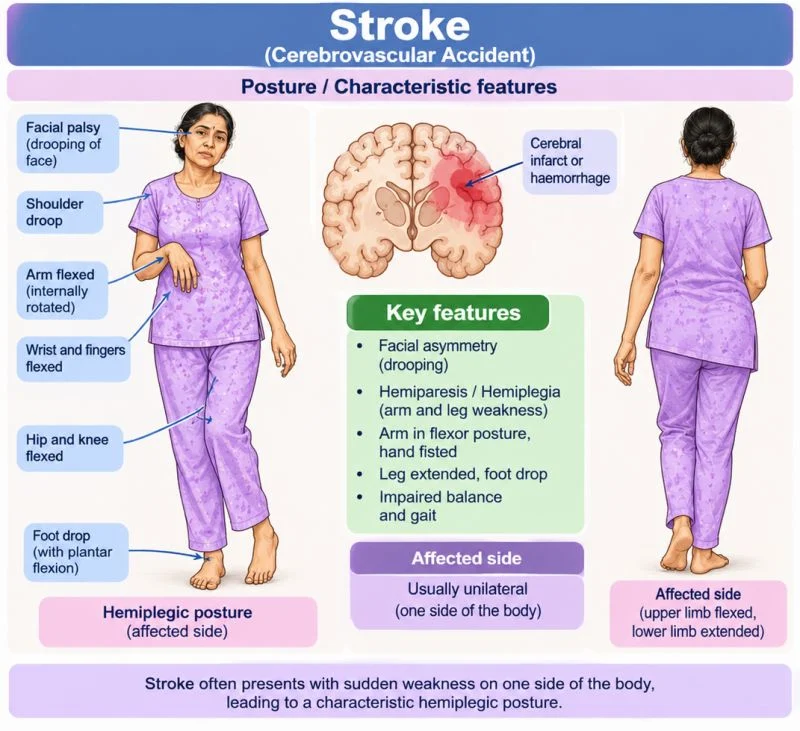
Stroke is a sudden neurological deficit caused by interruption of blood supply to the brain or rupture of a blood vessel, resulting in brain tissue damage.
Types of Stroke:
1. Ischemic Stroke (80–85%)
- Caused by blockage of a cerebral blood vessel.
- Due to thrombosis or embolism.
2. Hemorrhagic Stroke (15–20%)
- Caused by rupture of a blood vessel.
- Leads to bleeding inside or around the brain.
Types:
Intracerebral hemorrhage.
Subarachnoid hemorrhage.
Diagnosis:
- Medical history and physical examination.
- Neurological examination.
- CT scan of the brain.
- MRI brain.
- CT angiography (CTA).
- Blood tests (blood glucose, CBC, coagulation profile).
- ECG.
Clinical Features:
- Sudden weakness or paralysis (Hemiplegia).
- Facial drooping.
- Difficulty in speaking (Aphasia).
- Difficulty in swallowing (Dysphagia).
- Loss of balance and coordination.
- Visual disturbances.
- Severe headache (especially in hemorrhagic stroke).
- Altered consciousness.
- Sensory disturbances.
Management:
- Medical Management
- Thrombolytic therapy (e.g., alteplase) for eligible ischemic stroke patients.
- Mechanical thrombectomy in selected patients.
- Antiplatelet drugs.
- Blood pressure management.
- Management of blood glucose and complications.
- Neurosurgery in selected hemorrhagic strokes.
- B. Physiotherapy Management
- Proper positioning.
- Passive and active range of motion exercises.
- Bed mobility training.
- Sitting and standing balance exercises.
- Transfer training.
- Gait training.
- Muscle strengthening exercises.
- Functional activities training.
- Activities of daily living (ADL) training.”
Stay updated with Hemostasis Today.
-
Nov 9, 2026, 22:47Avirup Guha: Early Immune Responses to Androgen Deprivation Therapy and Coronary Plaque Progression
-
Nov 9, 2026, 22:42Angela Forsyth: Joining Novo Nordisk as Medical Liaison for the Ohio Valley Region
-
Nov 9, 2026, 22:36Vladimir Otasevic: Presenting Thromboprophylaxis and Treatment of VTE in Patients With Malignancy
-
Nov 9, 2026, 22:28Dragoș Claudiu Popescu: Corticosteroid Exposure and Thrombotic Risk in ITP
-
Nov 9, 2026, 22:20Cedric Ghevaert: How RNA Processing Defects Affect Megakaryocytes in TAR Syndrome
-
Nov 9, 2026, 22:07Todd C. Villines: PARAMOUNT Shows Benefits of Coronary Plaque-Based Care in Stable Symptomatic Patients
-
Nov 9, 2026, 22:06Maxima Mendez: Complete Results of the Pelacarsen Cardiovascular Outcomes Study at AHA 2026
-
Nov 9, 2026, 22:04The Role of the Spleen in Inflammation During Acute Plasmodium Vivax Malaria – American Journal of Hematology
-
Nov 9, 2026, 21:52Behnood Bikdeli: Honored to Share the Stage at AHA 2026 to Discuss Grant Funding