


Sonia Muliyil: The Greatest Benefit is The Wellbeing and Sustenance of Half The World’s Population
Sonia Muliyil, Editor in Chief at The Lancet Obstetrics, Gynaecology and Women’s Health, shared a post on LinkedIn:
“To commemorate IWD, we The Lancet Obstetrics, Gynaecology, and Women’s Health did something special.
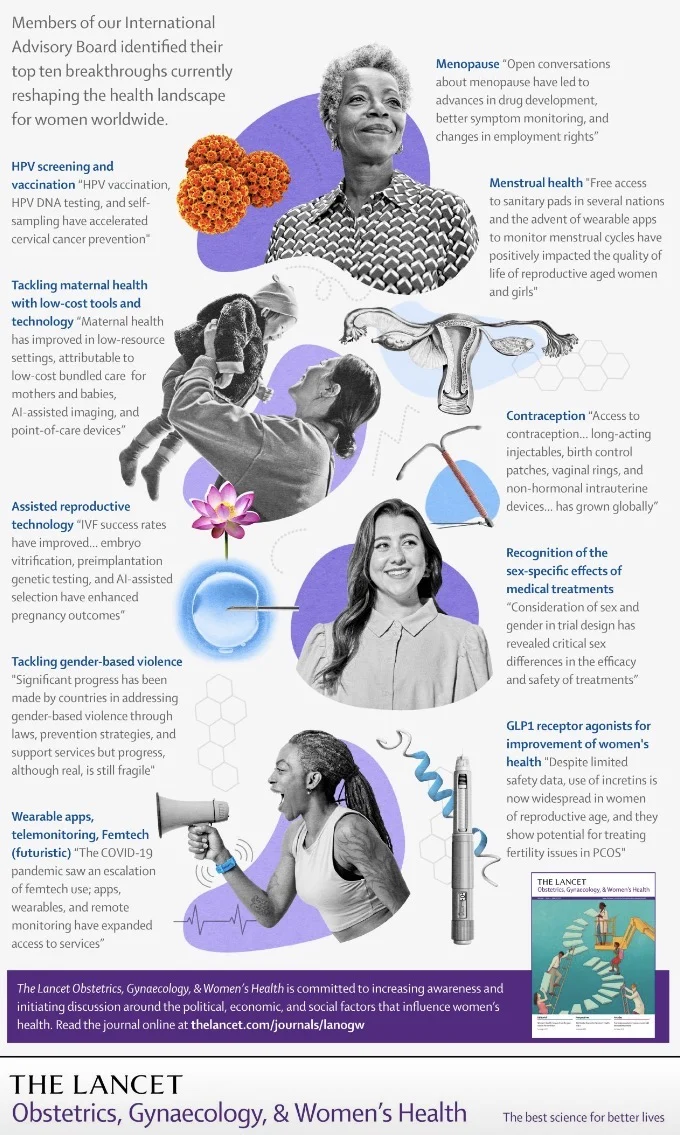
With feedback from our International Advisory Board, we spotlighted ten advances in women’s health that have significantly moved the field forward. This list is not exhaustive but aims to synthesise common evidence threads and spark dialogue about the meaning of this progress. While celebrating these innovations, we must also remain mindful of the risks of regression or misuse.
These advances are featured in an infographic. Huge Thanks to the very talented Jeremy Christopher Harding and Leon Terner for bringing this idea to life!
The first half of the infographic highlights The Lancet Group’s commitment to women’s health over the past decade. For years, The Lancet Group has demonstrated dedication to various facets of women’s health through Series and Commissions adopting a life-course approach, addressing systemic issues beyond reproductive and sexual health.
It is vital to promote the message that advancing knowledge of women’s health outcomes benefits everyone, directly or indirectly. Understanding sex-based differences in disease outcomes not only improves women’s health but also sheds light on diseases disproportionately affecting men. Beyond biological differences, societal benefits from improving women’s health are vast—for example, better preconception and pregnancy health has intergenerational effects, and enhanced diagnosis and treatment of gynecological conditions supports retention of women in a globally weakening workforce.
Ultimately, the greatest benefit is the wellbeing and sustenance of half the world’s population.”
Stay updated with Hemostasis Today.
-
Sep 17, 2026, 20:38Konstantinos Bistas: Reduced Circulating Tregs in Pediatric Chronic Neutropenia
-
Sep 17, 2026, 15:33Gopal Patidar: Honoured to Contribute to the ASFA 2026 Guidelines for Therapeutic Apheresis
-
Sep 17, 2026, 20:36Cosima C. Hoch: Developing a 3D Organotypic Co-Culture Model for Pleomorphic Adenoma
-
Sep 17, 2026, 20:19Riten Kumar: Boston Children’s Hospital Ranked No. 1 in Seven Pediatric Specialties
-
Sep 17, 2026, 20:17Katrina Snow: Whole Blood or Component Therapy – Which Would You Choose?
-
Sep 17, 2026, 16:30Daria Camilli: Empowering Bleeding Disorder Advocacy Through Health Economics
-
Sep 17, 2026, 16:17Mehran Ghasemzadeh: Platelet NK Cell Crosstalk in Advanced Coronary Artery Disease
-
Sep 17, 2026, 16:16Barbara Adams Krolak: Do GLP-1s Affect Blood Clot Risk?
-
Sep 17, 2026, 15:46Heghine Khachatryan: Clinical Context at the Core of Thrombosis and Thrombophilia Management