

Stan Van Boeckel: Pitfalls in Early Drug Discovery
Stan Van Boeckel, Professor Emeritus at Leiden University, shared a post on LinkedIn:
”Part 30 — Pitfalls in Early Drug Discovery.
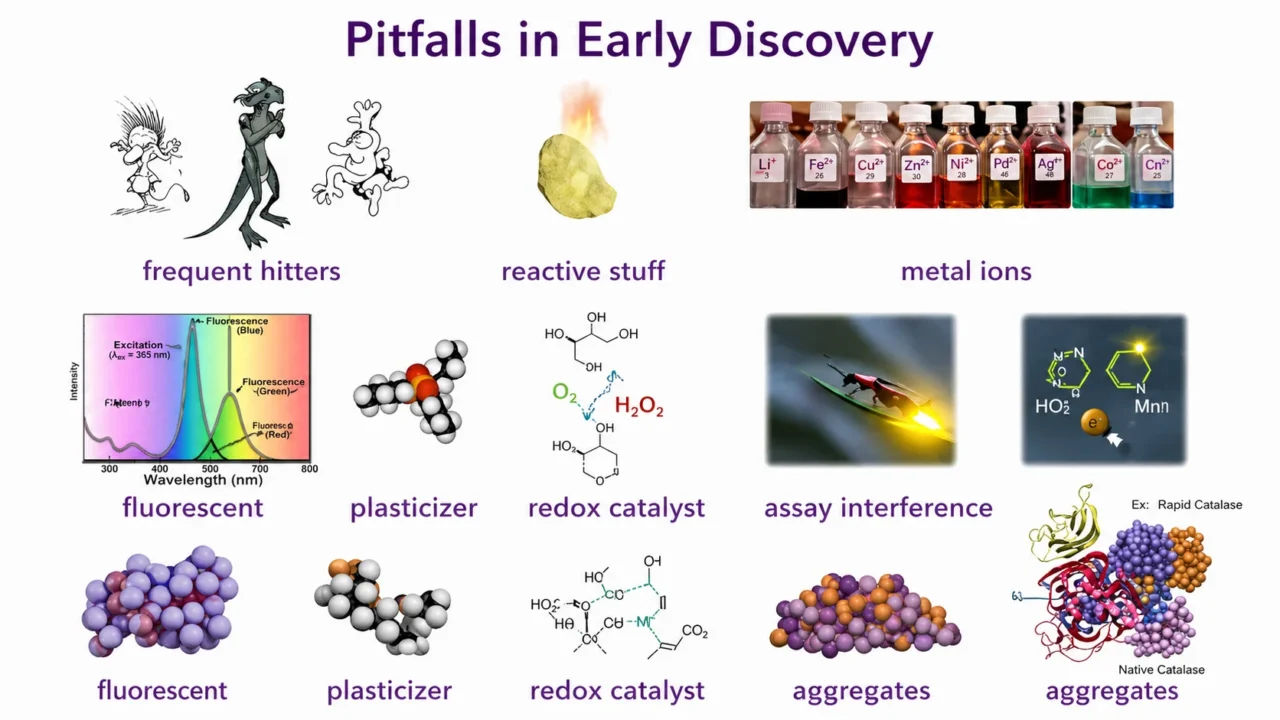
After more than forty years in medicinal chemistry across Pharma, Biotech, and Academia, I have repeatedly encountered misleading results, especially in early research where sensitive in‑vitro assays dominate.
Unfortunately, the same problems keep resurfacing. I still recall, four decades ago, working on inositol‑phosphate analogues to inhibit platelet aggregation. One compound looked spectacular, but after resynthesis and further purification the activity vanished.
The original batch contained a plasticizer-tributyl phosphate-which turned out to be the true active.
Since then, impurities have remained firmly on my radar: residual metal ions, reactive species, coloured or fluorescent compounds, intermediates, by‑products, stabilizers, plasticizers. They reappear in every generation of research, and investigators often begin in a phase of denial.
I have repeatedly met enthusiastic scientists convinced they had discovered unexpectedly potent hits or leads, only to learn that the compound adhered to the pipette tip and produced artificially high concentrations upon serial dilution. Sometimes the compound itself is the problem.
Entire classes of molecules are notorious for showing activity in many assays, and several are now well documented as PAINS. Others interfere with specific assay formats: luciferase inhibitors, fluorescent molecules, compounds that catalyse redox cycling and generate hydrogen peroxide in the presence of DTT.
Some react nonspecifically with the target through metal coordination or covalent modification. And perhaps the most misleading of all are aggregating compounds.
I have seen many papers where I wondered whether the reported inhibition was simply due to aggregates.
Large lipophilic or amphiphilic molecules are suspect, and repeating dose-response curves in the presence of non‑ionic detergents or higher protein concentrations should settle the question, yet this control is often omitted.
A striking example was published by Janssen R and D: a supposed lead that disrupted the protein–protein interaction between TNF‑α and its receptors.
Selective inhibitors of protein–protein interactions are difficult to find anyway so the team was cautious. Their ‘lead’ turned out to form a large, remarkably stable, ordered pentameric aggregate that interfered with binding, and remarkably this aggregate was still visible in the crystal structure with the protein.”
Stay updated with Hemostasis Today.
-
Sep 29, 2026, 17:31Rajnikant Patel: Bridging Ayurvedic Concepts and Modern Toxin-Mediated Disease
-
Sep 29, 2026, 17:13Nicholas Lang։ A Meaningful Case of Immune Thrombocytopenia
-
Sep 29, 2026, 16:55Ayatullah Gamal Wahab: When the CBC Lies
-
Sep 29, 2026, 16:35Jonathan Douxfils: Navigating the VTE Risk Continuum in Reproductive Medicine
-
Sep 29, 2026, 16:35Chaima Rajeh: Types of Anemia and Their Laboratory Features
-
Sep 29, 2026, 16:27Scott Isaacs: How GLP-1 RAs Target Systemic Inflammation to Drive Cardio, Autoimmune, and Gut Health
-
Sep 29, 2026, 16:21Yitshak Kreiss: From Treating Patients to Defining the Standard of Knowledge
-
Sep 29, 2026, 16:18Edward Lee Carter: Why Periprocedural DOAC Guidance Needs a Common Output Standard
-
Sep 29, 2026, 16:07Yasmine Laraba: Deep Vein Thrombosis Causes, Signs and Management