

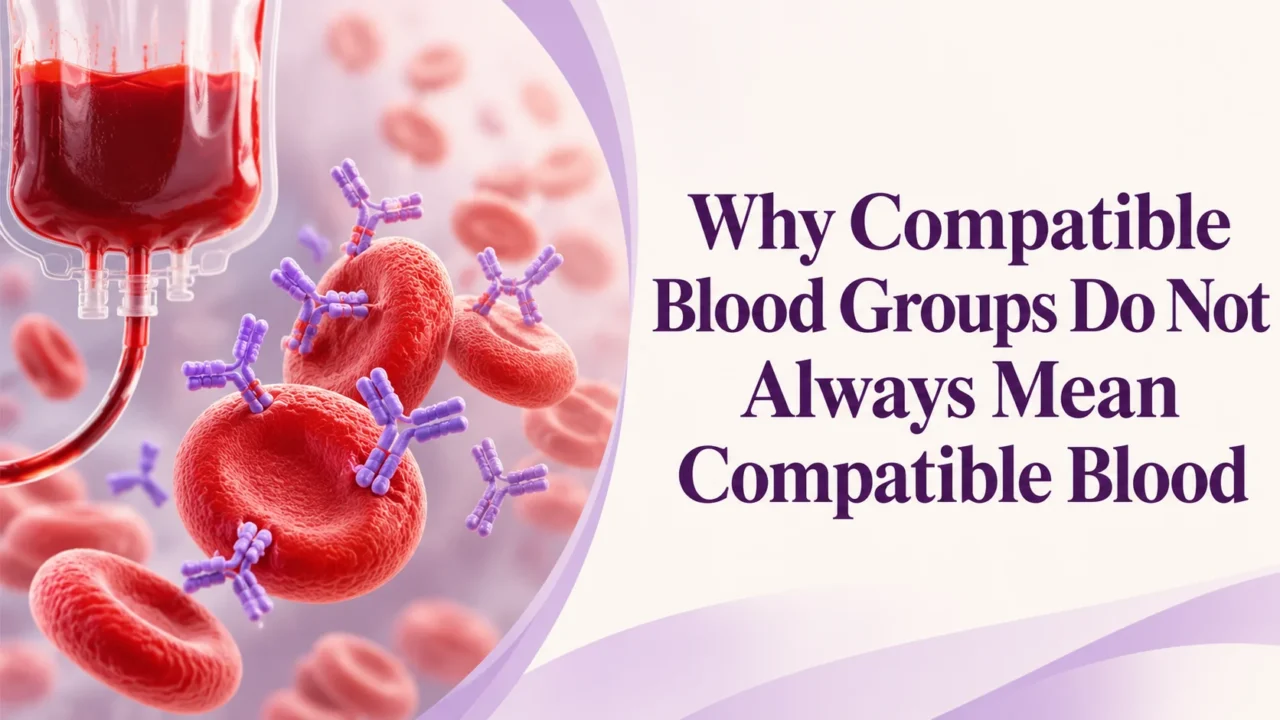
Vansh Yaduvanshi: Why Compatible Blood Groups Do Not Always Mean Compatible Blood
Vansh Yaduvanshi, Medical Laboratory Technology Trainee at Fortis Escorts Hospital, shared a post on LinkedIn:
”A compatible blood group does not always mean compatible blood. That’s why crossmatching matters!
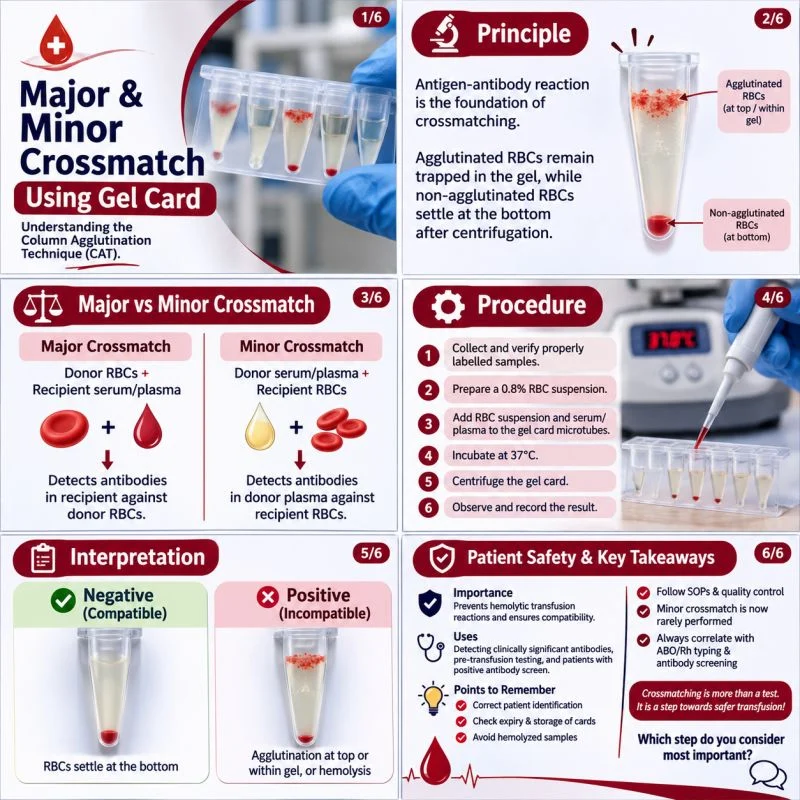
1. Principle
The Gel Card Technique is based on an antigen-antibody reaction.
During centrifugation, red blood cells pass through a gel matrix containing Anti-Human Globulin (AHG).
Agglutinated RBCs are trapped at the top or within the gel, whereas non-agglutinated RBCs pass through and settle at the bottom.
2. Major vs Minor Crossmatch
- Major Crossmatch: Donor RBCs plus Recipient serum/plasma. It detects antibodies in the recipient against donor red cell antigens.
- Minor Crossmatch: Donor serum/plasma plus Recipient RBCs. It detects antibodies in donor plasma against recipient red cell antigens.
3. Procedure (Gel Card Method)
- Collect and verify properly labelled donor and recipient samples.
- Prepare a 0.8% red blood cell suspension using the appropriate diluent.[Normal saline/LISS-Low ionic strength Solution (reduce incubation time) ]
- Add the required RBC suspension and serum/plasma to the designated microtubes according to the manufacturer’s instructions and laboratory SOP.
- Incubate the card at 37°C for the 10-15 mins.
- Centrifuge the gel card For 10 minutes.
- Observe and record the agglutination reaction.
4. Interpretation of Results
- Negative Reaction (Compatible): RBCs pass through the gel and form a compact button at the bottom.
- Positive Reaction (Incompatible): Agglutinated RBCs remain at the top or within the gel. Hemolysis is also considered a positive reaction and requires investigation.
5. Importance of Crossmatching
It is an essential part of pre-transfusion testing. It helps identify serological incompatibility and reduces the risk of immune-mediated hemolytic transfusion reactions.
6. Clinical Uses
- Pre-transfusion compatibility testing.
- Detection of clinically significant red cell antibodies.
- Evaluation of patients with a positive antibody screening result.
- Selection of compatible blood components for transfusion.
7. Important Points to Remember
- Always verify patient identification and sample labelling.
- Check the expiry date and storage conditions of gel cards.
- Avoid unsuitable or hemolyzed samples and investigate unexpected hemolysis.
- Follow laboratory SOPs and maintain proper quality control.
- Minor crossmatching is now rarely performed in routine practice because donor blood components are screened for clinically significant antibodies, particularly in donor plasma.
- Always correlate crossmatch results with ABO/RhD typing and antibody screening.
My Key Learning
Crossmatching is an important safeguard in transfusion medicine. Even a small laboratory error can have serious consequences for patient safety.
What do you consider the most critical step in pre-transfusion compatibility testing: ABO typing, antibody screening, or crossmatching?”
Stay updated with Hemostasis Today.
-
Nov 18, 2026, 14:49Estetrol-Based Contraception in PCOS and Its Effects on Coagulation – RPTH Journal
-
Nov 18, 2026, 14:41Factor V Deficiency: Diagnostic Challenges and the Role of Combined Factor V and VIII Deficiency
-
Nov 18, 2026, 14:29Maxime Dely: When Patient Encounters Become Life Lessons
-
Nov 18, 2026, 14:23Basanta Khatiwada: Advancing Haematology Through Research and Innovation at HAEMATOCON 2026
-
Nov 18, 2026, 14:13Alvin Katumba: Sickle Cell Disease Research Recognised With a 2026 ASH Abstract Achievement Award
-
Nov 18, 2026, 13:34Vincenzo De Angelis: Strengthening Plasma Management and Quality Control in Eastern Europe
-
Nov 18, 2026, 13:34Standardizing Bleeding Outcome Assessment in Hemophilia Clinical Trials – JTH
-
Nov 18, 2026, 13:34Nicolas Gendron: The Ecological Transition in Thrombosis and Haemostasis
-
Nov 18, 2026, 13:33Breaking the Silence on Women and Girls with Bleeding Disorders – EHC