


Factor XI/XIa Inhibition in Thrombosis Prevention: Efficacy and Bleeding Across Clinical Indications
Factor XI Inhibition Is Anticoagulation Entering a Safer Era?
For decades, anticoagulation has required a difficult balance between preventing thrombosis and accepting the risk of bleeding.
Warfarin, heparins and direct oral anticoagulants have transformed the management of venous thromboembolism and stroke, but bleeding remains one of their most important limitations.
Factor XI (FXI) and activated factor XI (FXIa) have emerged as promising targets for a different approach to anticoagulation.
The concept is straightforward: prevent pathological thrombosis while preserving enough hemostatic capacity to limit bleeding.
This has raised an important question for modern hemostasis:
Can FXI inhibition uncouple thrombosis from hemostasis?
The clinical evidence accumulated over the past several years suggests that the answer may depend strongly on the disease setting, the mechanism of inhibition, and the degree of FXI suppression.
Why Target Factor XI?
FXI is an important component of the intrinsic coagulation pathway and contributes to thrombin generation and clot propagation.
However, inherited FXI deficiency produces a bleeding phenotype that is generally less severe and less predictable than severe factor VIII or IX deficiency.
This observation helped establish the concept that FXI may contribute more substantially to pathological thrombosis than to everyday hemostasis.
The therapeutic goal is therefore not simply to inhibit coagulation, but to selectively reduce thrombus formation while maintaining sufficient hemostatic function.
Clinical trials, however, have shown that this separation is not universal.
Early Promise With Asundexian
The development of the oral FXIa inhibitor asundexian provided some of the first clinical evidence supporting this concept.
In PACIFIC-AF, approximately 750 patients with atrial fibrillation and increased bleeding risk received asundexian 20 mg or 50 mg once daily or apixaban 5 mg twice daily.
Asundexian produced substantial FXIa inhibition and was associated with substantially less bleeding than apixaban.
These findings generated considerable interest because they suggested that FXIa inhibition could provide anticoagulant activity with a lower bleeding burden.
However, PACIFIC-AF was a phase 2 study and was not designed to establish whether asundexian could provide comparable protection against stroke.
OCEANIC-AF Changes the Picture
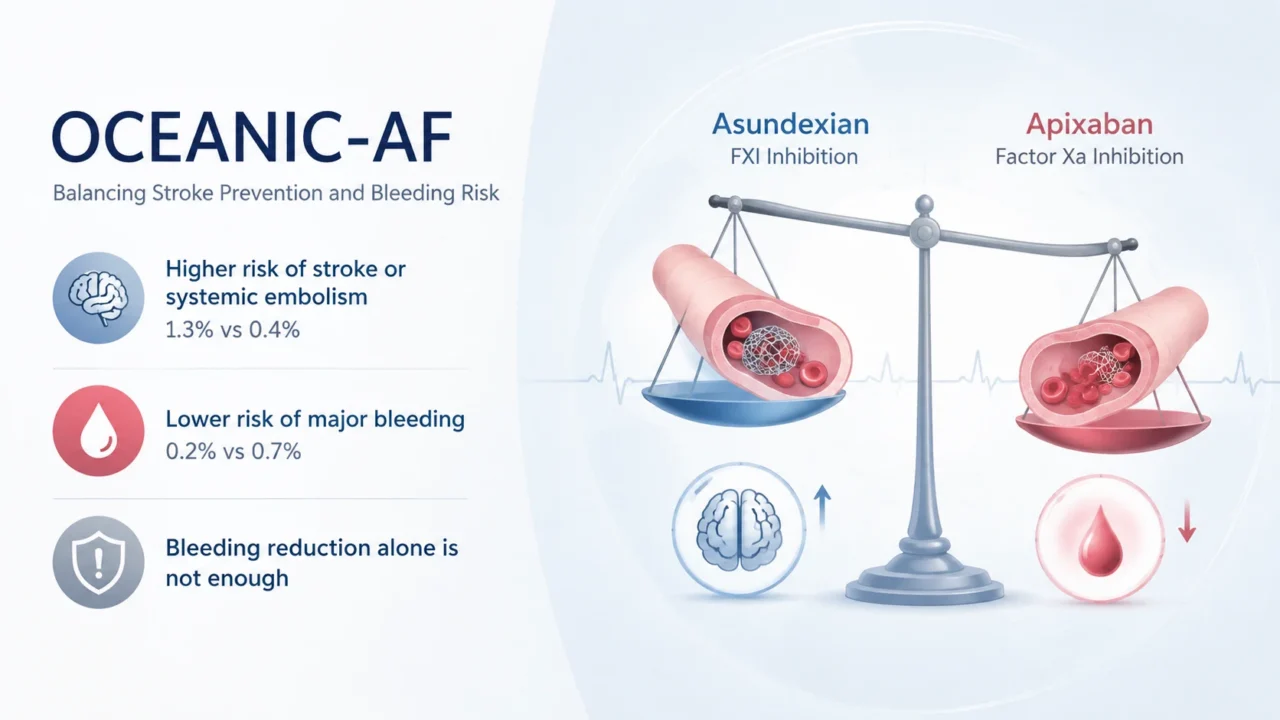
OCEANIC-AF compared asundexian 50 mg once daily with apixaban in 14,810 patients with atrial fibrillation at increased risk of stroke.
The trial was stopped early because asundexian was associated with a higher risk of stroke or systemic embolism.
The primary efficacy outcome occurred in approximately 1.3% of patients receiving asundexian compared with 0.4% receiving apixaban.
Bleeding, however, moved in the opposite direction. Major bleeding occurred in approximately 0.2% of patients receiving asundexian compared with 0.7% with apixaban.
OCEANIC-AF highlighted a critical challenge for the FXI field: a favorable bleeding profile alone is not sufficient to establish an effective anticoagulant.
Despite substantially reducing bleeding, asundexian provided less protection against stroke and systemic embolism than apixaban in atrial fibrillation.
These findings underscore the importance of matching the intensity and mechanism of FXI inhibition to the biological drivers of thrombosis in each clinical setting.
Abelacimab and Selective FXI Inhibition
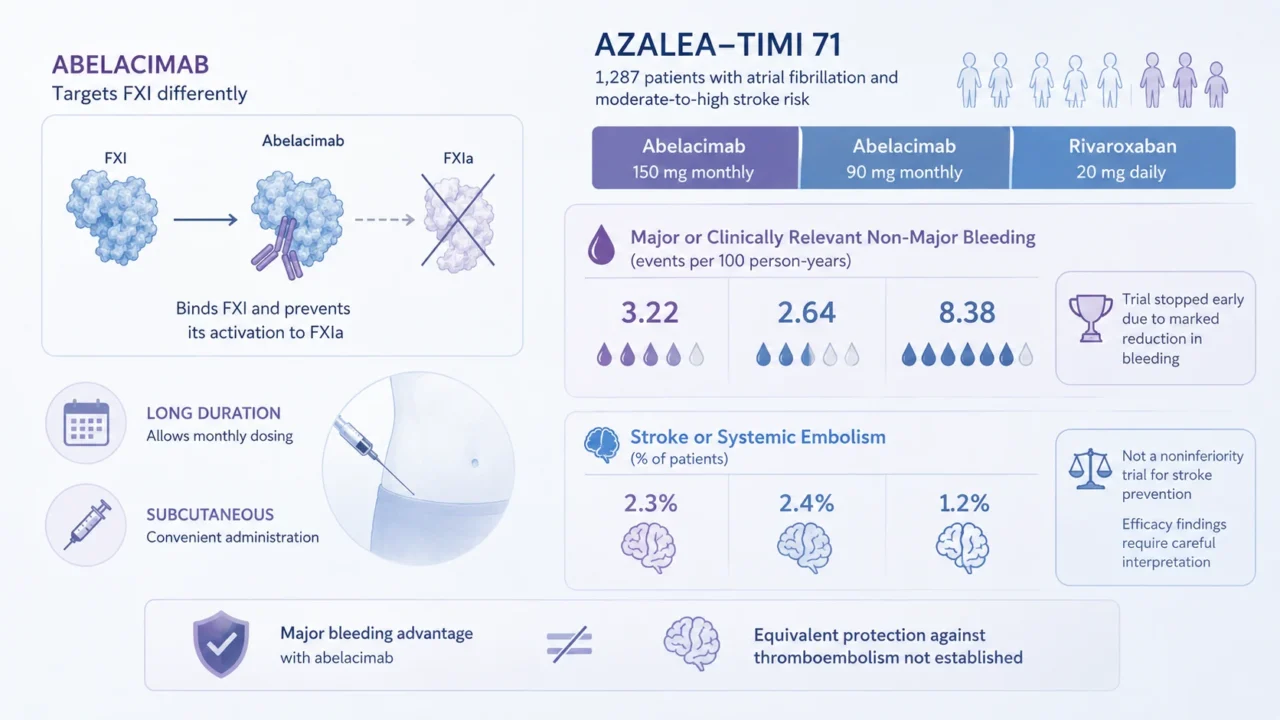
Abelacimab targets FXI differently from oral FXIa inhibitors. It is a fully human monoclonal antibody that binds FXI and prevents its activation to FXIa.
The drug has a long duration of action and is administered subcutaneously, including monthly dosing in clinical studies.
In AZALEA–TIMI 71, 1,287 patients with atrial fibrillation and moderate-to-high stroke risk were randomized to abelacimab 150 mg monthly, abelacimab 90 mg monthly, or rivaroxaban 20 mg daily.
The reduction in bleeding was substantial. Major or clinically relevant non-major bleeding occurred at approximately 3.22 events per 100 person-years with abelacimab 150 mg, 2.64 with abelacimab 90 mg, and 8.38 with rivaroxaban.
The trial was stopped early because of the marked reduction in bleeding with abelacimab.
However, the efficacy findings require careful interpretation. Stroke or systemic embolism occurred in approximately 2.3% of patients receiving abelacimab 150 mg, 2.4% receiving 90 mg, and 1.2% receiving rivaroxaban.
AZALEA–TIMI 71 was not designed as a noninferiority trial for stroke prevention.
Therefore, it demonstrated a major bleeding advantage but did not establish that abelacimab provides equivalent protection against thromboembolism.
This distinction is particularly important when considering a potential replacement for established anticoagulants.
FXI Inhibition Across Different Thrombotic Settings
Perhaps one of the most interesting lessons from the FXI inhibitor program is that the clinical effect may vary according to the underlying mechanism of thrombosis.
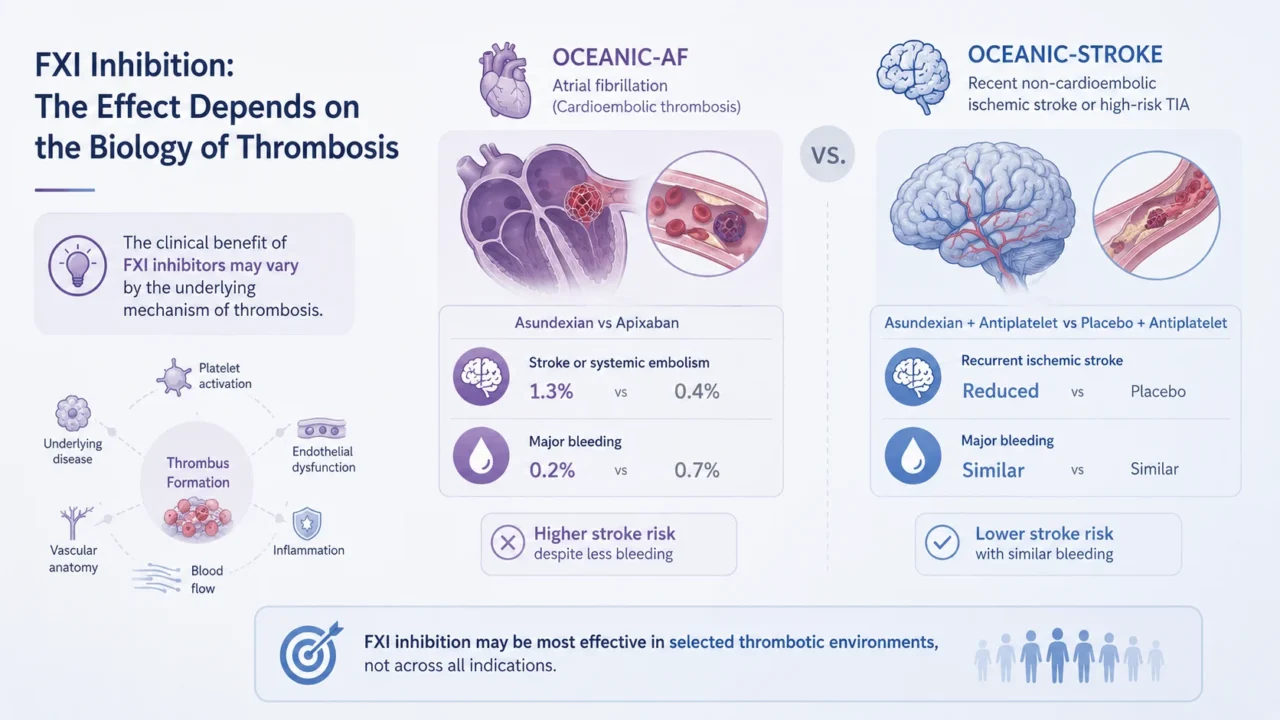
OCEANIC-STROKE evaluated asundexian in patients with recent non-cardioembolic ischemic stroke or high-risk transient ischemic attack.
In this population, asundexian added to antiplatelet therapy reduced recurrent ischemic stroke compared with placebo, while major bleeding was similar between the groups.
These findings contrast with OCEANIC-AF.
The difference may reflect the biology of thrombosis in the two populations. Cardioembolic thrombosis associated with atrial fibrillation is not biologically identical to thrombosis occurring in diseased cerebral arteries. Platelet activation, endothelial dysfunction, inflammation, blood flow, vascular anatomy, and the underlying disease all influence thrombus formation.
This raises an important possibility:
FXI inhibition may be particularly effective in selected thrombotic environments rather than across all indications.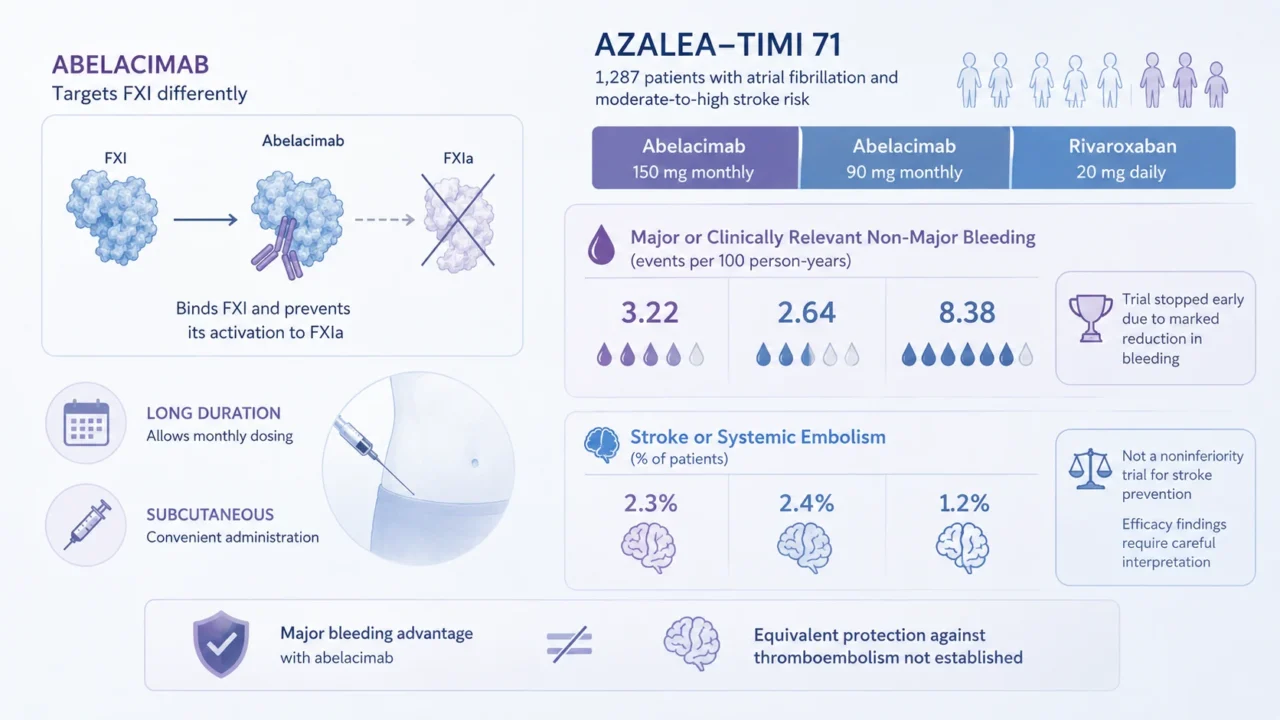
Where Could FXI Inhibitors Fit?
The future role of FXI inhibitors may not be to replace every existing anticoagulant.
Their greatest potential may lie in patients in whom bleeding risk limits the use of conventional anticoagulation.
This could include patients with previous major bleeding, older individuals requiring long-term antithrombotic therapy, selected patients with cancer-associated thrombosis, and patients who are unsuitable for standard oral anticoagulants.
Monthly administration may also offer an alternative for patients in whom adherence to daily oral therapy is challenging.
Abelacimab is being investigated further in high-risk patients with atrial fibrillation who are considered unsuitable for oral anticoagulation, including in the LILAC–TIMI 76 program. The efficacy results of this program will be important in determining whether the substantial bleeding reduction observed with abelacimab can translate into a clinically meaningful overall benefit.
From Universal Anticoagulation to Precision Anticoagulation
The FXI story is evolving.
PACIFIC-AF demonstrated the potential for substantially less bleeding with FXIa inhibition.
OCEANIC-AF showed that reduced bleeding can be accompanied by inadequate protection from thromboembolism in atrial fibrillation.
AZALEA–TIMI 71 demonstrated a striking bleeding reduction with abelacimab, while OCEANIC-STROKE provided evidence that the balance between efficacy and safety may be different in non-cardioembolic cerebrovascular disease.
Taken together, these studies suggest that the future of FXI inhibition may not be about finding a single anticoagulant that replaces all current therapies.
Instead, the field may be moving toward precision anticoagulation: selecting the appropriate target, degree of inhibition, dosing strategy and patient population according to the biology of thrombosis and the individual’s bleeding risk.
The key question is therefore no longer simply whether FXI can be inhibited.
It is whether we can identify where, when, and in whom FXI inhibition can prevent thrombosis while preserving clinically meaningful hemostasis.
That may ultimately determine whether FXI inhibition represents the next generation of anticoagulation – or simply another tool in an increasingly individualized antithrombotic landscape.
FAQ
1. What is Factor XI inhibition?
Factor XI inhibition is an anticoagulation strategy designed to reduce abnormal clot formation while preserving more of the body’s normal ability to stop bleeding.
2. Why is Factor XI an attractive drug target?
People with Factor XI deficiency often have less severe bleeding than those with deficiencies of factors VIII or IX, suggesting that FXI may be more important in disease-related thrombosis than in everyday hemostasis.
3. Can FXI inhibition completely separate clot prevention from bleeding risk?
Not necessarily. Clinical results show that the balance depends on the drug, degree of inhibition, and type of thrombotic disease.
4. What did PACIFIC-AF show?
Asundexian caused substantially less bleeding than apixaban in a phase 2 atrial fibrillation study, but the trial was not large enough to confirm equal stroke protection.
5. Why was OCEANIC-AF important?
OCEANIC-AF showed that asundexian reduced bleeding but provided less protection against stroke or systemic embolism than apixaban in atrial fibrillation.
6. What is abelacimab?
Abelacimab is a long-acting monoclonal antibody that binds Factor XI and prevents its activation to Factor XIa. It can be administered by subcutaneous injection, including monthly dosing.
7. What did AZALEA–TIMI 71 demonstrate?
Abelacimab produced a major reduction in major or clinically relevant non-major bleeding compared with rivaroxaban, although the study did not establish equivalent protection against stroke.
8. Why do FXI inhibitors perform differently in different diseases?
Thrombosis in atrial fibrillation, ischemic stroke, cancer, and venous disease may involve different contributions from coagulation, platelets, inflammation, blood flow, and vessel-wall abnormalities.
9. Who might benefit most from FXI inhibitors?
Potential candidates may include patients at high risk of bleeding, those with previous major bleeding, people unsuitable for standard oral anticoagulants, and selected patients who struggle with daily medication adherence.
10. What is the importance of LILAC–TIMI 76?
LILAC–TIMI 76 is evaluating whether monthly abelacimab can reduce ischemic stroke or systemic embolism in high-risk patients with atrial fibrillation who are unsuitable for oral anticoagulation. Its results may clarify whether the bleeding advantage translates into meaningful overall clinical benefit.
Written by Elen Avetisyan, MD.
Stay updated with Hemostasis Today.
-
Sep 7, 2026, 09:31Felix Scholkmann: Serotonin and the Formation of Microvascular Fibrin
-
Sep 7, 2026, 09:22Aryan Mishra: β-Thalassemia Analyzer: HPLC for Hemoglobinopathy Screening
-
Sep 7, 2026, 09:04Daniel Pereira Monteiro: Haemopaedia Case of the Week – Hemoglobinopathy Diagnosis and Confirmatory Testing
-
Sep 7, 2026, 08:51Judith de Vos: The Immune Composition of Thrombi in Ischemic Stroke
-
Sep 7, 2026, 08:50Maria Cherska: Lipid Metabolism and Immune Remodeling in Metastatic Colorectal Cancer
-
Sep 7, 2026, 08:28Deanna Joseph: Exploring Factor XIII Deficiency Through Summer Research
-
Sep 7, 2026, 08:17Nasim Hosseini: Women’s Blood Donation and the Social Determinants of Health
-
Sep 7, 2026, 08:12David McIntosh: The Global Plasma Supply Debate
-
Sep 7, 2026, 08:03Julio Avella: Advancing IDA Care Through Scientific Education and Collaboration