

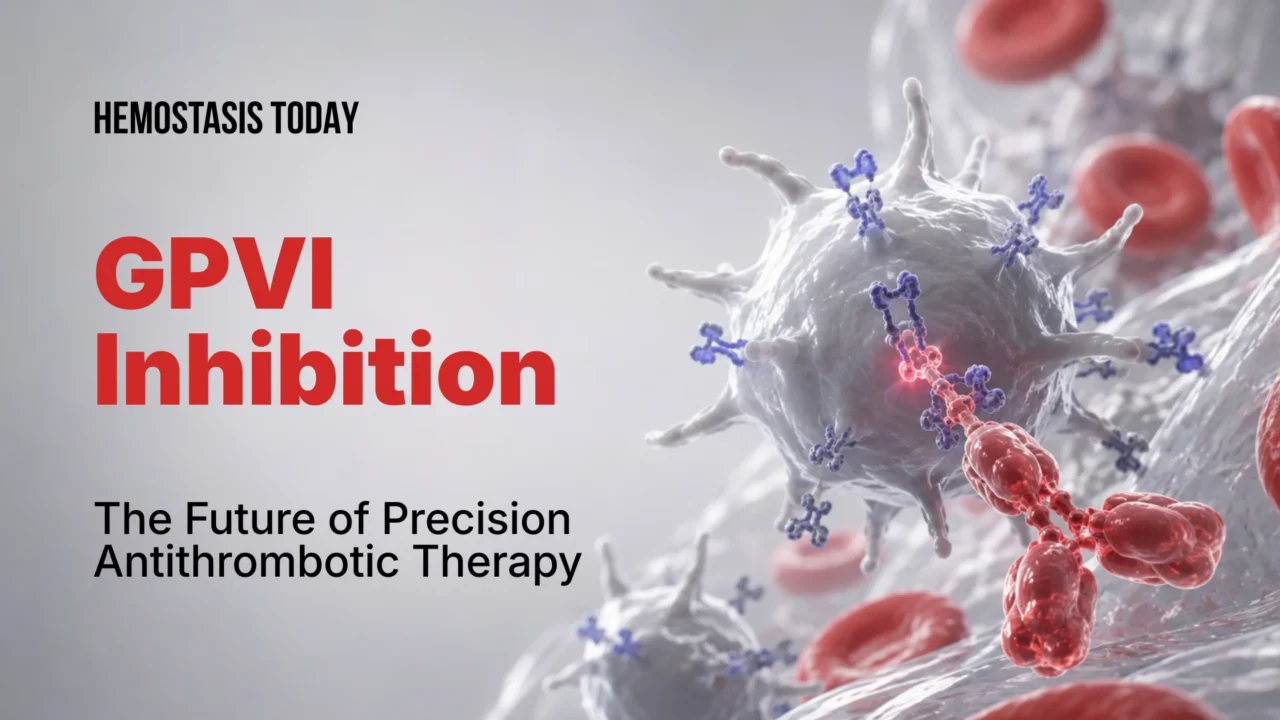
The Next Antithrombotic Frontier: GPVI Inhibitors Beyond Aspirin
For decades, antiplatelet therapy has relied on a relatively small number of established targets, particularly aspirin and P2Y12 inhibitors.
These therapies have transformed the prevention and treatment of arterial thrombosis. However, their antithrombotic benefit is accompanied by an inherent challenge: bleeding.
The search for safer antithrombotic strategies has therefore shifted toward a different goal.
Rather than simply achieving more profound platelet inhibition, researchers are exploring whether pathological platelet activation can be targeted more selectively, while preserving the platelet functions required for physiological hemostasis.
One of the most promising targets is platelet glycoprotein VI (GPVI), a receptor involved in platelet activation at sites of vascular injury.
This has led to the development of a new generation of GPVI-directed agents, including glenzocimab, revacept and EMA601.
Although none has replaced conventional antiplatelet therapy, these agents are providing an important test of whether thrombosis can be inhibited while maintaining adequate physiological hemostasis.
Why GPVI?
GPVI is a platelet-specific receptor that plays a central role in platelet responses to exposed collagen and fibrin at sites of vascular injury.
Activation of GPVI triggers intracellular signaling, platelet secretion, spreading, and thrombus stabilization.
What makes GPVI particularly attractive as a therapeutic target is its potential to distinguish pathological thrombus formation from the mechanisms required for normal hemostasis.
Unlike broader platelet inhibition, GPVI blockade may preferentially interfere with platelet activation within developing arterial thrombi while preserving sufficient platelet function to support primary hemostasis.
The therapeutic concept is therefore straightforward:
Can pathological thrombus formation be interrupted without compromising normal hemostasis?
This question is now moving from experimental biology into clinical development.
Glenzocimab: A Selective Approach to Platelet Inhibition
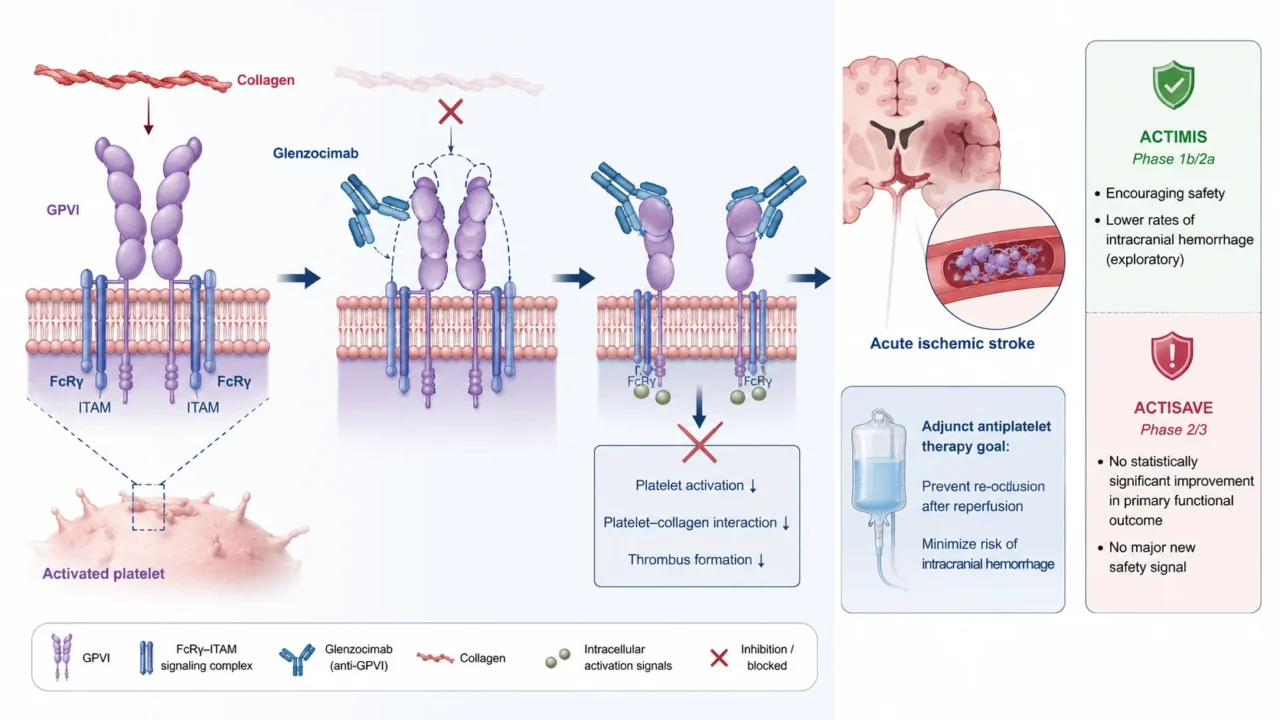
Glenzocimab, also known as ACT017, is a humanized antibody fragment that selectively targets platelet glycoprotein VI (GPVI).
Rather than simply competing with collagen for receptor binding, glenzocimab interferes with GPVI dimerization and receptor clustering, thereby reducing downstream platelet signaling, platelet–collagen interactions and thrombus formation.
This mechanism is particularly relevant in acute ischemic stroke, where platelet activation may contribute to arterial re-occlusion after thrombolysis or mechanical thrombectomy, while additional antithrombotic therapy may increase the risk of intracranial hemorrhage.
In the phase 1b/2a ACTIMIS trial, glenzocimab showed an encouraging safety profile and lower rates of intracranial hemorrhage in exploratory analyses.
However, the subsequent phase 2/3 ACTISAVE trial did not demonstrate a statistically significant improvement in the primary functional outcome, although no major new safety signal was identified.
Therefore, glenzocimab should be regarded as an innovative investigational antiplatelet therapy – not simply another conventional platelet inhibitor – and its potential role in selected thrombotic conditions requires further clinical evaluation.
Revacept: Targeting the Thrombotic Surface
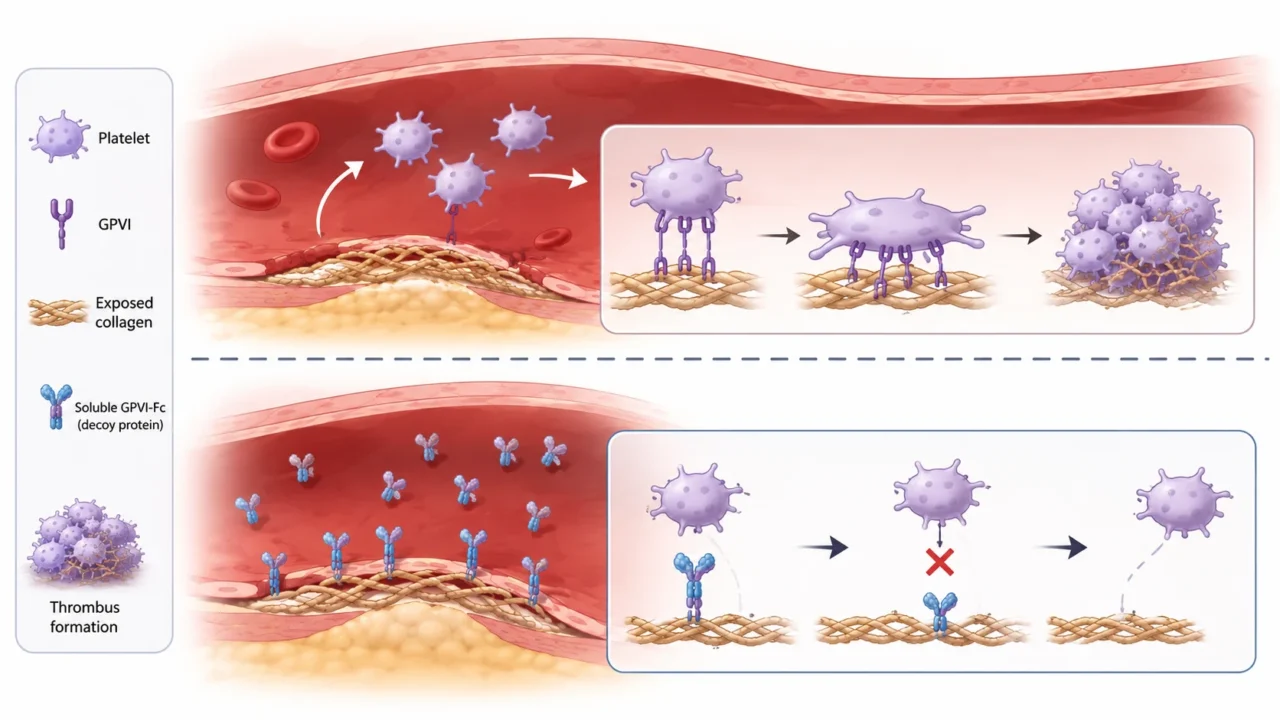
Revacept takes a different approach from conventional antiplatelet drugs. I
t is a soluble GPVI-Fc fusion protein composed of the extracellular domain of GPVI linked to a human Fc fragment. Rather than directly blocking GPVI on circulating platelets, revacept acts as a decoy receptor: it binds exposed collagen at sites of vascular injury or atherosclerotic plaque rupture, preventing platelet GPVI from attaching to the damaged vascular surface.
This produces a potentially lesion-directed antithrombotic effect while avoiding broad suppression of systemic platelet function.
This mechanism is particularly attractive in atherosclerotic disease, in which thrombus formation is initiated at a localized pathological vascular surface.
Revacept has been investigated in coronary and cerebrovascular disease, including the randomized phase II Revacept/CS/02 trial in patients with symptomatic internal carotid artery stenosis.
In that study, the 120-mg group showed a reduction in the combined safety and efficacy endpoint, although the primary exploratory endpoint – the number of new ischemic lesions – was not statistically different between groups. Importantly, revacept did not produce a significant increase in bleeding.ahajournals
Revacept therefore represents an important conceptual shift in antiplatelet pharmacology: instead of inhibiting platelet function throughout the circulation, it attempts to target platelet adhesion specifically at the diseased vascular lesion.
Nevertheless, revacept remains investigational, and larger clinical studies are needed to determine whether lesion-directed GPVI inhibition provides meaningful protection from stroke, myocardial infarction, or other arterial thrombotic events.
EMA601: A Next-Generation GPVI Inhibitor
EMA601 is a novel humanized antibody fragment designed to inhibit platelet glycoprotein VI (GPVI), an important receptor involved in collagen- and fibrin-dependent platelet activation.
Unlike glenzocimab, EMA601 recognizes a distinct, membrane-proximal epitope near the GPVI dimerization region. This gives it exceptionally high affinity for GPVI, with a reported KDK_DKD of approximately 0.195 nM, and enables potent inhibition of GPVI signaling in preclinical models.
Direct comparative experiments found that EMA601 produced more complete inhibition of collagen-induced platelet aggregation than glenzocimab under the tested laboratory conditions.
In experimental models, EMA601 inhibited arterial thrombus formation and reduced cerebral infarct growth after transient middle cerebral artery occlusion, while tail-bleeding times remained unaffected.
These findings support the possibility that EMA601 could suppress pathological arterial thrombosis and thromboinflammation without substantially impairing primary hemostasis. However, this evidence is currently preclinical and cannot yet establish safety or efficacy in humans.
EMA601 is therefore earlier in development than glenzocimab, and important questions remain unanswered: whether its strong receptor blockade will translate into clinical benefit, how predictable and reversible its platelet inhibition will be, and whether it can preserve wound healing and normal hemostasis in patients.
In March 2026, Boehringer Ingelheim and EMFRET Analytics announced a collaboration to advance EMA601’s preclinical development, particularly toward potential stroke applications.
If successful, EMA601 could become an important example of precision antithrombotic therapy – targeting a disease-relevant platelet receptor while aiming to preserve the hemostatic functions required to prevent bleeding.
Why Stroke is the Critical Test
Acute ischemic stroke is an ideal setting to test GPVI inhibitors because clinicians must prevent re-occlusion after thrombectomy without increasing intracranial bleeding.
By selectively blocking collagen- and fibrin-driven platelet activation, GPVI inhibition may control pathological thrombosis while preserving physiological hemostasis.
The greatest potential may lie in carefully selected patients with large-vessel occlusion, platelet-rich thrombi, or high re-occlusion risk.
However, despite encouraging safety findings in ACTIMIS, ACTISAVE did not significantly improve functional outcomes, so GPVI inhibition remains an innovative investigational strategy requiring further study.
A Broader Shift in Antithrombotic Therapy
GPVI inhibition is part of a broader evolution in thrombosis research. Increasingly, drug development is moving beyond broad inhibition of platelet or coagulation pathways toward more selective targeting of the mechanisms that drive pathological thrombosis.
Several approaches illustrate this shift.
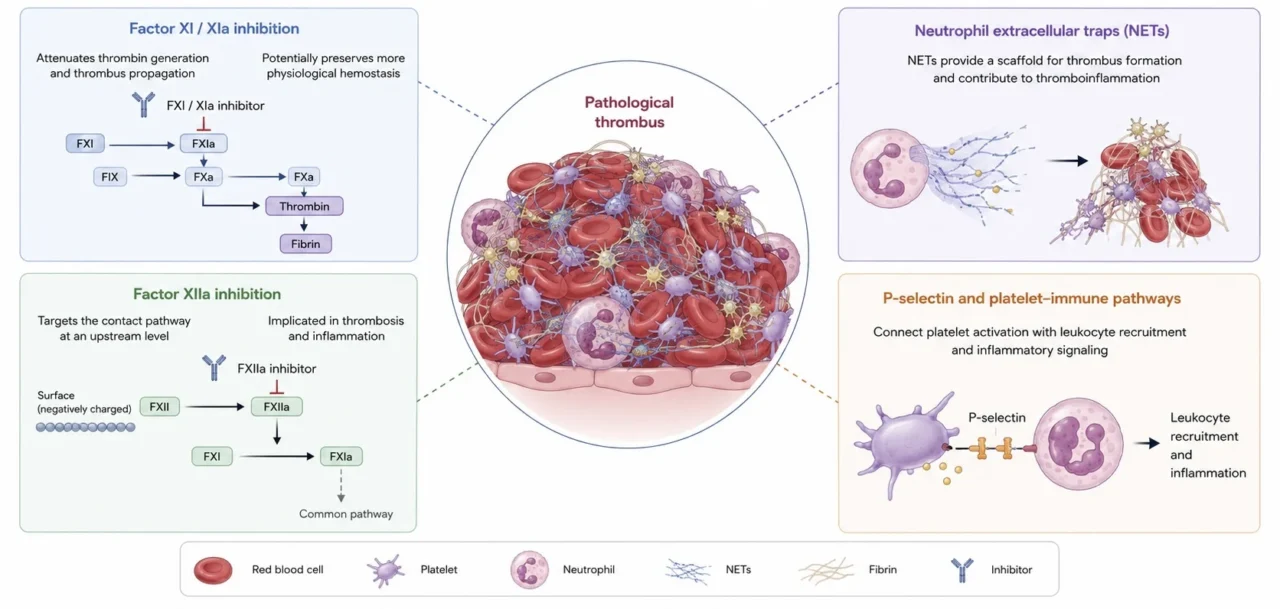
Factor XI/XIa inhibition aims to attenuate thrombin generation and thrombus propagation while potentially preserving more of physiological hemostasis than conventional anticoagulation.
Factor XIIa inhibition takes an even more upstream approach, targeting the contact pathway, which has been implicated in both thrombosis and inflammation.
Thrombus biology extends beyond platelets and coagulation.
Neutrophil extracellular traps (NETs) can provide a scaffold for thrombus formation and contribute to thromboinflammation, while P-selectin and other platelet–immune pathways connect platelet activation with leukocyte recruitment and inflammatory signaling.
These approaches target different components of thrombus formation, but they share a common objective: to inhibit pathological thrombosis while minimizing disruption of normal hemostasis.
From Antiplatelet Therapy to Precision Antithrombosis
The next step may be to select antithrombotic therapy according to the biological mechanisms driving an individual patient’s thrombosis.
A collagen- and GPVI-dependent arterial thrombus may be particularly amenable to GPVI inhibition.
In contrast, thrombosis characterized by substantial thrombin generation may be more responsive to inhibition of factor XIa or other coagulation targets. In thromboinflammatory disease, the relevant biology may involve interactions between platelets, coagulation factors, endothelial cells, and NETs.
This approach would represent a shift from selecting treatment primarily according to the clinical indication toward incorporating thrombus biology into therapeutic decision-making.
The question may therefore evolve from:
Which antithrombotic drug should this patient receive?
to:
Which biological pathways are driving this patient’s thrombosis, and which can be targeted without unnecessarily compromising hemostasis?
The Future of Hemostasis and Thrombosis
Glenzocimab, revacept, and EMA601 illustrate a broader change in the development of antithrombotic therapies. The objective is increasingly not to achieve maximal inhibition, but to identify the right target, at the right stage of thrombus formation, in the right patient.
GPVI-targeted therapy remains investigational, and current evidence does not support replacing established therapies such as aspirin or P2Y12 inhibitors.
Its significance lies instead in the therapeutic concept it represents: selectively targeting mechanisms that contribute to pathological thrombosis while preserving platelet functions required for physiological hemostasis.
If ongoing clinical development confirms this balance, GPVI inhibition could become an important component of a more individualized approach to antithrombotic therapy.
The broader vision is a transition from conventional antithrombotic treatment toward biology-guided thrombosis management – using an understanding of platelet, coagulation, vascular, and inflammatory pathways to suppress pathological clotting without unnecessarily compromising hemostasis.
FAQ
1. What is GPVI?
GPVI is a platelet receptor that activates platelets when they encounter exposed collagen and fibrin at an injured vessel wall.
2. Why is GPVI an attractive drug target?
GPVI may contribute more to pathological arterial thrombosis than to normal hemostasis, creating the possibility of preventing clots with less bleeding.
3. What is the main goal of GPVI inhibition?
The goal is to block dangerous thrombus formation while preserving enough platelet function for normal bleeding control.
4. Which GPVI inhibitors are being studied?
The main investigational agents are glenzocimab, revacept and EMA601.
5. How does glenzocimab work?
Glenzocimab interferes with GPVI dimerization and clustering, reducing platelet signaling and thrombus formation.
6. What did the ACTIMIS trial investigate?
ACTIMIS evaluated glenzocimab as an add-on treatment in acute ischemic stroke. It showed encouraging early safety findings, but it was not large enough to prove definitive clinical benefit.
7. What did ACTISAVE show?
The phase 2/3 ACTISAVE trial did not demonstrate a statistically significant improvement in its primary functional outcome. Glenzocimab therefore remains investigational.
8. How is revacept different?
Revacept acts as a soluble GPVI-Fc decoy receptor, binding exposed collagen at diseased vascular sites rather than broadly blocking GPVI on circulating platelets.
9. What makes EMA601 novel?
EMA601 binds a distinct GPVI epitope and has shown potent antithrombotic effects in preclinical models. However, human safety and efficacy have not yet been established.
10. Could GPVI inhibitors replace aspirin or P2Y12 inhibitors?
Not currently. GPVI inhibitors are investigational and must first demonstrate a clear clinical advantage in preventing thrombosis without increasing bleeding.
Written by Elen Avetisyan, MD.
Stay updated with Hemostasis Today.
-
Sep 6, 2026, 12:5810 Posts Not to Miss This Week
-
Sep 6, 2026, 12:38Parveen Yograj: Atrial Fibrillation More Than an Irregular Heartbeat
-
Sep 6, 2026, 12:38Marsha McLeod: The Safety Question Behind Canada’s High-Frequency Plasma Donations
-
Sep 6, 2026, 12:27Alan Nurden: Inherited GPIV (CD36) Deficiency Linked to Bleeding for the First Time
-
Sep 6, 2026, 12:19Zaid Siddiqui: Hemophilia From a Broader Perspective
-
Sep 6, 2026, 12:13Claire Harrison: MPN Does Not Define Your Dreams
-
Sep 6, 2026, 12:12Ilenia Calcaterra: Beyond Bleeding Control Emicizumab and the Evolution of Joint Health in Hemophilia A
-
Sep 6, 2026, 12:11Agisilaos Zerdelis: My CRTH Journey From Trial Idea to Clinical Research
-
Sep 6, 2026, 12:06Jan Geissler: Shaping the Future of Hematology Research at EHA CRTH