

NETs in Thrombosis: From Mechanism to Therapeutic Target
A patient receives full-dose thrombolysis for an acute stroke, yet the vessel remains occluded.
For years, thrombolysis-resistant clots were often discussed in terms of thrombus age, fibrin architecture and overall clot composition. Retrieved thrombi tell a more specific story: many contain dense meshes of neutrophil-derived DNA that can shield the fibrin core from plasmin.
These structures, known as neutrophil extracellular traps, or NETs, have moved from an immunology curiosity to an increasingly recognized contributor to thrombosis – and a potential therapeutic target.
From Host Defense to Thrombus Scaffold
NETs were first described in 2004 as weblike structures of decondensed chromatin that neutrophils release to trap and kill pathogens.
Formation depends on peptidylarginine deiminase 4 (PAD4), which citrullinates histones and drives chromatin decondensation and nuclear membrane rupture, releasing DNA studded with histones, myeloperoxidase, neutrophil elastase and other granule proteins.
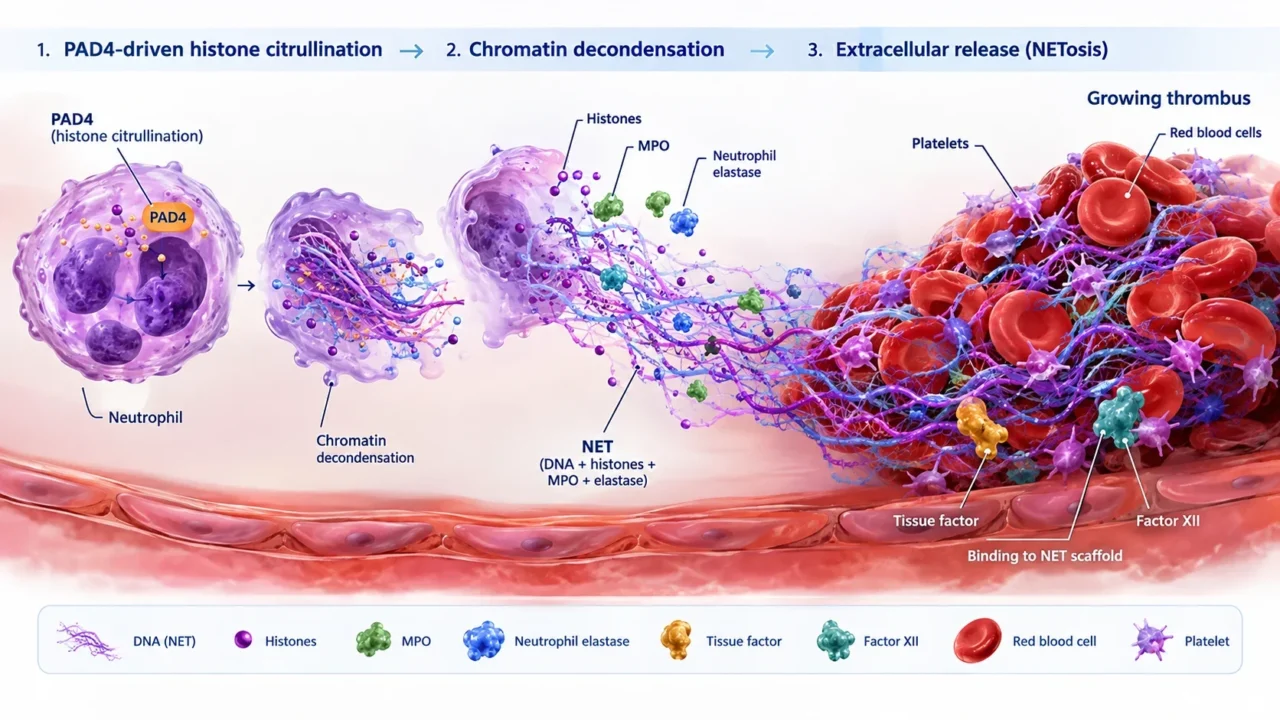
Outside infection, the same machinery is triggered by activated platelets, inflammatory cytokines, hypoxia, and tumor derived factors.
The resulting extracellular chromatin is not a bystander: it provides a physical scaffold that traps red cells and platelets, binds and concentrates tissue factor and factor XII, and cleaves tissue factor pathway inhibitor, tilting local hemostasis toward clot formation.
NET histones directly activate platelets and endothelium, triggering von Willebrand factor release and amplifying local thrombin generation. Once incorporated into a forming thrombus, NET derived DNA and histones make the clot mechanically denser and more resistant to plasmin, which helps explain why some thrombi resist thrombolysis or endovascular retrieval.
This dual role accelerating clot formation and impairing its dissolution is what separates NET driven thrombosis from classical coagulation-factor-driven clotting, and it is why the concept of ՛immunothrombosis՛ has gained traction across vascular medicine.
Where This Shows Up Clinically
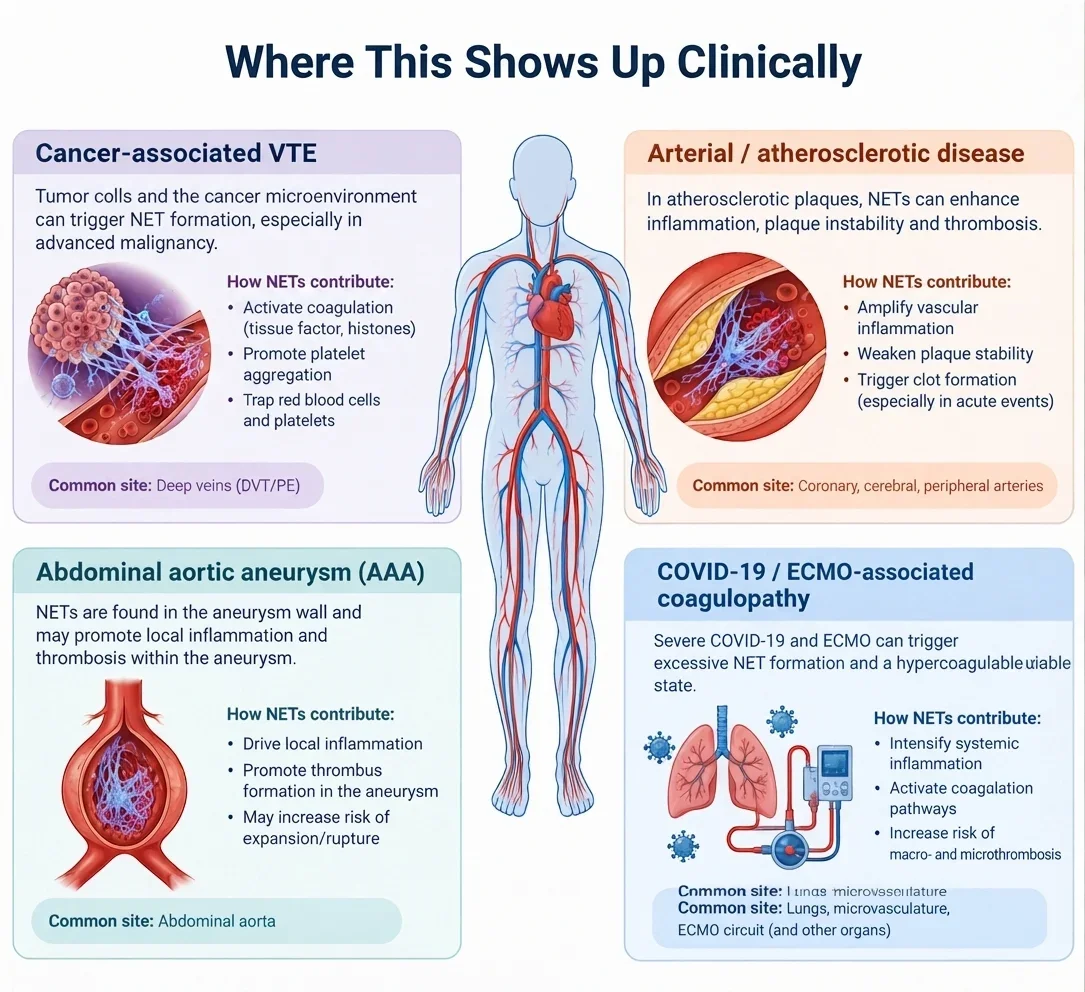
The clinical footprint of NETs spans venous and arterial disease. In cancer associated thrombosis, prospective cohort data from the Vienna Cancer and Thrombosis Study found that circulating citrullinated histone H3 (H3Cit), a relatively specific marker of NET formation, independently predicted venous thromboembolism (VTE) over two years of follow-up.
NETs have also been implicated in the thrombosis seen with myeloproliferative neoplasms and other hematologic malignancies, in atherosclerotic plaque instability and myocardial infarction, in abdominal aortic aneurysm progression, and in the coagulopathy of severe COVID 19 and extracorporeal membrane oxygenation, where circulating NETs correlate with thrombotic and hemorrhagic complications.
Biomarkers: Real Signal, Limited Precision
The clinical enthusiasm for NET biology has outpaced the diagnostic tools available to measure it. In a two cohort study of patients with suspected VTE, H3Cit DNA and neutrophil elastase were both significantly elevated in confirmed cases, but adding either marker to a D dimer based risk model did not improve diagnostic accuracy.
Part of the difficulty is specificity: cell free DNA and nucleosomes rise with general tissue damage and apoptosis, not only NETosis, and even H3Cit assays vary across laboratories. At present, NET markers are better supported as prognostic tools in defined populations, such as cancer patients being risk stratified for VTE, than as stand-alone diagnostic tests for acute thrombosis.
Targeting NETs: From DNase to PAD4 Inhibition
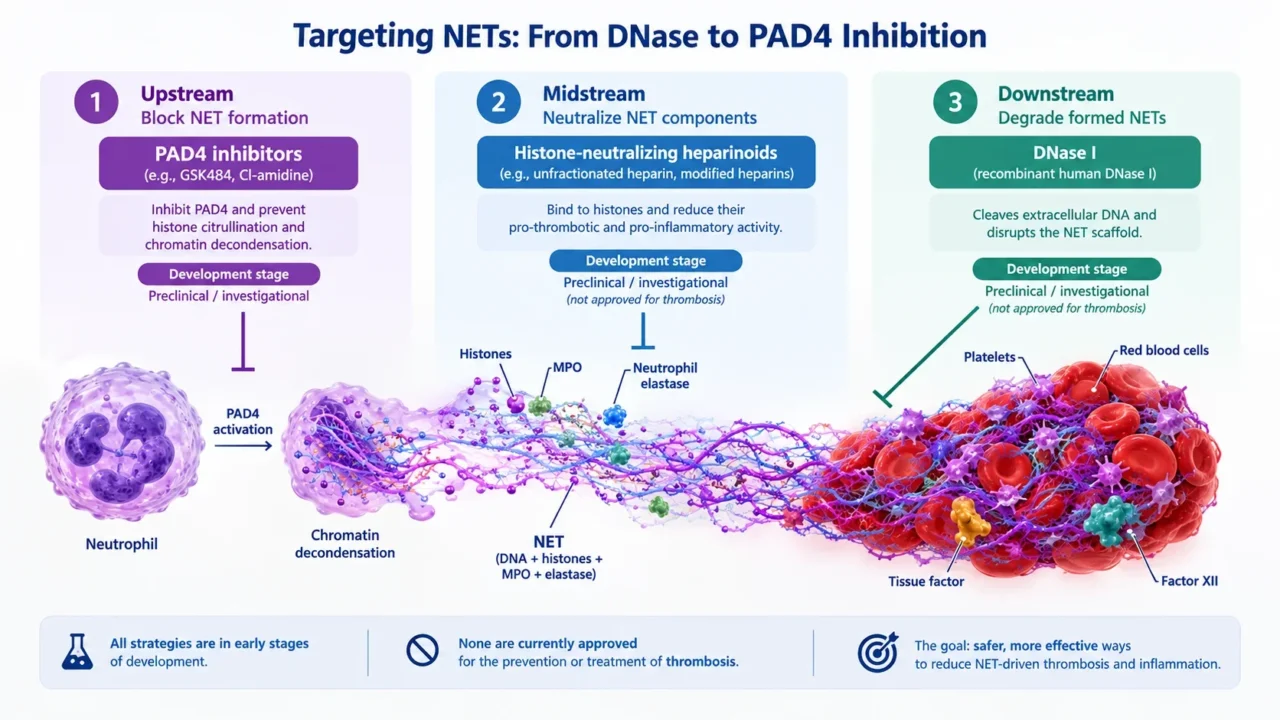
Two therapeutic strategies dominate current research: degrading NETs once formed, and blocking their formation upstream.
Recombinant DNase I (dornase alfa) dissolves the DNA backbone of NETs and looked promising in early COVID 19 case series.
However, subsequent randomized trials in COVID 19 pneumonia and ARDS were largely disappointing: aerosolized dornase alfa failed to improve oxygenation, ARDS severity, or mortality compared with standard care, and one trial found the nebulized route did not reliably raise plasma DNase activity or reduce circulating NET markers.
These results are a useful caution: NET biology can be compelling at the bench without translating into clinical benefit, particularly when drug delivery cannot achieve adequate systemic exposure.
Upstream, PAD4 inhibition prevents NET formation at its source. In mice, PAD4 deficiency or pharmacologic inhibition reduces venous thrombus size without abolishing normal hemostasis.
Orally available PAD4 selective inhibitors have shown NET suppression and disease benefit in preclinical models of arthritis and thrombosis, but none has yet completed clinical trials specifically for thrombosis prevention or treatment.
A parallel, more incremental approach targets NET components rather than the enzyme: non anticoagulant heparin fragments and other heparinoids bind and neutralize extracellular histones the most cytotoxic NET component without the bleeding liability of full dose anticoagulant heparin, and have improved survival in preclinical sepsis and thrombosis models.
Notably, standard unfractionated and low molecular weight heparins already bind histones as a secondary, non anticoagulant effect, and extracellular histones can in turn blunt heparin’s anticoagulant activity an interaction that may partly explain heparin resistance in NET rich prothrombotic states.
Take Home Message
NETs are increasingly recognized as important contributors to thrombosis, helping explain aspects of thrombus formation, fibrinolysis resistance, cancer-associated VTE risk and the coagulopathy of severe inflammatory states.
Circulating NET markers such as H3Cit show prognostic value in selected populations but are not yet established for routine diagnosis or for guiding individual anticoagulation decisions.
Therapeutically, DNase-based strategies have not yet demonstrated consistent clinical benefit despite strong preclinical rationale, while PAD4 inhibitors and histone-neutralizing heparinoids remain investigational.
For now, NETs are best viewed as a promising therapeutic target rather than an established clinical intervention, with ongoing research needed to determine whether targeting NETs can improve outcomes in patients with thrombotic disease.
Frequently Asked Questions
1. What exactly is a neutrophil extracellular trap?
It’s a web of decondensed DNA studded with histones and antimicrobial proteins that neutrophils release, normally to trap pathogens. The same structure can become a scaffold for platelets, red cells, and clotting factors when triggered outside infection.
2. How does NET formation actually promote clotting?
NET associated histones activate platelets and endothelium, the DNA histone scaffold concentrates procoagulant factors like tissue factor and factor XII, and NET components can inactivate natural anticoagulant pathways several mechanisms acting together rather than one dominant trigger.
3. Can measuring NETs in blood help diagnose a blood clot today?
Not reliably as a stand alone test. Studies comparing NET markers like H3Cit DNA to D dimer in suspected VTE found they didn’t improve diagnostic accuracy over D dimer alone, so they aren’t part of routine diagnostic algorithms.
4. Is there a clinical situation where NET markers are already useful?
Yes, prognostically. In cancer patients, elevated H3Cit has been shown to predict future VTE risk over time, which could eventually support risk based decisions about prophylactic anticoagulation, though this isn’t yet standard practice.
5. Why did DNase-based treatment (dornase alfa) not work better in COVID 19?
Despite strong preclinical rationale, randomized trials found aerosolized dornase alfa didn’t improve oxygenation or outcomes in COVID 19 ARDS, possibly because inhaled delivery didn’t achieve enough systemic drug exposure to meaningfully reduce circulating NET burden.
6. Are PAD4 inhibitors available for patients now?
No. PAD4 inhibitors have reduced thrombosis in animal models and are in earlier stage development for inflammatory and thrombotic conditions, but none has completed clinical trials establishing safety and efficacy specifically for thrombosis in humans.
7. Does regular heparin already work against NETs?
Partially, and incidentally. Heparin can bind and neutralize extracellular histones, one of the most damaging NET components, independent of its anticoagulant activity but this isn’t why heparin is prescribed, and full dose heparin’s anticoagulant effect can itself be blunted by high histone levels.
8. Do NETs matter outside of venous clots, like in heart attacks or strokes?
Yes. NETs have been found within retrieved arterial thrombi, including after mechanical thrombectomy for stroke, where they’re associated with resistance to thrombolysis, and they’ve been implicated in atherosclerotic plaque instability and myocardial infarction.
9. Is targeting NETs likely to increase bleeding risk?
It’s a key concern, and part of why non anticoagulant heparinoids are of interest they aim to neutralize histones without the bleeding liability of full anticoagulation. PAD4 inhibition in animal models has reduced thrombosis without eliminating normal hemostasis, but this hasn’t been confirmed in humans.
10. What would need to happen for anti-NET therapy to reach clinical practice?
Better NET specific biomarkers to select the right patients, a PAD4 inhibitor or comparable agent that completes controlled human trials for a thrombotic indication, and clearer evidence that reducing NETs improves outcomes rather than just biomarker levels none of which currently exists.
Written by Mariam Karapetyan.
Stay updated with Hemostasis Today.
-
Oct 7, 2026, 15:28Amir Samimi: Prognostic Value of Platelet Count in Resected HNSCC
-
Oct 7, 2026, 15:21Eloïse Laouenan: Bridging Immunity and Thrombosis in MVTE
-
Oct 7, 2026, 15:10Uthra Sundaram: Honouring Donors During International Plasma Awareness Week
-
Oct 7, 2026, 15:04Daniel Victor Ortigoza: Should Frail Older Patients With AF Switch From VKA to DOACs?
-
Oct 7, 2026, 14:53Susan Noone: Donor Turned Recipient Shares Lifesaving Transfusion Story
-
Oct 7, 2026, 14:49Aimee Burtenshaw: The Impact of the Infected Blood Inquiry on Hospital Transfusion Laboratories
-
Oct 7, 2026, 14:41Vikash Jaiswal: Does Timing Matter for Calcium in Pre-Eclampsia Prevention?
-
Oct 7, 2026, 14:34Pre-Registration Ends for Our Webinar on Pregnancy and Thrombotic Risk – World Thrombosis Day
-
Oct 7, 2026, 14:19Maha Othman: Celebrating the Opening of The Current at St. Lawrence College