


OCEANIC-STROKE Revives Optimism for Factor XI Inhibitors
Davide Capodanno, Professor of Cardiology at University of Catania, editor-in-Chief of EuroIntervention, shared on X:
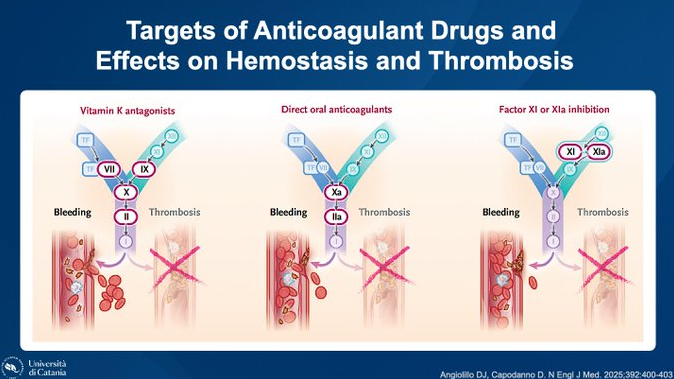
”Finally, some good news for Factor XI inhibitors, a class of anticoagulants that was starting to look genuinely unfortunate—full of promising hypotheses and remarkably short on outcomes. OCEANIC-STROKE is positive, according to a press release issued today, and notably soon after the announcement that LIBREXIA-ACS had been stopped for futility. Just as the last nail seemed ready to seal the coffin, the lid reopened and out came asundexian—the same agent for which, after OCEANIC-AF, we had essentially already recited the de profundis.
According to the press release, OCEANIC-STROKE met its primary efficacy and safety endpoints: asundexian 50 mg once daily significantly reduced the risk of ischemic stroke compared with placebo, on top of antiplatelet therapy, in patients after a non-cardioembolic ischemic stroke or high-risk TIA. There was no increase in ISTH major bleeding with asundexian.
So the same drug that failed against apixaban in cardioembolic stroke succeeds against placebo in non-cardioembolic stroke (on a background of antiplatelet therapy), highlighting the fundamentally different nature of thrombi in these two conditions.
It is also notable—judging from this sequence of press releases—that factor XI inhibition currently appears more effective in ischemic stroke (asundexian) than in acute coronary syndromes (milvexian), a scenario almost inverted compared with expectations only a few weeks ago. And several shots remain in the chamber (LIBREXIA-STROKE with milvexian; LILAC, ASTER and MAGNOLIA with the monoclonal antibody abelacimab).
OCEANIC-STROKE press release here.
LIBREXIA-ACS press release here.
Find more posts on Hemostasis Today.
-
Oct 9, 2026, 16:23David Boone: Distinguishing Stroke Prevention from Rhythm Control in Atrial Fibrillation
-
Oct 9, 2026, 15:27Mohamed Hegazi: Geostatistical Modelling Maps Global β-Thalassaemia Carrier Prevalence
-
Oct 9, 2026, 15:15Maha Othman: Uncovering the Consensus on TXA in TBI – Call for Collaboration on a Landmark Umbrella Review
-
Oct 9, 2026, 15:07Daniel D. Han: How Inhalation Product Exposure Impairs Cardiac and Platelet Recovery After MI
-
Oct 9, 2026, 14:58William Toole: How Ultrasound-Guided PRP Therapy Relieves Joint and Tendon Pain
-
Oct 9, 2026, 14:50Shayan Mohammadmoradi: In Corpus Christi for the 20th Midwest Platelet Conference
-
Oct 9, 2026, 14:37Tariq Tramboo: High Platelet Concentrate for Osteoarthritis Knee – Recent Meta-Analyses
-
Oct 9, 2026, 14:26Yousma Khan: Hematology Series – Beyond RBCs, WBCs and Platelets
-
Oct 9, 2026, 14:13Jesus Ardila Novoa: Why the WHO’s Historic Essential Medicines List Decision Is Just the Beginning