


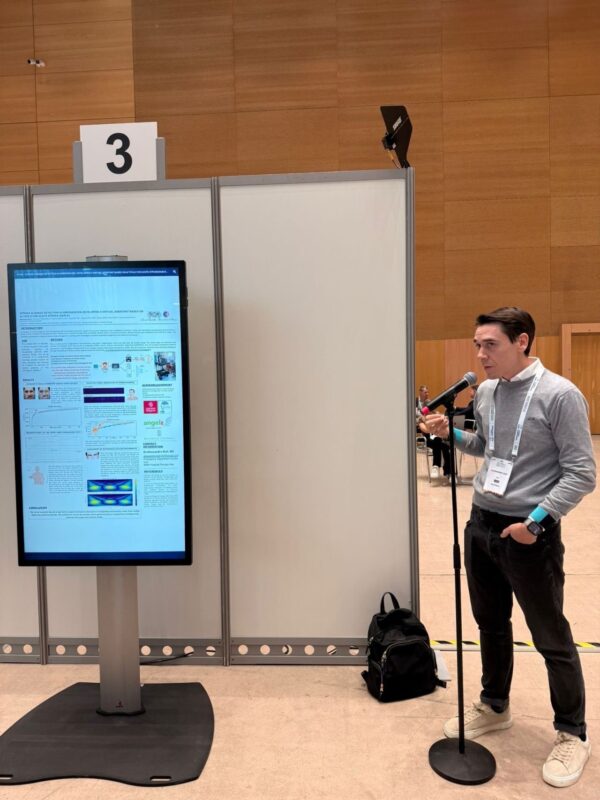
Alessandro Bufi Presented SAIDE Project at World Stroke Congress 2025
Alessandro Bufi, Emergency Medicine Doctor- University of Perugia, shared on LinkedIn:
”WSC 2025 – Barcelona
Attending the World Stroke Congress 2025 is always an inspiring experience and a valuable opportunity to exchange ideas with colleagues and researchers from around the world.
This year, we had the pleasure of presenting the first-phase results of the SAIDE project, focused on developing and validating artificial intelligence–based methods to support emergency physicians in the early identification of stroke patients.
This represents a significant unmet need in everyday clinical practice: improving the speed and accuracy of stroke recognition can make a real difference in patient outcomes.
Our preliminary findings confirm the potential of AI as a decision support tool that complements clinical expertise and opens new perspectives for efficiency and precision in emergency care.
Each global congress is a source of inspiration, collaboration, and renewed motivation.
The work continues, with the same passion and vision: innovating to improve patient care.”
Stay updated with Hemostasis Today.
-
Oct 3, 2026, 08:31Víctor S. Rangel: Advanced Endovascular Management in Severe Postpartum CVST
-
Oct 3, 2026, 08:05Are Circadian Rhythms Fueling Thrombotic Risk in Space? – RPTH Journal
-
Oct 3, 2026, 07:43Janez Urevc: Modeling Compression Ultrasound for Internal Jugular Vein Thrombosis in Astronauts
-
Oct 3, 2026, 07:20Adam Wufsus: Novo Nordisk Seeks Medical Liaison for Sickle Cell Disease
-
Oct 3, 2026, 07:16Álvaro Dubois-Silva: Rethinking the Obesity Paradox in Cancer-Associated VTE
-
Oct 3, 2026, 07:09Lori Bryngelson Taylor: Expert Consensus Guidelines Flag Hypophosphatemia Risks With Injectafer
-
Oct 3, 2026, 06:40Aayush Bist: Study Reveals Distinct Social Patterns in Anemia, Excess Adiposity, and High Blood Pressure Among Women in Nepal
-
Oct 3, 2026, 06:39Ahmed Bennis: Understanding the Diagnosis, Risk, and Management of ARN
-
Oct 3, 2026, 06:11Ana Cespedes: Maternal Anemia in Pregnancy Linked to Differences in Infant Brain Structure