


André da Silva: Stroke Is Not an Explosion – It’s Often a Silent Loss of Blood Flow
André da Silva, Scrub Nurse at American Hospital Dubai, shared on LinkedIn:
”Most people imagine a stroke as a sudden ‘explosion’ in the brain.
In reality, the most common type is the opposite – a silent loss of blood flow.
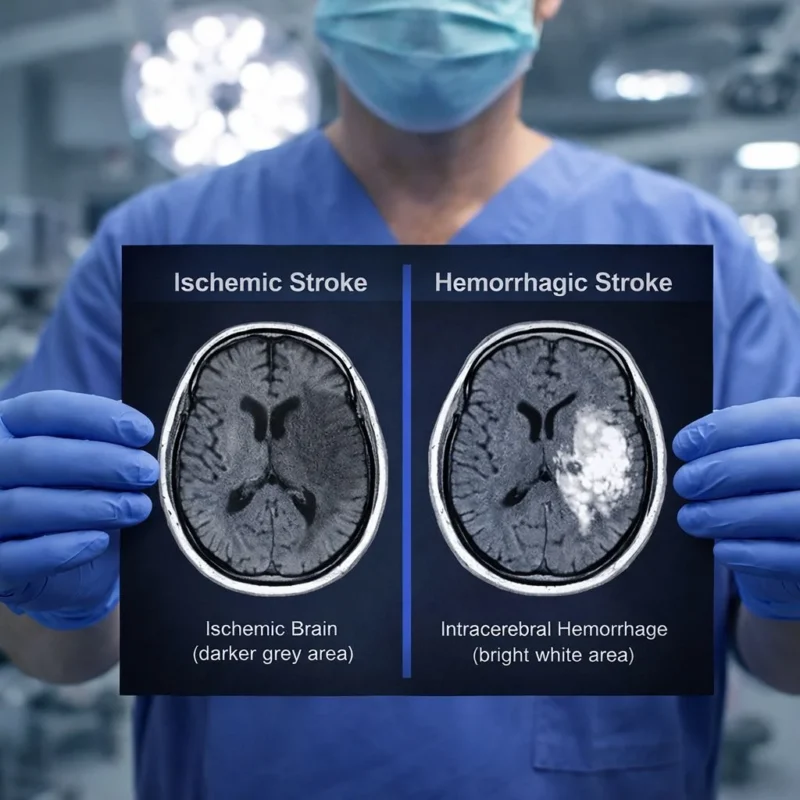
Stroke is broadly divided into two entities, each requiring fundamentally different management:
- Ischemic stroke (~85–87%)
An arterial occlusion interrupts cerebral perfusion, leading to rapid neuronal death — estimated at nearly 2 million neurons per minute.
Management: urgent reperfusion (e.g., thrombolysis with tPA or mechanical thrombectomy).
- Hemorrhagic stroke (~13–15%)
Vessel rupture causes intracranial bleeding, increasing pressure and damaging surrounding tissue.
Management: hemostasis, blood pressure control, and neurosurgical intervention when indicated.
Clinically, both can present identically:
- facial asymmetry
- limb weakness
- speech disturbance
- sudden neurological deficit
Neuroimaging: typically non-contrast CT – is the critical first step to differentiate them.
Treating blindly is not an option; the wrong intervention can be catastrophic.
This is why in stroke care, time is brain – and precision is just as vital as speed.
The intersection of neurology and neurosurgery remains one of the most time-sensitive and decision-critical areas in medicine – where seconds shape outcomes.
What concept in medicine changed the way you think about patient care?”
Stay updated with Hemostasis Today.
-
Oct 3, 2026, 00:25Antiplatelets May Be a Strong Option After Ischemic Stroke in Active Cancer – International Journal of Stroke
-
Oct 3, 2026, 00:24Mavis Agnes Kisakye: Honored to Join UNHLS Leadership in Advancing HIV Diagnostics in Uganda
-
Oct 3, 2026, 00:23Phil Spinella: Blood is for Bleeding, Salt Water is for Cooking pasta, Keeping it simple
-
Oct 3, 2026, 00:21Pablo Corral: The ANGPTL Axis in Dyslipidemia and Cardiovascular Risk
-
Oct 3, 2026, 00:20Raghavendra Rao: The Link Between Chronic Venous Disease and VTE May Be Less Robust Than Previously Thought
-
Oct 3, 2026, 00:19Nicolas Hubacz: Immune Cells in the Embryo
-
Oct 3, 2026, 00:18Kalpana Gupta Shekhawat: Reading Beyond the Numbers – A Deeper Look at Routine Blood Reports
-
Oct 3, 2026, 00:17Paulus Kirchhof: Aortic stiffness – A Consequence of High Blood Pressure, or a Driver, or Both?
-
Oct 3, 2026, 00:17Konstantin Yenkoyan: When Science Steps Outside the Laboratory – ERNA 2026