


Asima Ahmad: Heavy Menstrual Bleeding – A Symptom That Demands a Diagnosis
Asima Ahmad, Reproductive Endocrinology and Infertility Specialist, Co-founder and Chief Medical Officer, shared a post on LinkedIn:
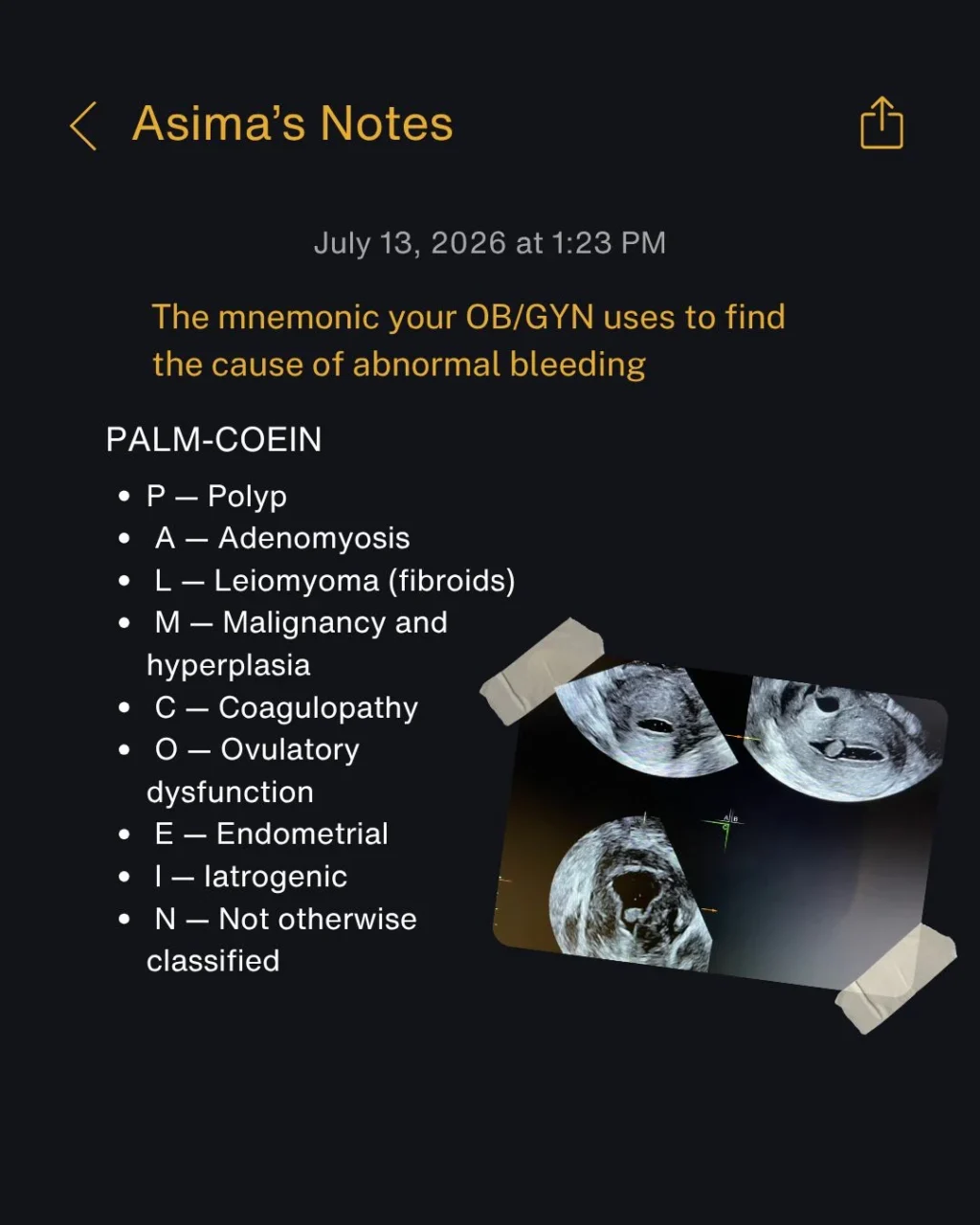
“Many women experience heavy or irregular bleeding at some point. But extremely heavy or irregular bleeding often has a cause, can disrupt your life, and deserves an evaluation, not a dismissal.
We use a framework called Palm-Coein to organize the causes. Palm covers structural causes we can often see on imaging. Coein covers functional causes.
P – Polyp: growths in the uterine lining. Risk factors include irregular cycles (PCOS), unopposed estrogen, meds (eg. tamoxifen), perimenopause, obesity, and family history. Often treatable with a minimally invasive hysteroscopy.
A – Adenomyosis: when tissue similar to the uterine lining grows into the uterine muscle. Linked to prior uterine surgery (eg. C-section) and sometimes endometriosis. Heavy bleeding can be treated with meds like progestins. If you hope to conceive, review all options, as some procedures affect fertility.
L – Leiomyoma (fibroids): a very common structural cause, often benign. Risk factors include race/ethnicity (higher in Black women), family history, age (30s–40s), and weight. Treatment can include meds & surgical removal. If you plan to have children, ask how the approach may affect future delivery.
M – Malignancy/hyperplasia: precancerous or cancerous changes in the lining. Risk factors include obesity, PCOS, age, family history, genetics (eg. Lynch syndrome), and race/ethnicity.
C – Coagulopathy: bleeding or clotting disorders, sometimes found this way. Usually diagnosed with a blood test.
O – Ovulatory dysfunction: irregular ovulation, including PCOS and thyroid disease. Treating the cause can improve bleeding.
E – Endometrial: issues with the lining itself.
I – Iatrogenic: bleeding from meds (eg. blood thinners), devices (eg. copper IUD), or procedures.
N – Not otherwise classified.
Sometimes the workup finds nothing concerning, and heavier periods can be managed with options like birth control pills. Other times it finds a clear cause and targeted treatment.
Either way, you get answers.
If your bleeding is heavy, prolonged, or unpredictable, see your OB/GYN and ask for an evaluation!”
Stay updated with Hemostasis Today.
-
Oct 16, 2026, 18:12Adil Nawaz: Extended Dual Antiplatelet Therapy After Coronary Stenting
-
Oct 16, 2026, 17:50Elad Asher։ STORM-PE Shows Functional Benefits of Thrombectomy
-
Oct 16, 2026, 17:32Shruthi Narayan: STORM-PE and STRIKE-PE Studies Advance Understanding of Recovery After Pulmonary Embolism
-
Oct 16, 2026, 17:22Wolfgang Miesbach։ What a Near-Perfect FISH Score Fails to See
-
Oct 16, 2026, 17:06Troels Wienecke: Connecting Myeloproliferative Disease and Ischemic Stroke
-
Oct 16, 2026, 17:03Only 5 Days Left to Submit Your Research for EAHAD 2027
-
Oct 16, 2026, 16:48Abdul Rahman: Reticulocyte Count and Bone Marrow Activity
-
Oct 16, 2026, 16:44DOAC Adherence in Stroke Patients With Atrial Fibrillation – International Journal of Stroke
-
Oct 16, 2026, 16:22Shannon Farmer: Driving Patient Blood Management Forward in Australia and New Zealand