

Sep 24, 2025, 18:07
Can BHOC Deliver Oxygen More Efficiently Than Traditional RBC Transfusions?
BHOC – Biological Hemoglobin Oxygen Carrier shared a post on LinkedIn:
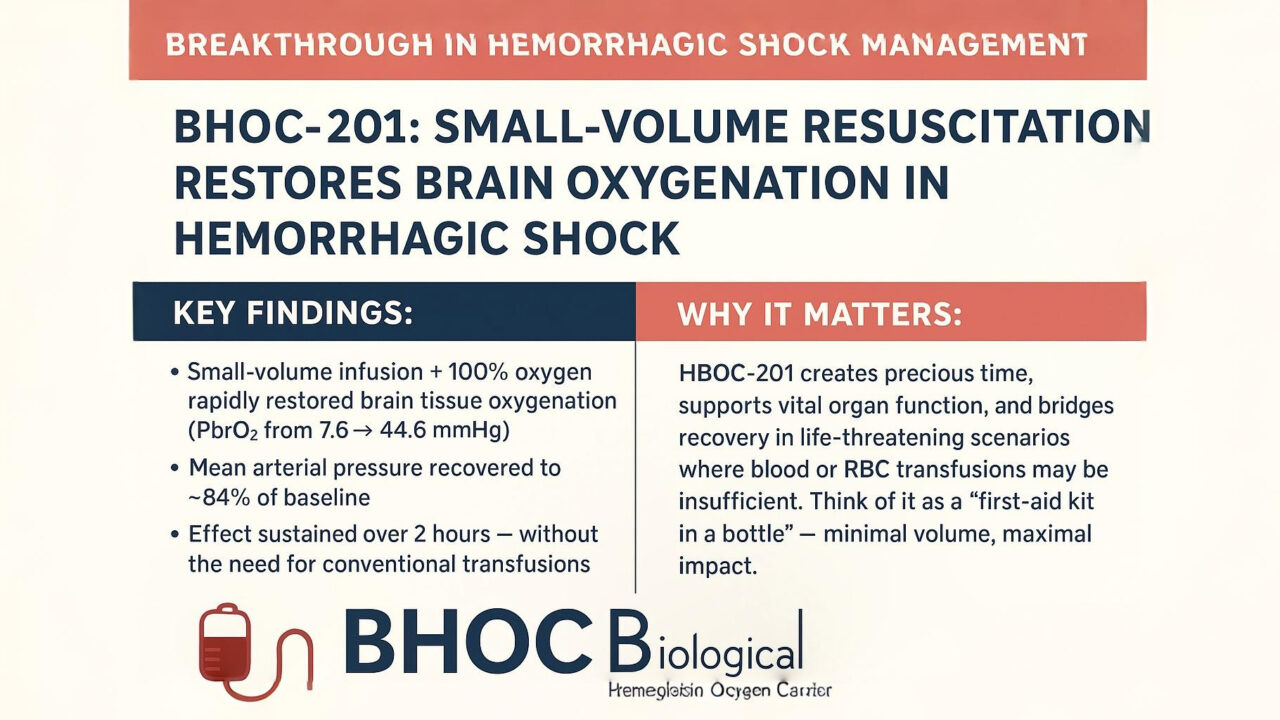
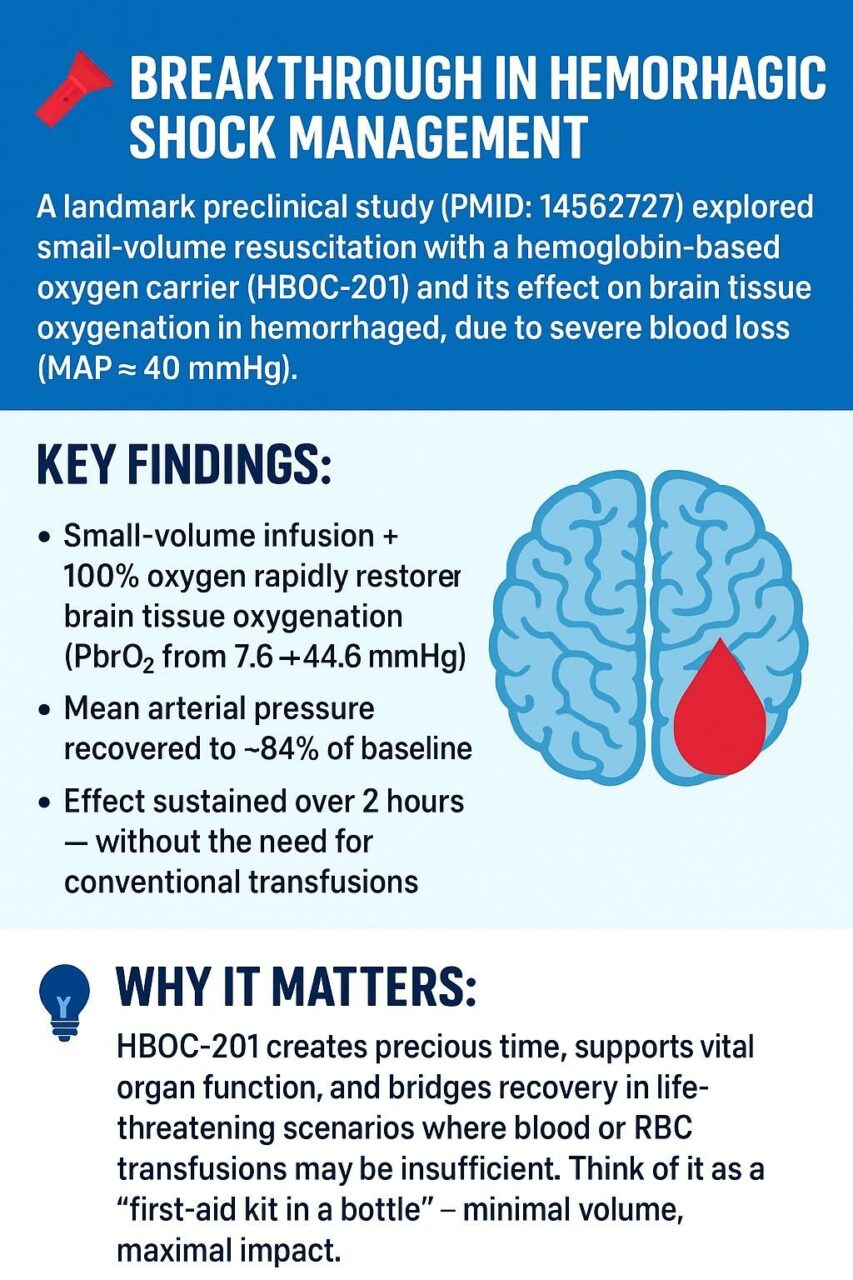
”Breakthrough in Hemorrhagic Shock Management
A landmark preclinical study (PMID: 14562727) explored small-volume resuscitation with a hemoglobin-based oxygen carrier (HBOC-201) and its effect on brain tissue oxygenation in severe blood loss (MAP ≈ 40 mmHg).
Key Findings
- Small-volume infusion + 100% oxygen rapidly restored brain tissue oxygenation (PbrO₂ from 7.6 → 44.6 mmHg).
- Mean arterial pressure recovered to ~84% of baseline.
- Effect sustained over 2 hours, without the need for conventional transfusions.
Why it matters
- HBOC-201 creates precious time, supports vital organ function, and bridges recovery in life-threatening scenarios where blood or RBC transfusions may be insufficient. Think of it as a “first-aid kit in a bottle” — minimal volume, maximal impact.
- This aligns with previous findings showing that Biological Hemoglobin Oxygen Carriers (BHOCs) can deliver oxygen more efficiently than traditional RBC transfusions, making them promising tools in trauma and emergency care.
Stay updated with Hemostasis Today.
-
Oct 17, 2026, 04:07Weihao Li: Global HEPATIC Registry Findings on Post-Transplant Arterial Thrombosis
-
Oct 17, 2026, 03:56Ghaith Abu-Zeinah: ASH Publishes 2026 Guidelines for Myelofibrosis Management in Blood Advances
-
Oct 17, 2026, 03:48Tristan Siokos: Why Vascular Occlusion Is More Than Just Clots – Breakdown of the 8 Pathways
-
Oct 17, 2026, 02:36Archil Jaliashvili: Oxygen Transport in Capillaries
-
Oct 17, 2026, 02:35Carly Newton: Understanding Access to Red Blood Cell Exchange for People Living With SCD
-
Oct 17, 2026, 02:34Raising Awareness of Blood Clots During and After Pregnancy – Thrombosis UK
-
Oct 17, 2026, 02:33Alaa Salamat: Our Research Accepted for Publication at ASH 2026
-
Oct 17, 2026, 02:32Mohammed Al Sharif: Discussing Factor XIII Testing and Its Clinical Significance
-
Oct 17, 2026, 02:31Joanna Popiolek-Kalisz: Talking about Novel Pharmacotherapy for Hypertension at CV Prevention and Intervention