


Jamshid Ullah: Recognizing Blood Disorders Through Laboratory Findings
Jamshid Ullah, Clinical Laboratory Technologist at Institute of Kidney Disease, shared a post on LinkedIn:
“Blood disorders can affect red blood cells, white blood cells, platelets, or the coagulation system, and each category can produce distinct laboratory findings.
Understanding these disorders is essential for medical laboratory technologists because accurate interpretation of CBC parameters, peripheral blood smear morphology, coagulation studies, and specialized tests helps support diagnosis and clinical management.
Key examples include:
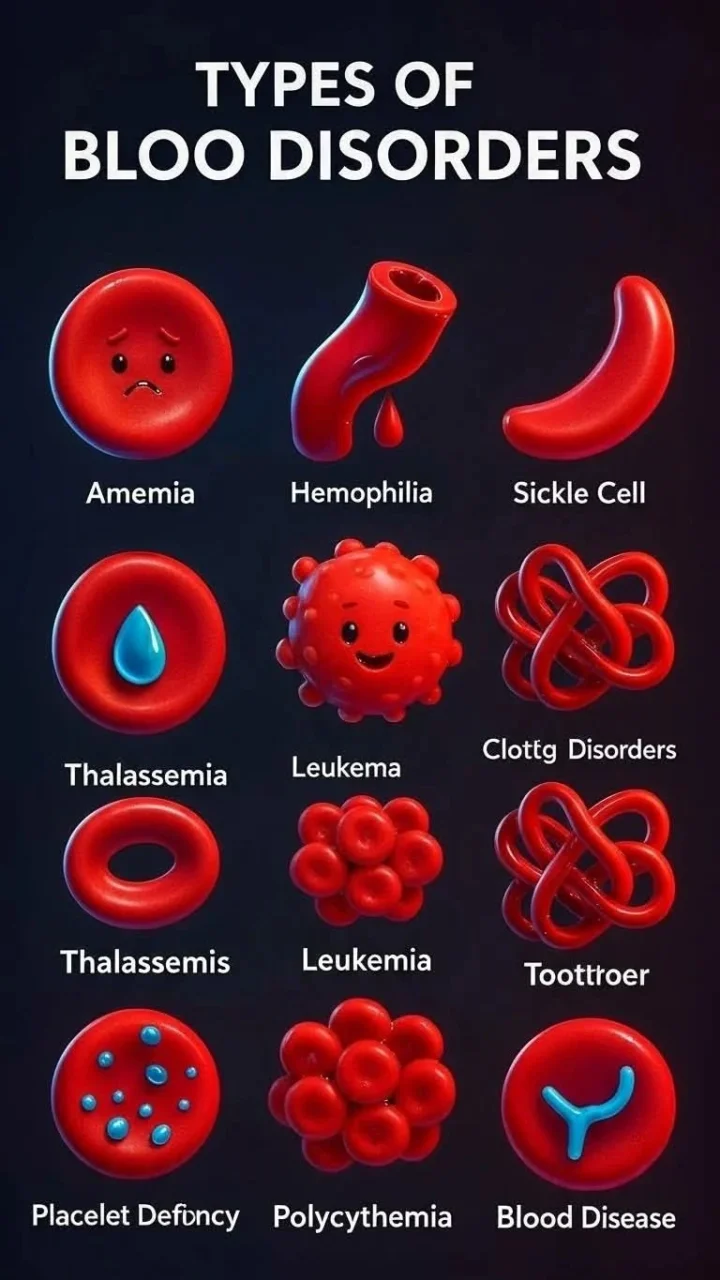
- Anemia: Reduced hemoglobin or red-cell mass, with causes including iron deficiency, vitamin B12/folate deficiency, blood loss, and hemolysis.
- Hemophilia: An inherited coagulation disorder, most commonly involving factor VIII or IX deficiency, typically evaluated with PT, aPTT, and specific factor assays.
- Sickle cell disease: An inherited hemoglobinopathy associated with HbS and characteristic sickle-shaped RBCs.
- Thalassemia: Disorders of globin-chain synthesis that can produce microcytic, hypochromic anemia and characteristic RBC morphology.
- Leukemia: Malignant disorders of hematopoietic cells that may produce abnormal or immature white cells and changes in CBC findings.
- Platelet disorders: May cause abnormal bleeding or thrombosis and require assessment of platelet count and, when indicated, platelet function.
- Polycythemia: Increased red-cell mass, which may be reflected by elevated hemoglobin and hematocrit.
For laboratory professionals, recognizing the pattern is only the first step.
Morphology and automated results should be correlated with the patient’s clinical history and appropriate confirmatory investigations rather than using a single finding to establish a diagnosis.
Learn the morphology.
Understand the mechanism.
Correlate the laboratory findings.”
Stay updated with Hemostasis Today.
-
Sep 21, 2026, 10:18Mana Alshehri: A New Step Toward Hemophilia B Gene Therapy in Adolescents
-
Sep 21, 2026, 09:52Afreenish Tasadaq: Contributing to Awareness about Bleeding Disorders
-
Sep 21, 2026, 08:49Andrea Bridges: When Support Becomes a Commitment to Give Back
-
Sep 21, 2026, 08:21Managing Thrombotic Risk in Pregnancy
-
Sep 21, 2026, 04:06Allison Lewin: How Gender Shapes the Way We Receive Medical Care
-
Sep 21, 2026, 03:49Jessica Lee: Walking Together for a Stronger Bleeding Disorders Community
-
Sep 21, 2026, 03:36Syed Asif Ali Shah: From Pakistan to Australia – A Clinical Haematology Milestone
-
Sep 21, 2026, 03:22Katie Baca-Motes: Estradiol Fluctuations May Help Explain Menstrual Migraine
-
Sep 21, 2026, 03:00Family History Can Reveal Hidden Risk of Aortic Dissection – The Marfan Foundation