


Maxime Dely: Manufacturing a Blood Transfusion Device: A Real Headache
Maxime Dely, Sales and Application Specialist in Therapeutic Apheresis and Cell Therapy, shared on LinkedIn:
”Manufacturing a blood transfusion device: a real headache
When we think about transfusion, it seems simple: collect blood, then transfuse it to the patient. But behind a single blood bag lies a long journey filled with mechanical, thermal, and material constraints.
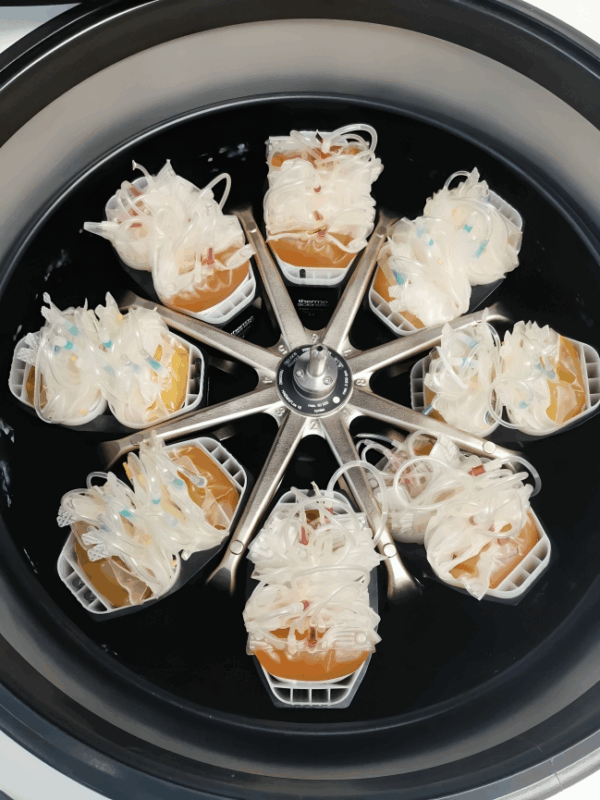
I used to give the following example when I was conducting blood bag training sessions. A yogurt cup is made of plastic. If you drop it, there’s a 90% chance it will burst on the ground. Blood bags are also made of plastic, but in the centrifuge, a bag will weigh as much as an elephant —over three tons—and will be exposed to temperatures colder than those ever recorded in Antarctica, yet it will still withstand it.
And that’s exactly what I want to share here: the invisible challenges a disposable must withstand throughout the process.
𝟭. Physical constraints
A blood bag is exposed to extreme forces. During centrifugation, it must withstand up to 5000 G. It is then placed under pressure to separate blood components. Even the design of the materials and semi-finished parts impacts the final quality of the products.
𝟮. Thermal constraints
Throughout processing, blood bags undergo major temperature variations: from +37 °C down to -80 °C. On top of this comes steam sterilization, required whenever solutions are inside the device. These extremely high temperatures often lead to a shrinkage of the plasticizer, which must still remain flexible and strong enough to guarantee product safety.
𝟯. Material impact
The nature of the plasticizer directly influences the quality of blood components. A constant compromise between technical performance and biological safety.
Add to this a manufacturing process that remains highly manual, where each step is critical to ensure that the device meets strict standards and preserves blood integrity—all the way to the patient.
What is often overlooked is that behind every transfused blood bag lies engineering precision and meticulous control, serving a vital purpose.
And you, were you aware of all these invisible constraints behind a “simple” blood bag.”
Stay updated on all scientific advances in the field of transfusion medicine with Hemostasis Today.
-
Oct 6, 2026, 12:33Platelets Without Donors: Can Freeze-Dried Artificial Platelets Transform Trauma Care?
-
Oct 6, 2026, 12:03Louise St. Germain Bannon: Supporting the World Thrombosis Day
-
Oct 6, 2026, 11:39Joining the Hemophilia and Bleeding Disorders Community at the EHC 2026 – WFH
-
Oct 6, 2026, 10:56Moustafa Abdou: LE Cells and the Early Diagnosis of Lupus
-
Oct 6, 2026, 10:35Caitlin Raymond: Understanding IgA Deficiency and Anaphylaxis Risk
-
Oct 6, 2026, 10:15Zeeshan Ali Baig: AI-Designed Peptide for Rare Bleeding Disorder
-
Oct 6, 2026, 10:12Srivatsan Rangachari: Stem Cell Transplant for 12-Year-Old with Fanconi Anaemia
-
Oct 6, 2026, 09:56Anitha Narayanamurthy: A Possible Missing Link in Unexplained Blood Test Abnormalities
-
Oct 6, 2026, 09:46Francois Roubille: Biomarkers and Long-Term Prognosis After Revascularised STEMI