

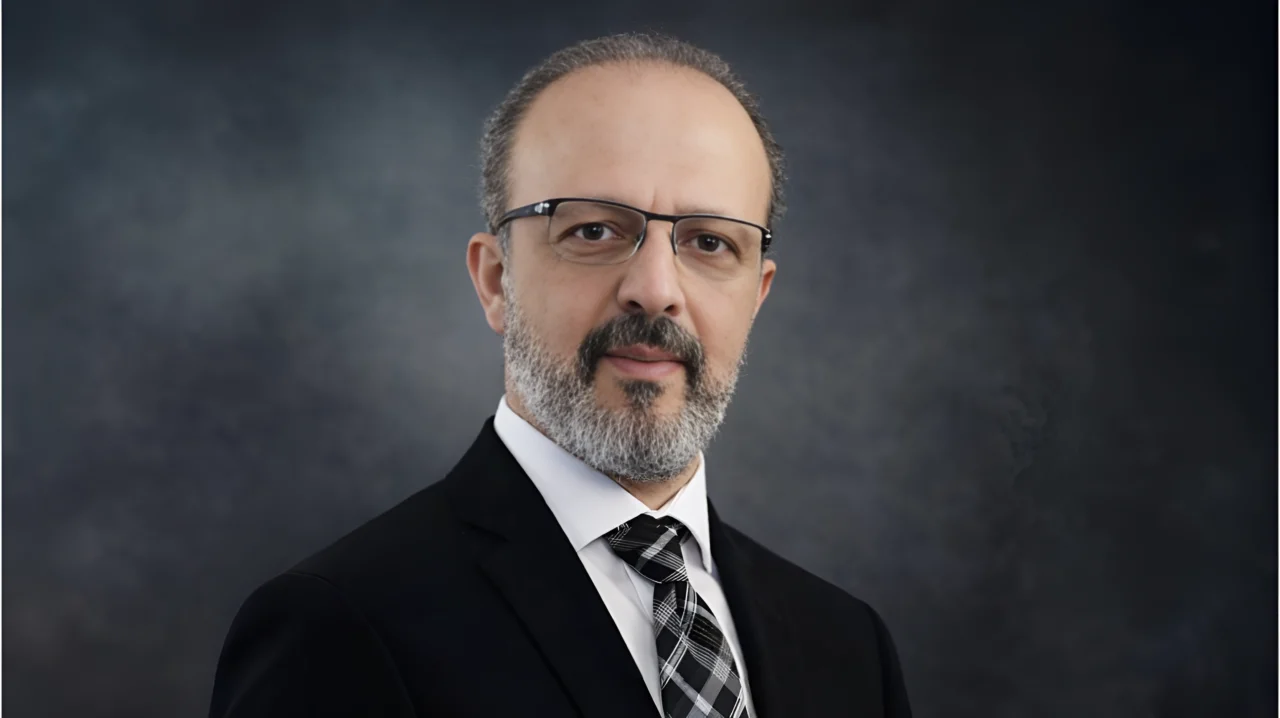
Reza Shojaei: Can Artificial Blood Really Replace Blood Donation
Reza Shojaei, Chief Operating Officer at Canadian Plasma Resources, shared a post on LinkedIn:
“A fact-checked look at how real it is, how close we are, and whether it could ever replace blood donation.
If you have scrolled LinkedIn in the past year, you have almost certainly seen it: a striking headline announcing that Japan has invented universal artificial blood that works for every blood type, lasts for years on the shelf, and could soon ‘end blood shortages’ or even ‘replace blood donation.’
The posts are exciting, well-intentioned, and, like most things that travel fast on social media, a mix of genuine science and considerable exaggeration.
As someone who has spent more than two decades inside the blood and plasma industry, I wanted to do more than react.
I wanted to fact-check the claims against the peer-reviewed literature and the clinical-trial registries, and then answer the three questions everyone is actually asking:
Is it real? How close are we? And could it replace blood donation?
Here is the short version, before we get into the detail.
First, ‘Japanese artificial blood’ is not one project; it is at least two
Most viral posts blur together two distinct Japanese research programmes. Getting them straight matters, because they sit at very different stages of development.
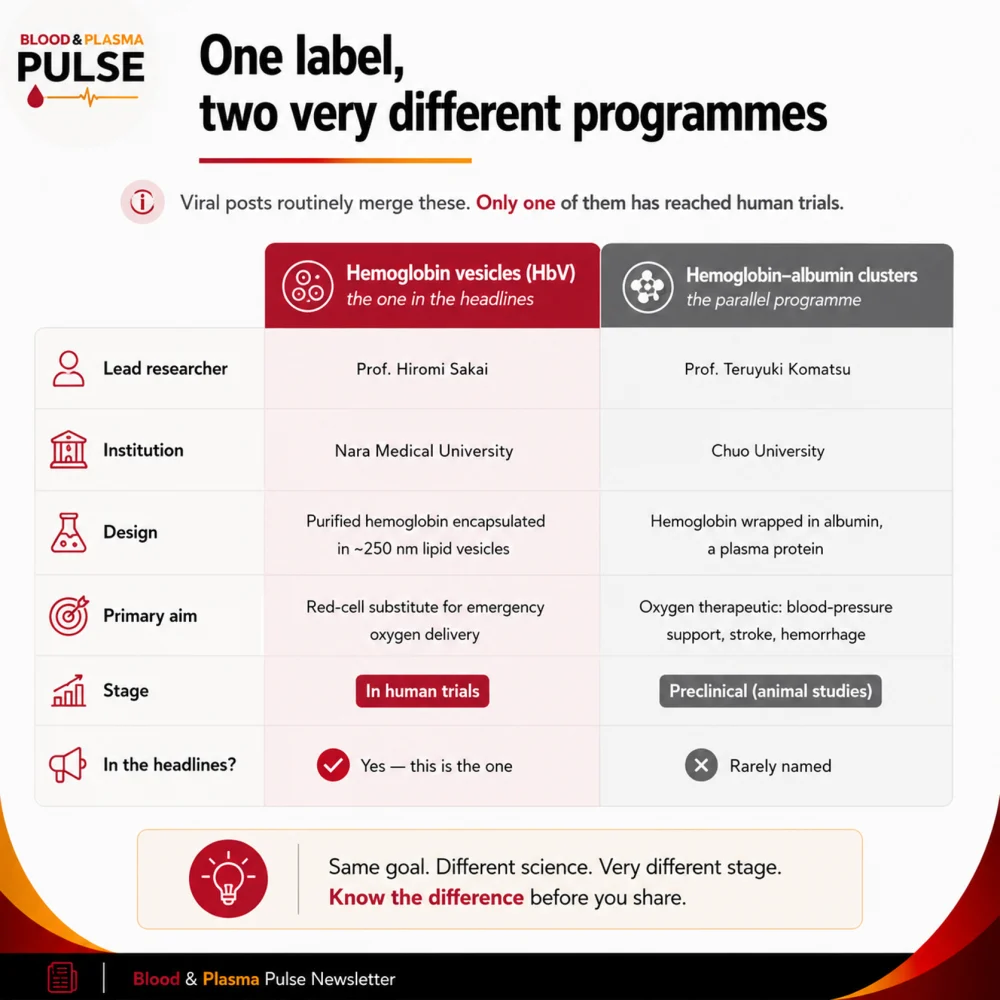
When a post says ‘Japanese artificial blood,’ it almost always means Sakai’s hemoglobin vesicles (HbV): purified hemoglobin extracted from expired donated blood and encapsulated inside nano-sized lipid shells roughly 250 nanometres across, mimicking the structure of a red blood cell (Sakai et al., 2022).
Because the hemoglobin is stripped of the antigens that determine blood type, the product carries no A, B or Rh markers, the source of the “universal” claim.
Komatsu’s parallel work at Chuo University is legitimate and promising, including freeze-dried and long-storable formulations, but it has not entered human trials (Kohyama et al., 2025). So the fact-check belongs on HbV.
CLAIM 01: ‘It works for all blood types’

This is the most solid part of the story. The entire design premise of HbV is to remove the surface antigens that force us to type and crossmatch donated red cells.
By encapsulating purified hemoglobin, the product is engineered to be antigen-free and therefore not restricted to matching recipients (Sakai et al., 2022).
One nuance for our field: researchers have already begun studying how HbV might interfere with pretransfusion blood-typing tests in the laboratory; the purple, hemoglobin-based fluid can affect sample readings, and they are developing mitigation strategies (Omae et al., 2026).
‘Universal’ refers to compatibility in the patient, not invisibility in the lab.
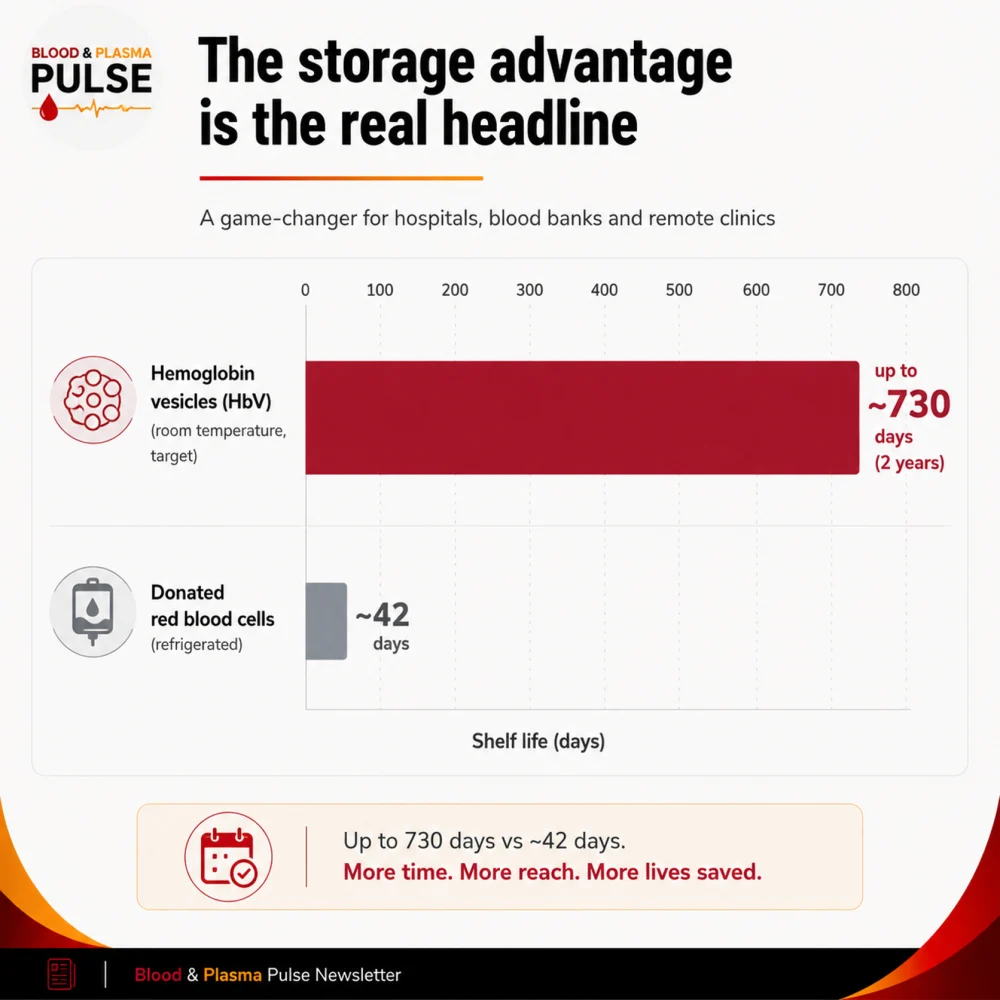
CLAIM 02:’It lasts up to two years without refrigeration

Long-term, room-temperature storage is arguably HbV’s most genuinely transformative property, and the one that gets the least attention relative to the ‘universal‘ angle.
Preclinical work has shown that long-term-stored HbV can resuscitate animals in massive-hemorrhage models comparably to fresh red cells (Sakai et al., 2022).
That is precisely what would make such a product valuable wherever cold-chain logistics break down: ambulances, disaster zones, remote clinics, military settings.
The ‘two years’ figure reflects a developmental target that continues to be validated as the product advances, but the direction of travel is real and repeatedly documented.
CLAIM 03:’Clinical trials were completed in 2025′

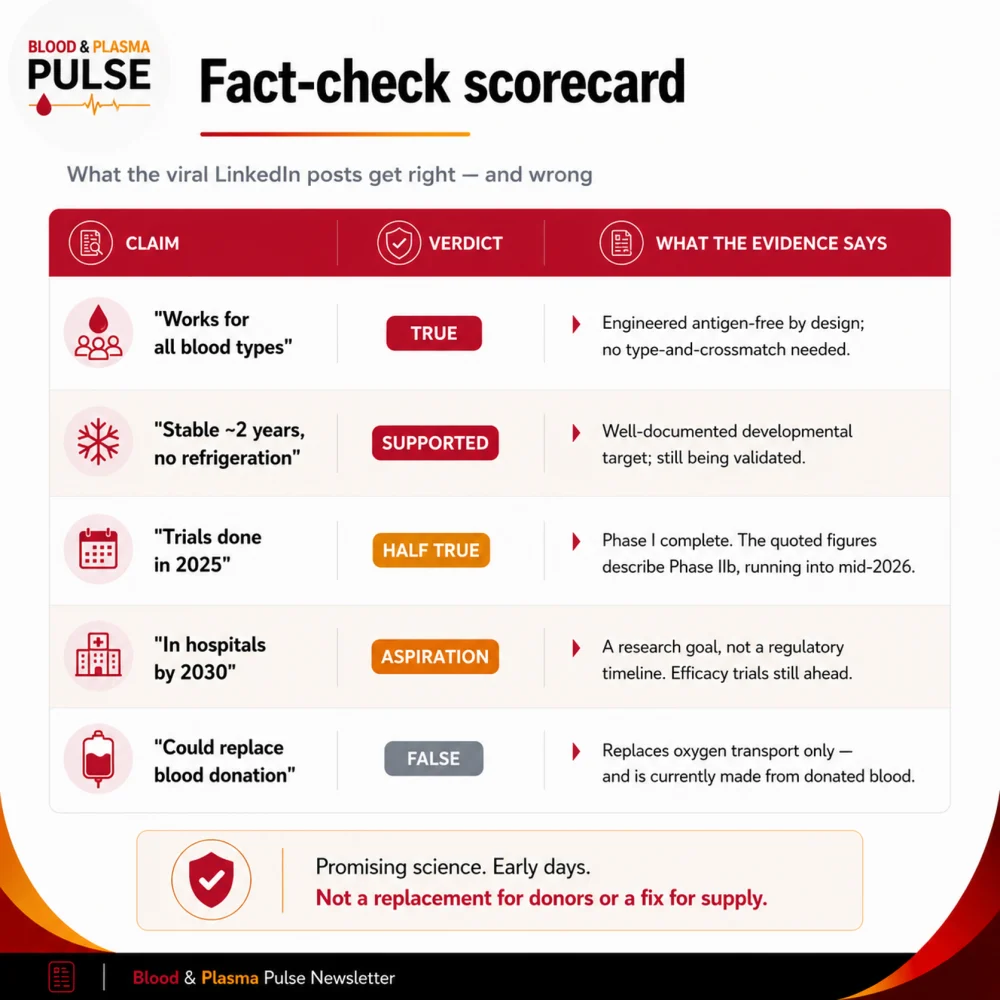
This is where most viral posts go wrong, and the confusion is understandable, because two separate trials are being collapsed into one.
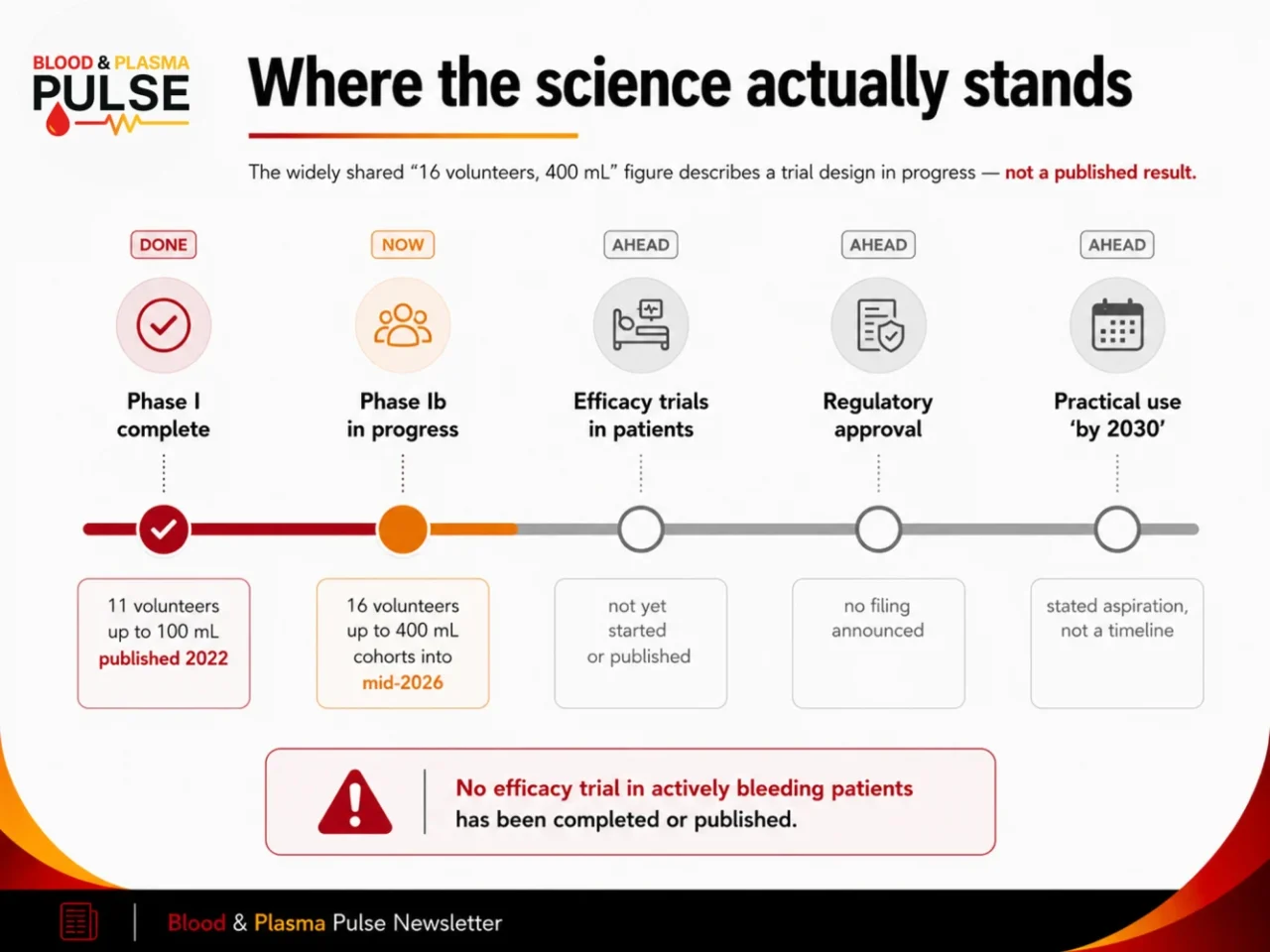
The completed Phase I trial. An earlier first-in-human study administered HbV at doses up to 100 mL to 11 healthy volunteers.
Adverse events were well-tolerated, with no clinically significant changes in vital signs (Azuma et al., 2022; Sakai et al., 2026). This is finished and published.
The ongoing Phase Ib trial. The widely quoted figures, ’16 volunteers,’ doses up to 400 mL, describe the design of a newer dose-escalation study, not a completed result.
Per the published protocol, it was registered with the Japan Registry of Clinical Trials (jRCT2051240249) in January 2025 following ethics approval in December 2024, and its four volunteer cohorts were scheduled to be dosed in stages running from mid-2025 into mid-2026 (Sakai et al., 2026).
So the honest status: an early safety trial is complete; a larger safety-and-dose study is in progress.
No efficacy trial in actual bleeding patients (the study that would show it works when someone is genuinely hemorrhaging) has been completed or published.
The ‘2030’ figure that appears in nearly every article is the research team’s stated aspiration, not a regulatory timeline.
CLAIM 04:Could it replace blood donation?

Here is where enthusiasm needs to meet physiology. The short answer, grounded in the science, is no, and, importantly, the researchers themselves do not claim otherwise.
Blood is not a single substance. It carries oxygen, but it also stops bleeding, maintains volume, defends against infection, and supplies the raw material for an entire class of medicines
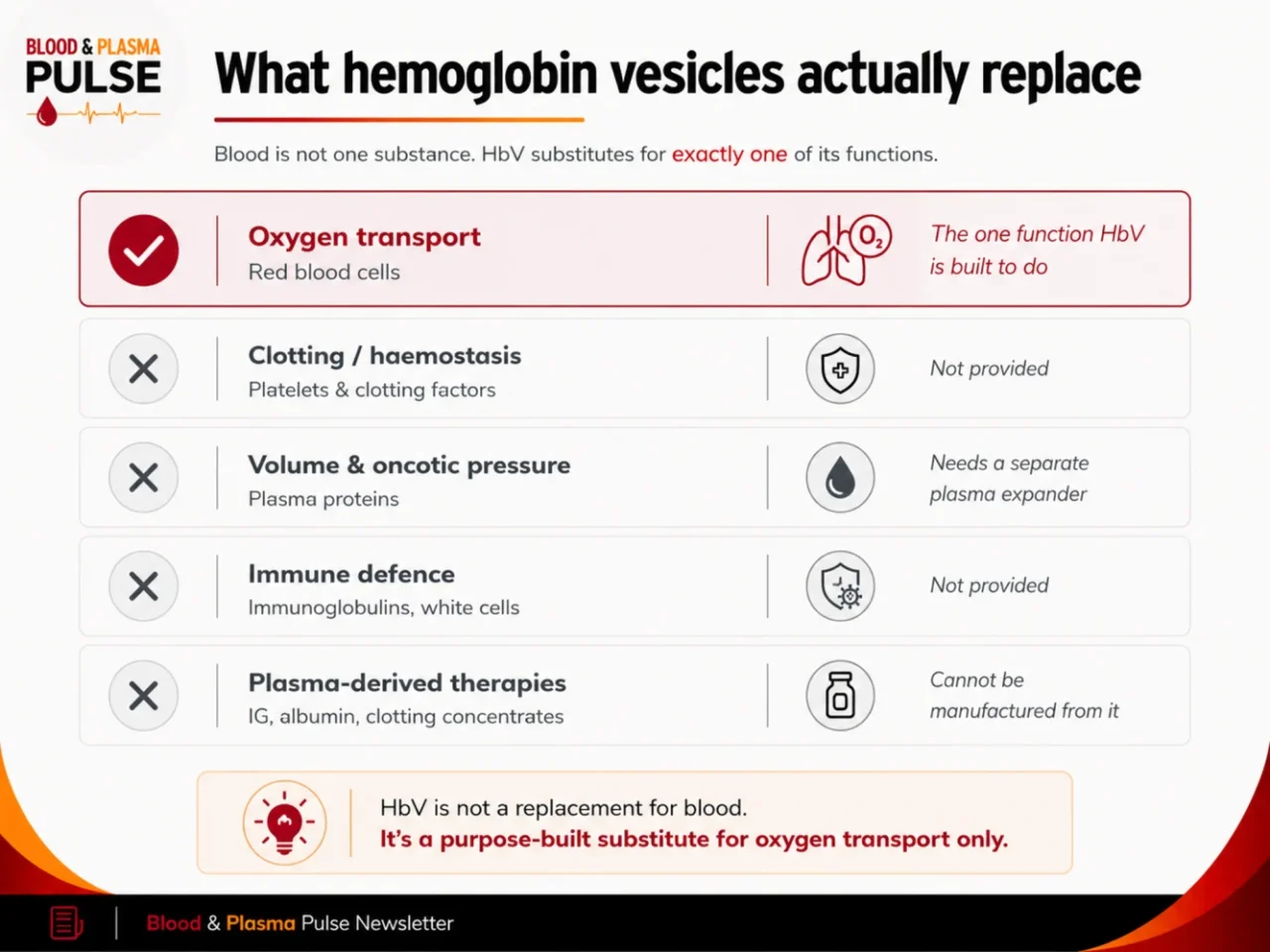
HbV carries no platelets, no clotting factors, no plasma proteins and no immune components.
In severe hemorrhage, it must even be co-injected with a separate plasma expander, because the suspension lacks the colloid osmotic pressure needed to maintain blood volume on its own (Sakai et al., 2022).
HbV is a bridge, not a substitute.
That framing, used carefully in the literature, describes a shelf-stable, universally compatible oxygen carrier that keeps a patient alive when matched red cells are unavailable, until real transfusion products can be given.
It is designed for the ambulance, the disaster site and the rural clinic, not to empty the donor chair.
Two further points our industry should not lose sight of:
It is made from donated blood. The hemoglobin is sourced from expired donations. In its current form, the technology depends on a functioning donation system rather than eliminating one.
It does nothing for plasma-derived medicinal products. The global immunoglobulin, albumin and clotting-factor supply cannot be manufactured from an oxygen carrier.
Nothing in these programmes reduces the need for source plasma by a single litre.
Why the story resonates: the shortage is real
The excitement is not irrational, because the underlying problem is genuine and severe.
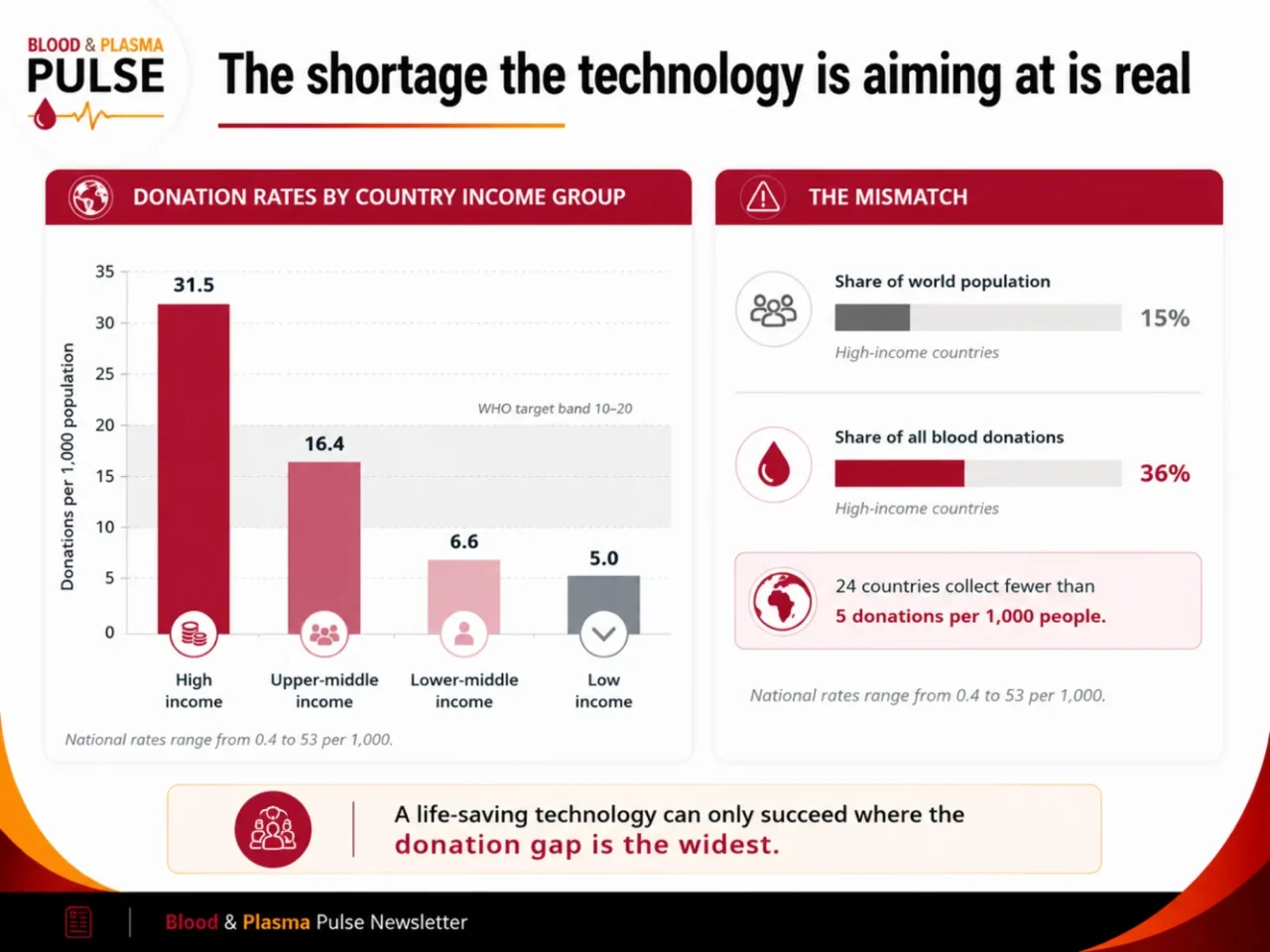
National donation rates range from 0.4 to 53 per 1,000 population, and 24 countries collect fewer than 5 per 1,000 (World Health Organization, 2026).
Modelling work has estimated unmet need exceeding 100 million units, concentrated overwhelmingly in low- and middle-income countries (Roberts et al., 2019).
That promise is real. It is simply not the same thing as replacing donation.
The bottom line for our industry
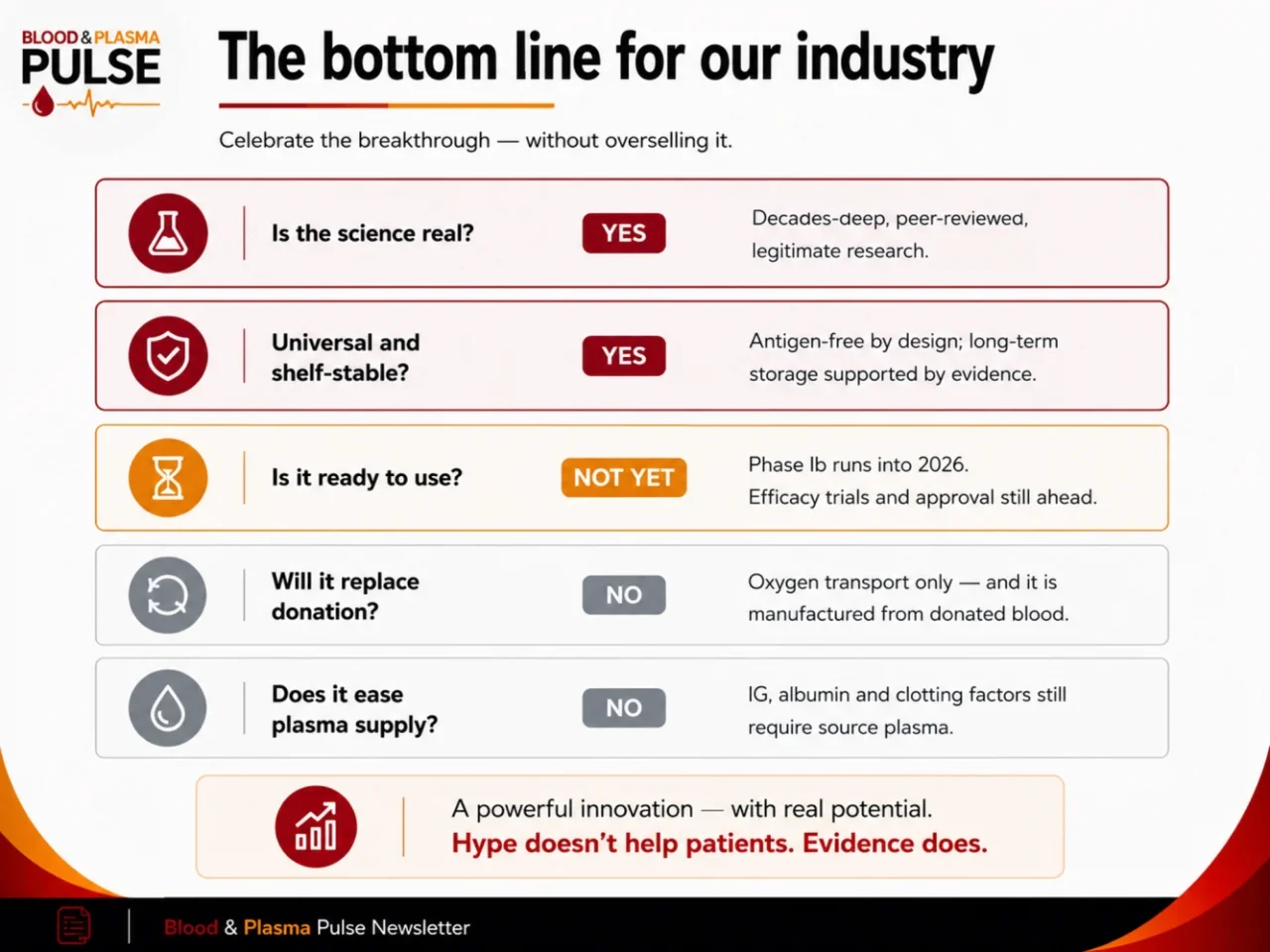
The most useful thing we can do as professionals is to celebrate a genuine breakthrough without overselling it. Artificial oxygen carriers may soon save lives in the gap before a transfusion arrives.
They will not make the donor, or the plasma centre, obsolete. If anything, they are a reminder of how extraordinary, and how genuinely irreplaceable, human blood and plasma really are.
What are you seeing in your networks, is the ‘end of donation’ narrative helping or hurting public understanding? We’d like to hear your take.”
Stay updated with Hemostasis Today.
-
Sep 30, 2026, 01:52Javed Anees: DADA2 – When a Young Stroke Is More Than a Stroke
-
Sep 30, 2026, 01:51How a Venous Thrombus Becomes Revascularized – ISTH
-
Sep 29, 2026, 22:45Victor Agunyego: Paracetamol – The Most Common Drug We Underestimate
-
Sep 29, 2026, 22:42Nova Sinclair: Advancing the Future of Hematology – Meet Our 2027 Organizing Committee
-
Sep 29, 2026, 22:41Lorenz Räber: Intracoronary Imaging in PCI – Why, When, How, and Which Modality?
-
Sep 29, 2026, 22:31Selma Turkovic: Pleased to Deliver the Opening Presentation at Kingston Hospital
-
Sep 29, 2026, 22:31Miguel Teran: Ultrasound and Simulation in Arterial Blood Sampling
-
Sep 29, 2026, 22:28Mohammad Refaei: Navigating Your Career in Hematology From Training to Practice
-
Sep 29, 2026, 22:27Matteo Foschi: 10 Clinical Pearls for Antithrombotic Therapy in Secondary Stroke Prevention