

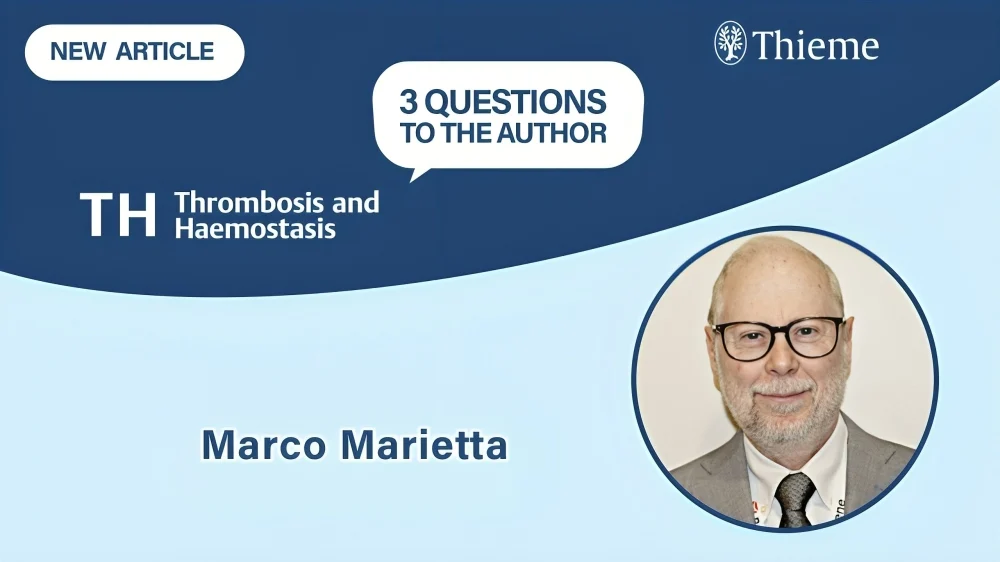
Expert Consensus on Inferior Vena Cava Thrombosis – Thrombosis and Haemostasis Journal
Thrombosis and Haemostasis Journal shared a post on LinkedIn:
“TH: Why did you (and your colleagues) write this paper? What was its main purpose?
Marco Marietta: We developed this consensus-based guidance on behalf of the Italian Society for the Study of Haemostasis and Thrombosis (SISET) to address a significant unmet clinical need.
Inferior vena cava thrombosis (IVCT) is a rare but potentially severe thrombotic disorder for which disease-specific evidence remains limited. As a result, management is often extrapolated from studies on lower-extremity deep vein thrombosis, leading to considerable heterogeneity in clinical practice.
The primary objective of this document was to provide clinicians with a practical, evidence-informed framework for the diagnosis, etiological assessment, and management of IVCT, integrating the available literature with expert consensus where evidence is lacking.
What are the main conclusions?
M.M : Several key messages emerged from the consensus process.
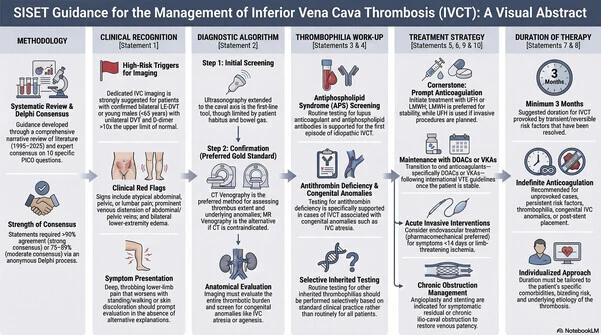
First, accurate diagnosis requires a structured imaging approach. We recommend an initial evaluation with ultrasonography, followed by confirmation with CT venography or, when CT is contraindicated, MR venography. Clinicians should maintain a high index of suspicion in patients presenting with bilateral lower-limb edema or otherwise unexplained abdominal, pelvic, or lumbar pain.
Second, etiological investigations should be tailored to the clinical context. In patients with apparently unprovoked IVCT, screening for antiphospholipid syndrome should be routinely considered. In individuals with congenital abnormalities of the inferior vena cava, testing for antithrombin deficiency may be particularly relevant.
Third, anticoagulation remains the cornerstone of treatment. Therapeutic anticoagulation should be initiated promptly. Low-molecular-weight heparin is generally preferred during the acute phase, with subsequent transition to oral anticoagulants, including direct oral anticoagulants (DOACs), in most clinically stable patients.
Finally, invasive interventions should be reserved for selected cases. Catheter-directed thrombolysis, thrombectomy, or venous stenting are not routinely indicated but may be considered in carefully selected patients, particularly those with limb-threatening ischemia or those presenting within 14 days of symptom onset.
What are the paper’s implications?- to the public?-to medical professionals?
M.M: For the public, greater awareness of IVCT is important because the condition may present with atypical and non-specific symptoms. Abdominal, pelvic, or lower back pain can precede the development of lower-limb swelling and may delay diagnosis.
Earlier recognition of these manifestations could facilitate more timely treatment of a condition associated with a higher risk of complications and mortality than thrombosis confined to the lower extremities.
For healthcare professionals, this guidance provides a practical roadmap for the management of a patient population that is often underrepresented in clinical guidelines.
A central message is that IVCT requires a broader diagnostic work-up than conventional lower-extremity deep vein thrombosis, including assessment for congenital venous anomalies, underlying malignancy, and selected high-risk thrombophilic conditions.
At the same time, the document highlights the substantial evidence gaps that still exist in this field. Until more robust prospective data become available, clinical judgment and individualized patient management will remain essential components of care.”
Stay updated with Hemostasis Today.
-
Sep 30, 2026, 22:21Markus Abeln: How Platelets, Coagulation, Glycosylation, and Complement Regulate Placental Blood Flow
-
Sep 30, 2026, 22:19Fatma Al Arbawi: Studying Blood Clot Mechanics to Understand Aspirin Resistance and Thrombosis
-
Sep 30, 2026, 22:17Sudhir Kumar: Stroke is a Medical Emergency – and Every Minute Matters
-
Sep 30, 2026, 22:15Luisa Medeiros Visentini: Our Research on Cognitive Impairment After CVT Cited in the International Journal of Stroke
-
Sep 30, 2026, 21:50Jagat Narula: Connecting Cardiovascular Health and Sickle Cell Disease on World Heart Day 2026
-
Sep 30, 2026, 21:38John Kastelein: Exploring the Biology of Cardiovascular Disease at BioCentury Grand Rounds Europe
-
Sep 30, 2026, 21:36Mark Murphy: Irish Heart Foundation Meets With Senator Teresa Costello on World Heart Day
-
Sep 30, 2026, 21:34Sadashiva Pai: How Pancreatic Cancer Uses Blood Clotting to Evade Immune Attack
-
Sep 30, 2026, 15:58Bernhard Merget: New Frontiers in Thrombosis and Stroke Research