

Strengthening Local Partnerships to Improve Haemophilia and Sickle Cell Care in the DRC – NNHF
Novo Nordisk Haemophilia and Haemoglobinopathies Foundation shared on LinkedIn:
“In the Democratic Republic of the Congo, haemophilia and sickle cell disease remain significantly underdiagnosed due to limited diagnostic capacity, shortages of trained healthcare professionals, and challenges in accessing quality care.
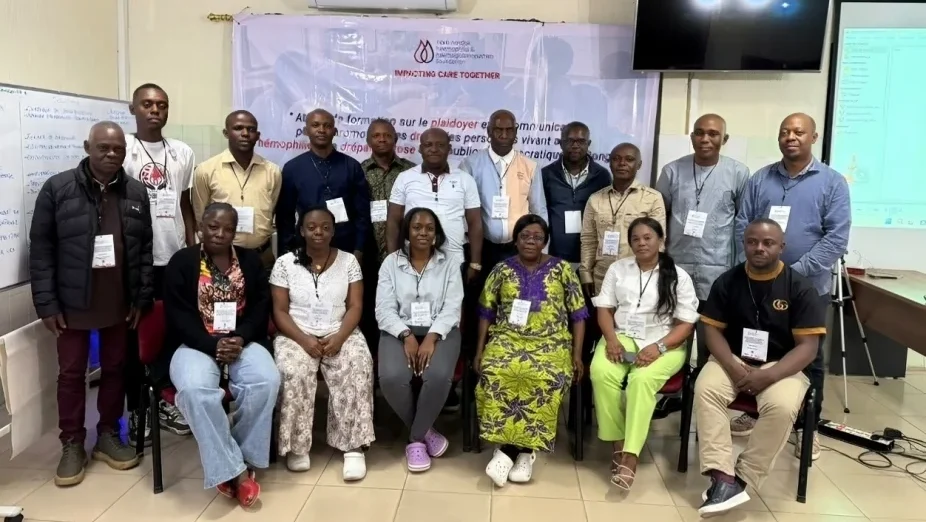
As part of the NNHF-supported Hemodrepa 2 project, patient associations, paediatricians, and nurses from Kinshasa, Lubumbashi, Kisangani, and Mbuji-Mayi came together for an advocacy and communication workshop.
Together, they identified key priorities and developed common advocacy messages focused on improving awareness, strengthening healthcare worker capacity, expanding access to diagnostic tools and treatment services, and promoting family tree tracing.
The next step is to engage authorities, healthcare professionals, and technical and financial partners to advance these priorities and strengthen prevention, early diagnosis, and comprehensive care across the DRC.
Follow NNHF to learn more about how locally led partnerships are strengthening access to care.”
Stay updated with Hemostasis Today.
-
Nov 24, 2026, 06:21Daniel Strohleit: The Challenge of Early Pulmonary Embolism Detection
-
Nov 24, 2026, 06:14Shabnam Boudagh: A Tiny Valve Clot With Major Consequences in Antiphospholipid Syndrome
-
Nov 24, 2026, 05:24Vinod Ravindran: Pregnancy Outcomes in Women With Antiphospholipid Antibodies
-
Nov 24, 2026, 03:28Tobias Tichelbäcker: Mechanical Thrombectomy for Acute Pulmonary Embolism
-
Nov 24, 2026, 03:26Natalie Wong: ASH 2026 Guidelines on the Diagnosis of Iron Deficiency
-
Nov 24, 2026, 03:17Shadi Tabibian: Beyond Bleed Counts Improving the Quality of Life in Hemophilia Care
-
Nov 24, 2026, 03:02Rehab Salah: An Overlooked Cause of DAT-Negative Neonatal Jaundice
-
Nov 24, 2026, 02:56Karim Jamaleddine։ Shoulder Dislocation and DVT – New Evidence on the Low Risk of Thrombosis
-
Nov 24, 2026, 02:41Suresh S: Making Every Blood Donation Count