


Ahmed Ibrahim: Optimal Antithrombotic Therapy for Secondary Stroke Prevention in Patients with AF and ASCVD
Ahmed Ibrahim, Medical Student at Alexandria University, shared a post on LinkedIn about a recent article that he and his colleagues co-authored:
“For patients with ischemic stroke and comorbid Atrial Fibrillation (AF) and Atherosclerotic Cardiovascular Disease (ASCVD), does adding an antiplatelet to an anticoagulant do more harm than good in secondary stroke prevention?
Key Findings from our Network Meta-Analysis (should be interpreted with caution and contextualized within the study’s limitations):
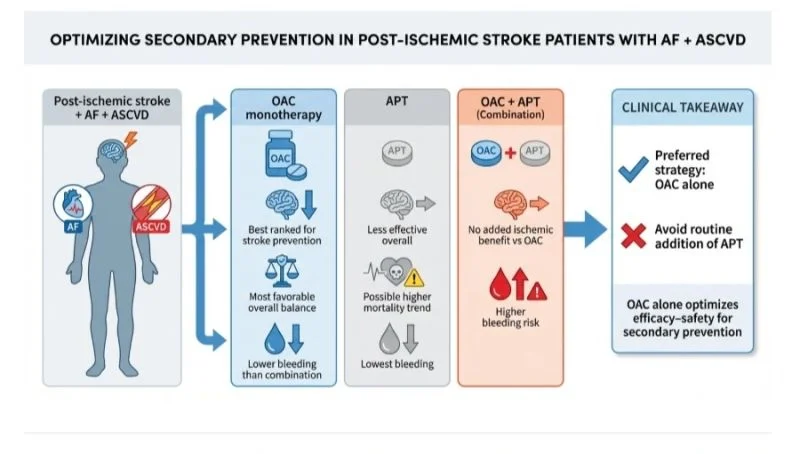
The Power of One: OAC monotherapy emerged as the most favorable strategy for secondary prevention. It provides a balanced profile, offering strong protection against recurrent strokes with potential lower risk of major bleeding compared to combination therapy.
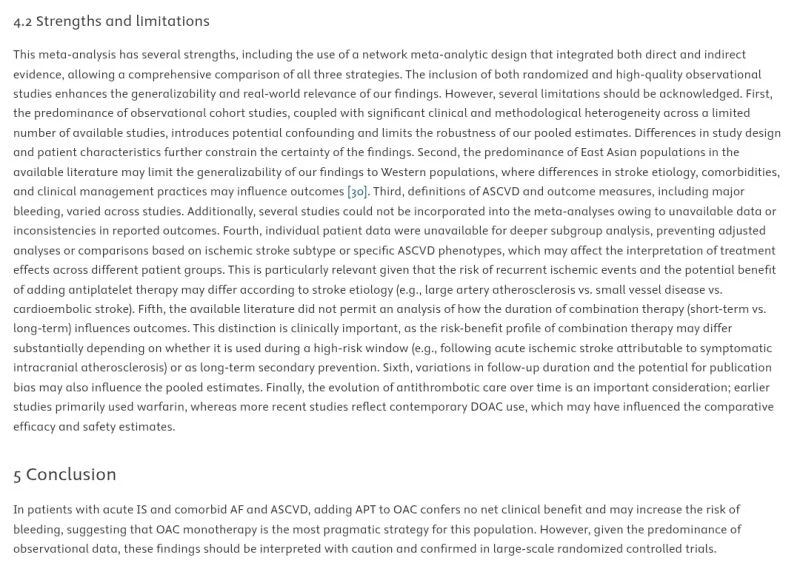
Less is More: Adding antiplatelet therapy (APT) to an anticoagulant did not provide additional clinical benefit. It may increase the risk of major bleeding without significantly reducing the risk of further ischemic events or death.
APT Alone: While APT monotherapy had the lowest bleeding risk, it was associated with a concerning trend toward increased all-cause mortality and was the least effective at preventing recurrent ischemic strokes.
Take-Home Message:
- In secondary stroke prevention for patients with AF and ASCVD, OAC monotherapy appears to offer a favorable balance between efficacy and safety.
- While combination therapy may be considered in select cases with compelling indications, routine use of antiplatelet therapy alongside anticoagulation should be approached with caution due to potential increased bleeding risk without clear added benefit.
Grateful to my colleagues Elsayed Balbaa, Ameer Awashra, Abdalhakim Shubietah, Giulia Cavolina, Alessio villari.
Heartfelt thanks to our seniors, Prof. Giuseppe Andò and Dr. Pierre F. Sabouret, for their invaluable support and guidance.”
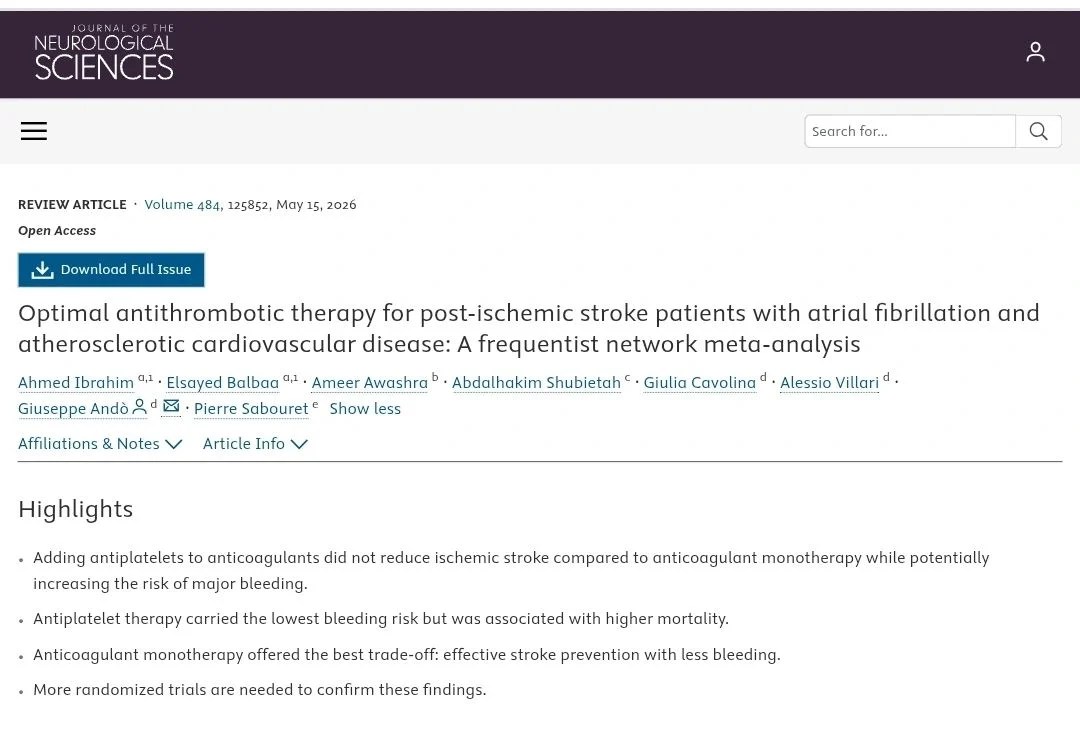
Title: Optimal antithrombotic therapy for post-ischemic stroke patients with atrial fibrillation and atherosclerotic cardiovascular disease: A frequentist network meta-analysis
Authors: Ahmed Ibrahim, Elsayed Balbaa, Ameer Awashra, Abdalhakim Shubietah, Giulia Cavolina, Alessio Villari, Giuseppe Andò, Pierre Sabouret
Read Full Article on Journal of the Neurological Sciences.
Stay updated with Hemostasis Today.
-
Sep 19, 2026, 08:51Zia Ullah Shah: Advancing Early Diagnosis of Wilson Disease With AI and Biomarkers
-
Sep 19, 2026, 03:15Paulus Kirchhof: Europe’s Safe Hearts Plan to Reduce Cardiovascular Mortality
-
Sep 19, 2026, 03:10James Smith: Brain Training and Exercise for Cognitive Recovery After Stroke
-
Sep 19, 2026, 03:03Lesley Van Wyk: ASH Releases New Iron Deficiency Diagnosis Guidelines
-
Sep 19, 2026, 02:53Francisco Chacón-Lozsán: Acute Ischemic Stroke in 2026 – Expanding the Treatment Window
-
Sep 19, 2026, 01:53Thomas Dayspring: Understanding Genome and Lipid Interactions in Lipidology
-
Sep 19, 2026, 01:47Abdurrahman Tufan: Combination Targeted Therapy in Refractory Systemic Autoinflammatory Diseases
-
Sep 19, 2026, 01:44Patrick James Lynch: Mother of a Thousand Sons Premieres at BDC 2026
-
Sep 19, 2026, 01:41Genetic Fate Mapping Reveals Endothelial Cells During Venous Thrombus Resolution – RPTH Journal