


Alejandro González Veliz: Can Treating Tricuspid Regurgitation Change Outcomes?
Alejandro González Veliz, Interventional Cardiologist at Institute of Cardiology and Cardiovascular Surgery, shared a post on LinkedIn about a recent article by Jörg Hausleiter et al., published in NEJM, adding:
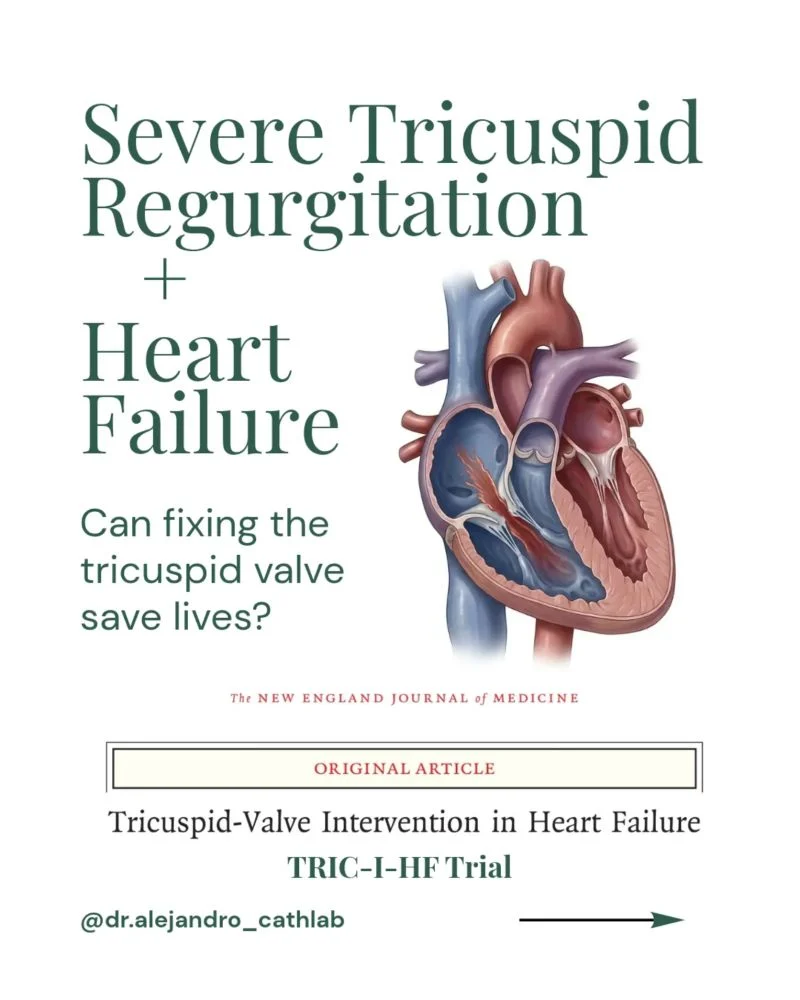
“Can treating severe tricuspid regurgitation actually change clinical outcomes?
The TRIC-I-HF trial, published today in the New England Journal of Medicine, provides important new evidence.
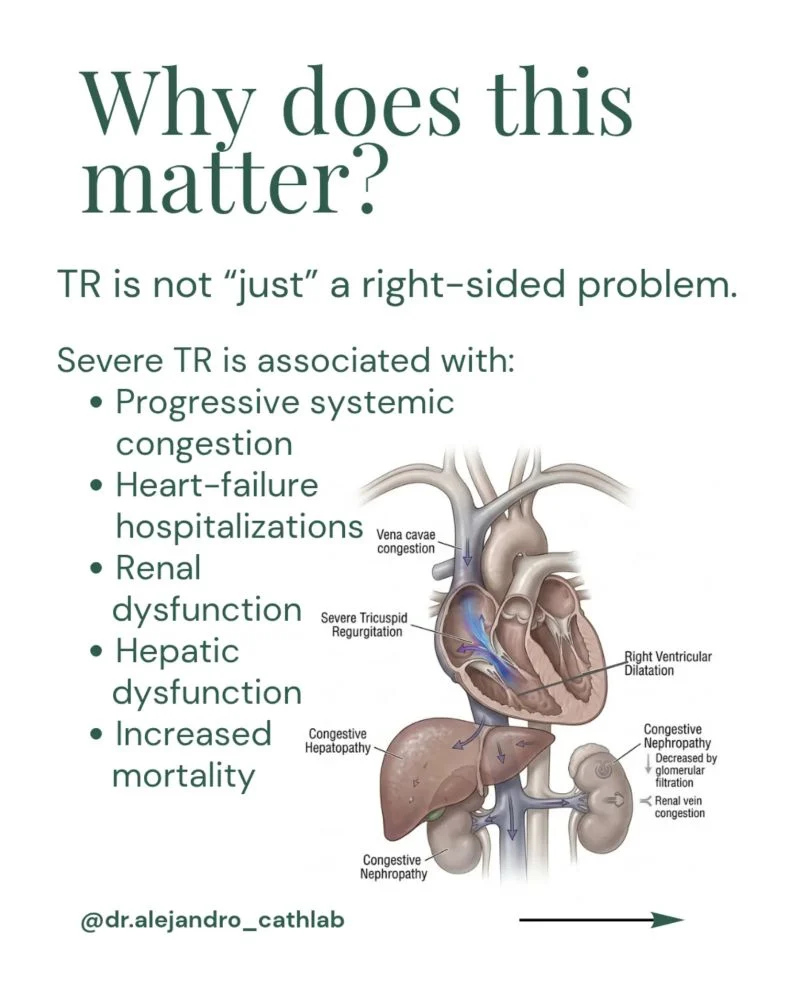
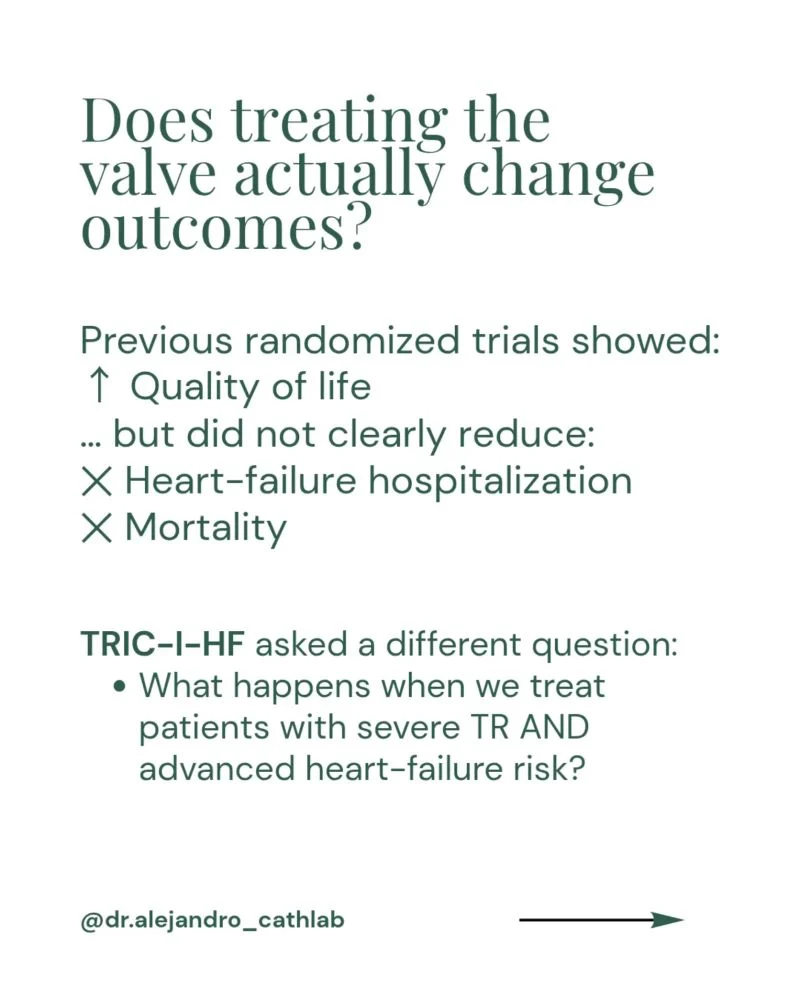
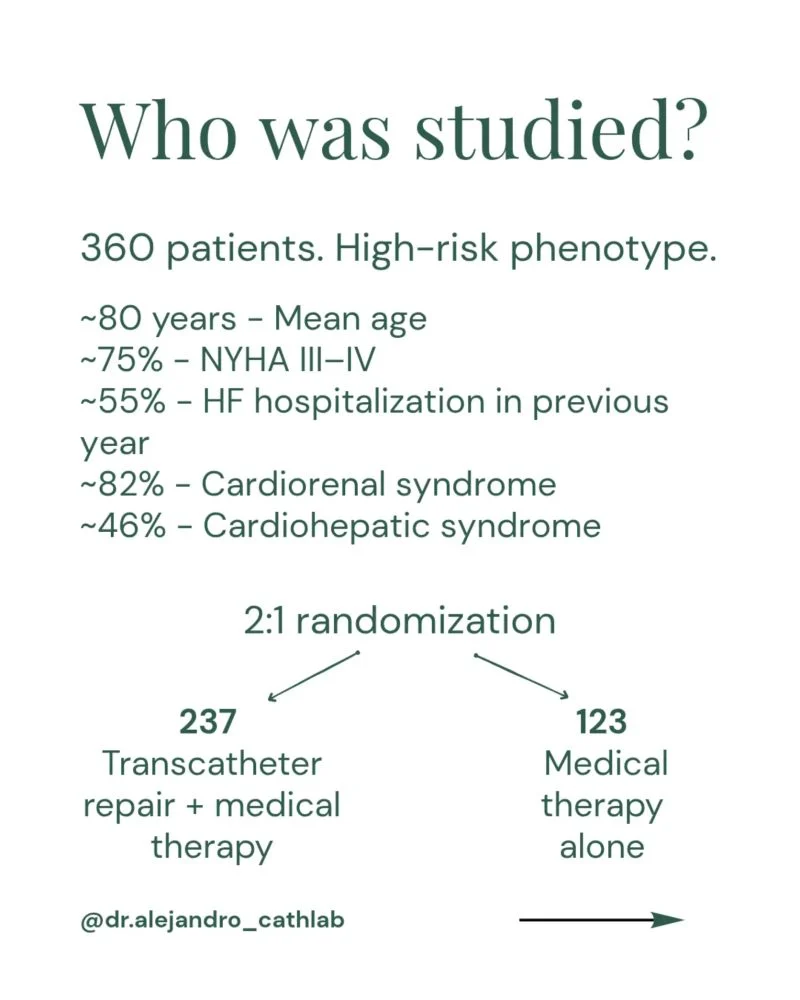
TRIC-I-HF focused on a particularly high-risk population: patients with symptomatic severe tricuspid regurgitation and advanced risk of future heart-failure events.
- 360 patients.
- Mean age: 80 years.
- 75% had NYHA class III–IV heart failure.
- 55% had been hospitalized for heart failure during the previous year.
- 82% had cardiorenal syndrome.
Patients were randomized 2:1 to transcatheter tricuspid repair plus medical therapy or medical therapy alone.
And the results were striking.
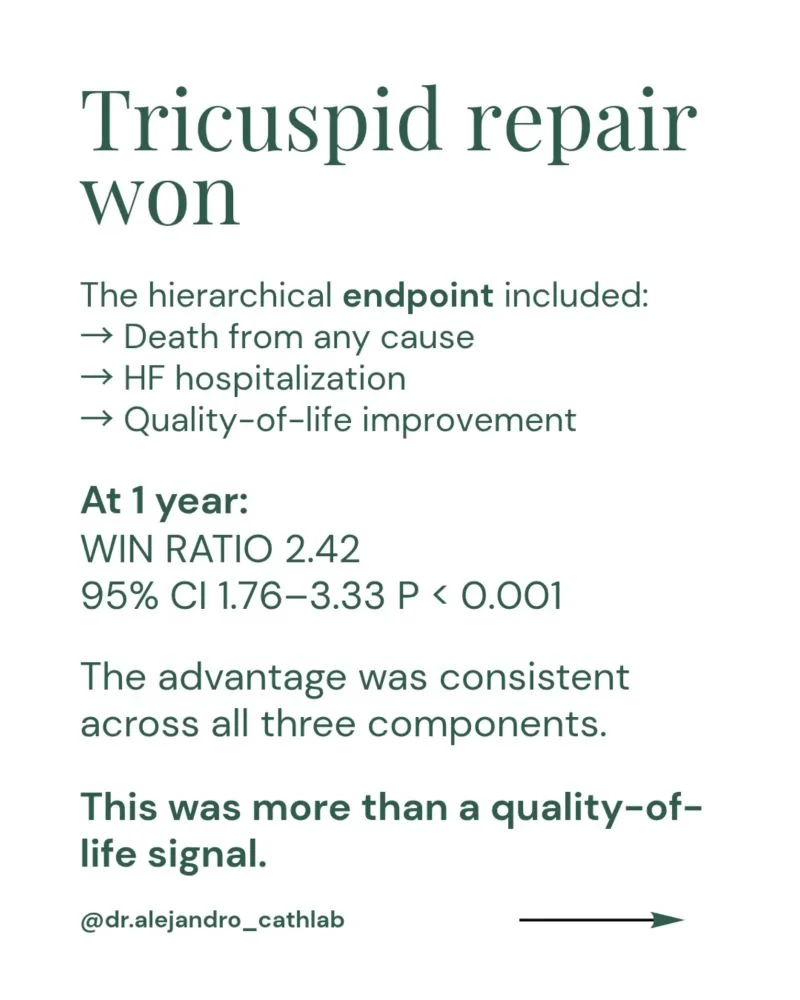
At 1 year, the hierarchical primary endpoint favored transcatheter repair:
Win ratio: 2.42.
95% CI, 1.76-3.33; P less than 0.001.
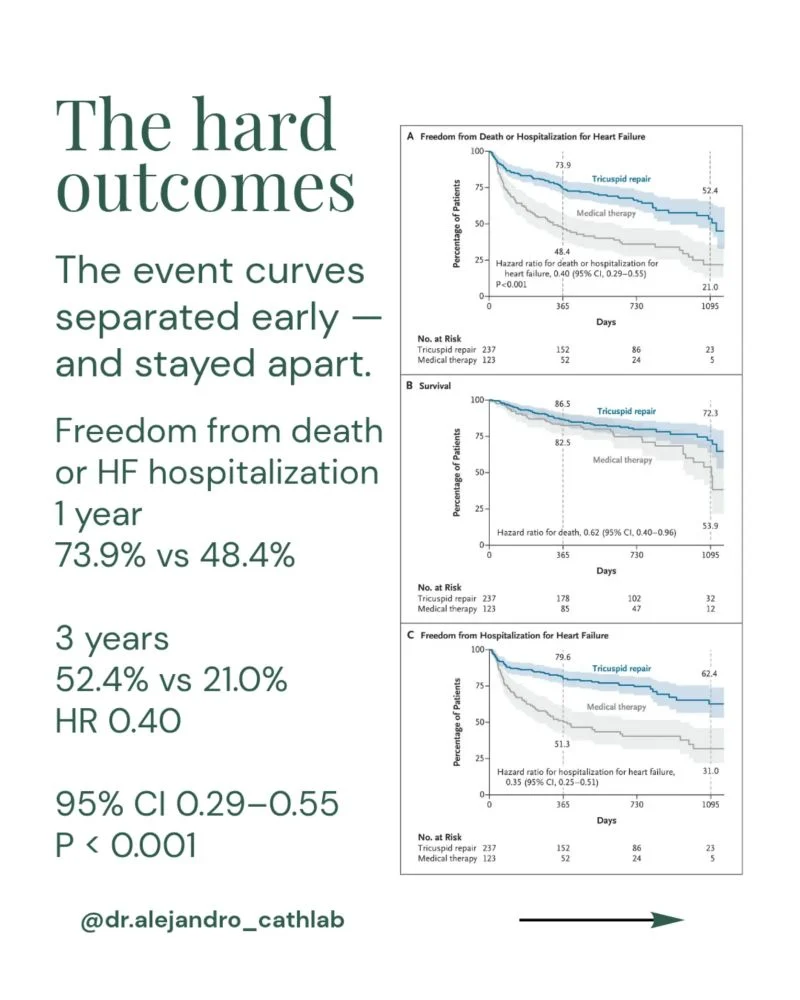
More importantly, the benefit extended to hard clinical outcomes.
At 3 years, freedom from death or heart-failure hospitalization was:
52.4% vs. 21.0% with a hazard ratio of:
0.40 (95% CI, 0.29-0.55).
Heart-failure hospitalization was also substantially reduced:
HR 0.35 (95% CI, 0.25-0.50).
A post-hoc analysis estimated an NNT of 4 to prevent one death or heart-failure hospitalization at 1 year.
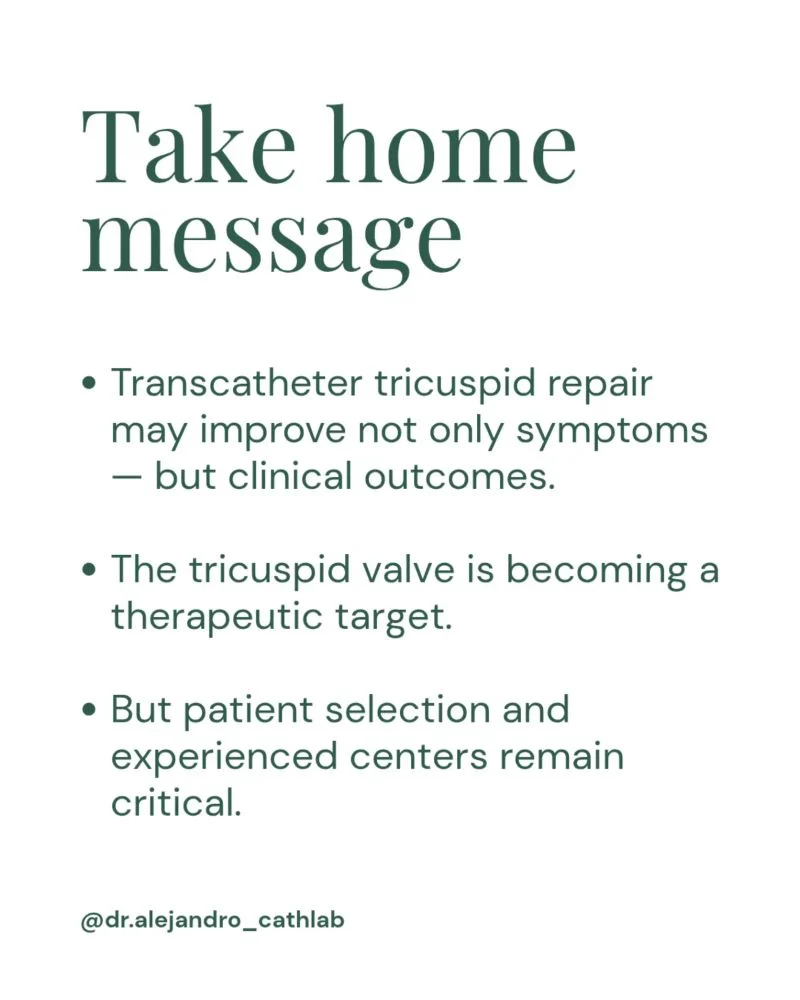
The findings suggest that, in carefully selected patients with severe TR and advanced heart-failure risk, treating the tricuspid valve may do more than improve symptoms – it may alter the clinical trajectory.
However, these results should be interpreted in the context of the trial population, experienced high-volume centers, crossover design, use of different repair devices, and the limitations of longer-term follow-up.
The tricuspid valve is no longer simply a bystander in right-sided heart failure.
The key question now may be not ‘Should we intervene?’ but rather:
‘Which patients benefit most – and when is the optimal time to intervene?'”
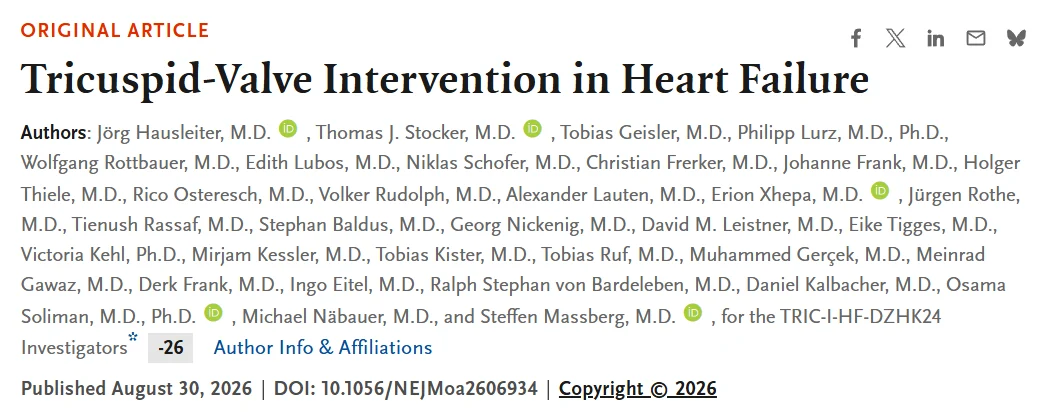
Title: Tricuspid-Valve Intervention in Heart Failure
Authors: Jörg Hausleiter, Thomas J. Stocker, Tobias Geisler, Philipp Lurz, Wolfgang Rottbauer, Edith Lubos, Niklas Schofer, Christian Frerker, Johanne Frank, Holger Thiele, Rico Osteresch, Volker Rudolph, Alexander Lauten, Erion Xhepa, Jürgen Rothe, Tienush Rassaf, Stephan Baldus, Georg Nickenig, David M. Leistner, Eike Tigges, Victoria Kehl, Mirjam Kessler, Tobias Kister, Tobias Ruf, Muhammed Gerçek, Meinrad Gawaz, Derk Frank, Ingo Eitel, Ralph Stephan von Bardeleben, Daniel Kalbacher, Osama Soliman, Michael Näbauer, Steffen Massberg.
Stay updated on all scientific advances with Hemostasis Today.

-
Oct 18, 2026, 17:11Owen McCarty: Understanding Prekallikrein and Its Role in Inflammation and Thrombosis
-
Oct 18, 2026, 17:04Emna Gouider Belhadjali: Don’t Miss GPAS 2026 on Bleeding Disorders
-
Oct 18, 2026, 16:53Mehran Ghasemzadeh: Microparticle-Associated Mitochondrial DNA in Stored Platelet Products
-
Oct 18, 2026, 16:38Edward Lee Carter: A 15-Minute Blood Test for Brain Hemorrhage?
-
Oct 18, 2026, 16:29Patrick Taylor: Oral vs Transdermal Estrogen and Cardiovascular Risk in Menopausal Women
-
Oct 18, 2026, 16:19Artangela Henry: A Meaningful Week at the SCDAA National Convention
-
Oct 18, 2026, 16:04Emília Araújo։ New Insights Into the Genetics of Hemophilia B Leyden
-
Oct 18, 2026, 15:43André Marcel Harris: Award-Winning Research on Texas Sickle Cell Data Collection
-
Oct 18, 2026, 15:21Eleonora Gambineri: First Results of the IEI-Haem Consortium at ESID 2026