


Amrit Kaur Kaler: The Hidden Genetic Drivers of Thrombosis
Amrit Kaur Kaler, Consultant in the Department of Genetics and Molecular Medicine at Kokilaben Dhirubhai Ambani Hospital, shared a post on LinkedIn about a recent article she and his colleagues co-authored, published in Journal of Thrombosis and Haemostasis, adding:
”Thrombophilia genetic polymorphisms are inherited variations in genes controlling blood coagulation, increasing the risk of venous and arterial thrombosis.
Common polymorphisms include Factor V Leiden (FVL 1691GA), Prothrombin (FII 20210GA), and MTHFR variants, which enhance clot formation or inhibit fibrinolysis. These genetic factors can cause hypercoagulable states, leading to VTE or reproductive issues.
Thanks to Dr R Sekhar, our vascular surgeon for sharing deep insights into the management of thrombosis. Thanks to Sameer Tulpule and all the authors for their contribution.”
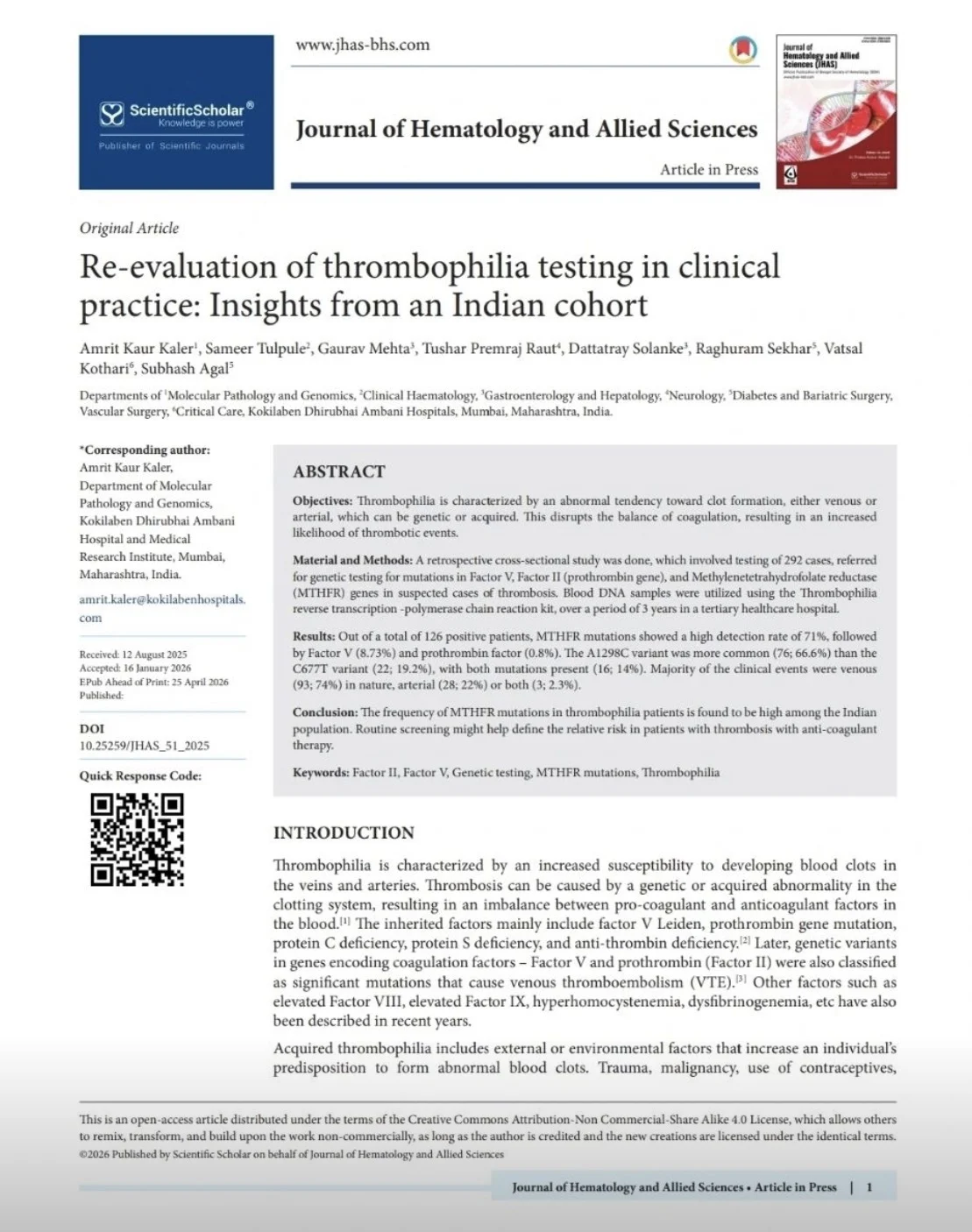
Title: Re-evaluation of thrombophilia testing in clinical practice: Insights from an Indian cohort
Authors: Amrit Kaur Kaler, Sameer Tulpule, Gaurav Mehta, Tushar Premraj Raut, Dattatray Solanke, Raghuram Sekhar, Vatsal Kothari, Subhash Aga
Stay updated on all scientific advances with Hemostasis Today.
-
Sep 24, 2026, 16:02Leonardo Roever: Understanding Peripheral Artery Disease in the Modern Era
-
Sep 24, 2026, 15:49Sthanu Subramanian: When HbA1c Does Not Reflect True Glycemia
-
Sep 24, 2026, 15:09Caroline Voltz-Girolt: Accelerating the Development of Innovative Therapies for Rare Blood Disorders
-
Sep 24, 2026, 15:00Gambo Ramatu: Anemia as a Preventable Pregnancy Challenge
-
Sep 24, 2026, 14:56Holly John: Sickle Cell Disease Beyond Pain and Clinical Outcomes
-
Sep 24, 2026, 14:45Bruce Holland: Ex Vivo Assessment of ActiGraft Clot Formation Under Anticoagulation
-
Sep 24, 2026, 14:33Mohamed El Belghiti Alaoui: Thrombin as a Therapeutic Target in Coagulation
-
Sep 24, 2026, 14:22Integrating Thrombosis Risk Into Menopause Care – World Thrombosis Day
-
Sep 24, 2026, 13:41Mahmoud Samir Bayomi: Raise ITP Awareness and Improve Patient Care