


Danny Hsu Shares The ”I-WISh” Study by Nichola Cooper on ITP
Danny Hsu, President of THANZ, reposted from ITP Australia and New Zealand on LinkedIn:
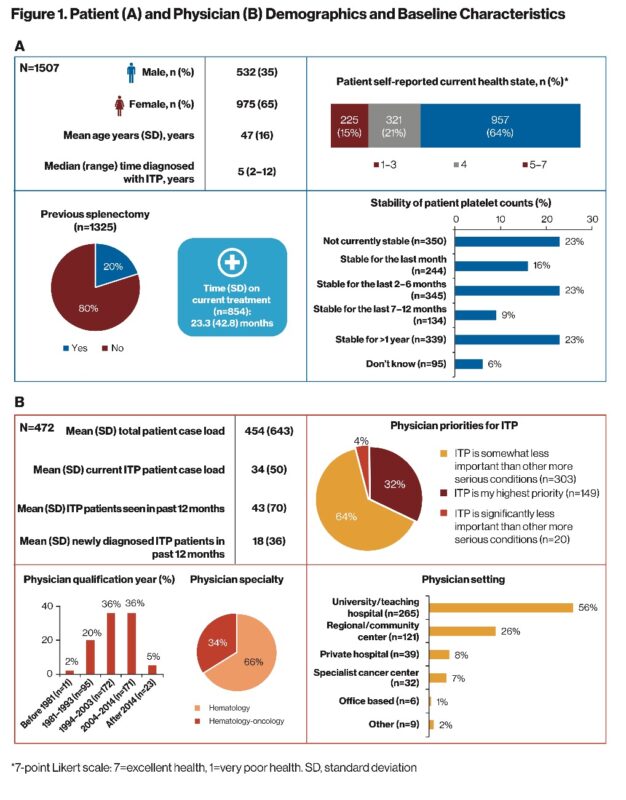
”Burden of disease in ITP patients is more significant than we think!
Thanks to the I-WISh study by Nichola Cooper, an excellent insight into what ITP patients go through.”
Quoting ITP Australia and New Zealand‘s post:
”Fatigue in ITP: A symptom that demands attention.
The original I‑WISh study highlighted a critical gap: while patients consistently report fatigue as one of the most disruptive aspects of Immune Thrombocytopenia (ITP), it is often under‑recognised in clinical practice.
“Fatigue has impacted my work, relationships, and daily routine.”
Now, I‑WISh 2.0 results are being finalised — with Australia included — offering fresh insights into patient and physician perspectives worldwide.
For healthcare professionals, this is a call to action: fatigue is not secondary.
It is central to the patient experience and must be addressed with empathy and integrated care strategies.
Explore the findings.”
Stay updated on all scientific advances with Hemostasis Today.
-
Oct 4, 2026, 15:06Vasiliki Gkalea: Journal of Clinical Medicine Launches Special Issue on Hematologic Thrombosis and Bleeding
-
Oct 4, 2026, 14:55Quentin Brebant: What Defines a High-Quality Red Blood Cell Concentrate?
-
Oct 4, 2026, 14:47Rana Al-Hrout: Recognizing Non-Anemic Iron Deficiency – Why Iron Matters Beyond Hemoglobin
-
Oct 4, 2026, 14:41David McIntosh: International Plasma Awareness Week 2026 – Closing the Global Plasma Gap
-
Oct 4, 2026, 14:33Pete Stibbs: CleanerVac Real-World Study Presented at VIVA and The VEINS 2026
-
Oct 4, 2026, 13:56Maria Elisa Mancuso: EHC 2026 Highlights the Unmet Needs of Women with Bleeding Disorders
-
Oct 4, 2026, 13:53Nirmal Shaji George: Individualizing Anticoagulation in Complex APS and Thrombocytopenia
-
Oct 4, 2026, 13:5210 Posts Not to Miss This Week
-
Oct 4, 2026, 13:45Suswapna Singh Rawat: The Clinical Significance of Coronary Plaque Stability