

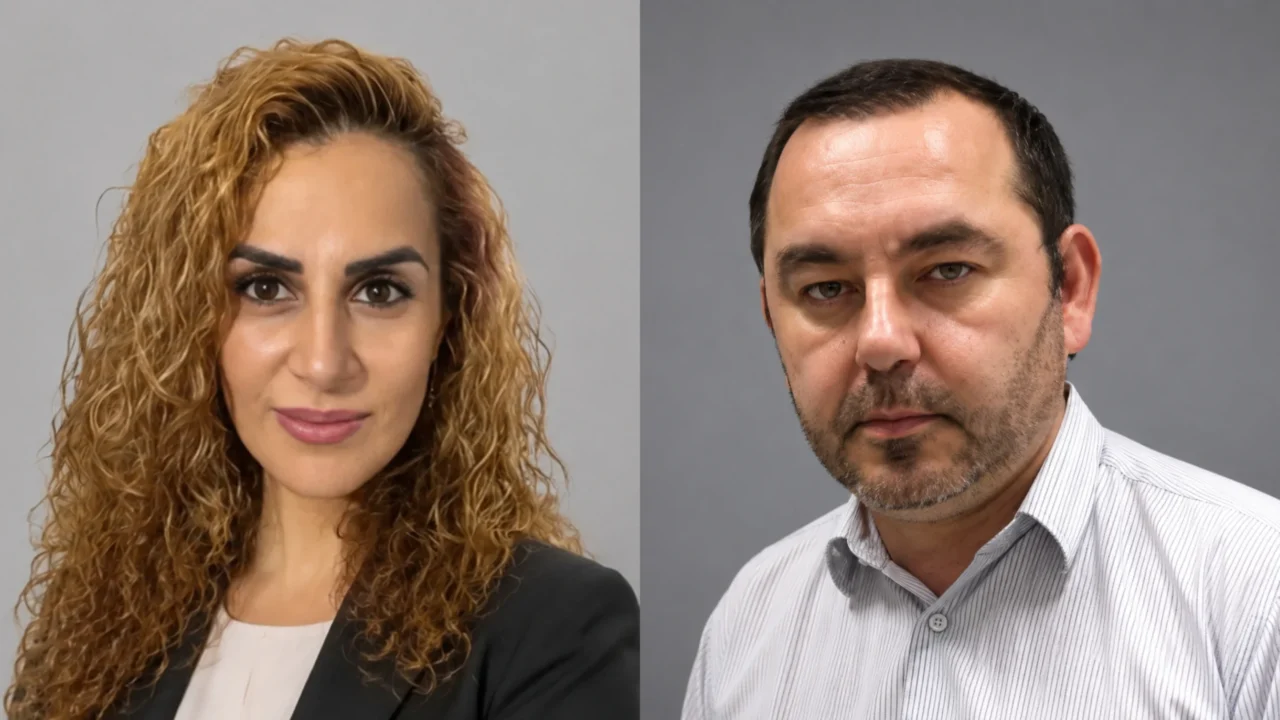
Julie Rayes: Sepsis Rewrites the Role of Mast Cells in Thrombosis
Julie Rayes, Professor of Cardiovascular Sciences, British Heart Foundation Intermediate Fellow, Department of cardiovascular sciences at University of Birmingham, shared Alexander Brill‘s post on LinkedIn, adding:
“A new collaboration with Alexander Brill looking at what mast cells do in deep vein thrombosis (DVT) when sepsis is in the background.
Sepsis changes the composition of venous thrombi.
Mast cells promote thrombus initiation in sterile DVT but not in septic DVT, where they instead control thrombus stability.
Their role is not confined to the vein, since they also regulate fibrin deposition in the lung, remote from the thrombus site.”
Alexander Brill, Associate Professor in Thrombosis and Hemostasis at University of Birmingham, shared a post on LinkedIn about a recent article he and his colleagues co-authored, published in Blood Advances, adding:
“I am glad to see and share our paper published in Blood Advances.”
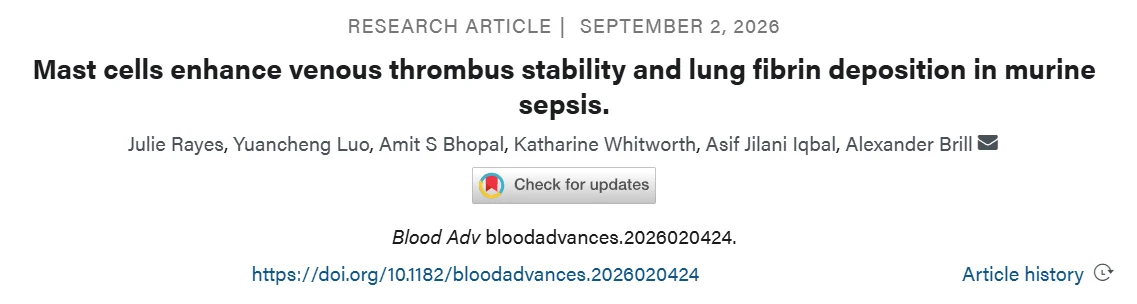
Title: Mast cells enhance venous thrombus stability and lung fibrin deposition in murine sepsis.
Authors: Julie Rayes, Yuancheng Luo, Amit S Bhopal, Katharine Whitworth, Asif Jilani Iqbal, Alexander Brill
Stay updated with Hemostasis Today.
-
Oct 16, 2026, 12:17Exploring Endothelial Cells, Genetic Fate Mapping, and Revascularization – ISTH
-
Oct 16, 2026, 10:07Habib Bennaceur: Building a Stronger Care Pathway for Sickle Cell Disease in India
-
Oct 16, 2026, 09:59Tareq Abadl: A Simple Guide to Blood Collection Tubes
-
Oct 16, 2026, 09:50Mona Alfaraj: Distinguishing HCL from SMZL in Bone Marrow
-
Oct 16, 2026, 09:44New International Consensus on Covert Brain Infarction – International Journal of Stroke
-
Oct 16, 2026, 06:17Neha Rastogi Panda: Precision Diagnosis and Organ Preservation in Splenic Abscess
-
Oct 16, 2026, 05:53Alejandro González Veliz: Looking Beyond Coronary Anatomy to Understand Ischemia
-
Oct 16, 2026, 04:16Asmaa M. Gouda: Advancing Blood Bank Leadership at Alexandria University Hospitals
-
Oct 16, 2026, 03:52Saja Al-Zamili: Minimally Invasive Hematoma Evacuation in Intracerebral Hemorrhage