

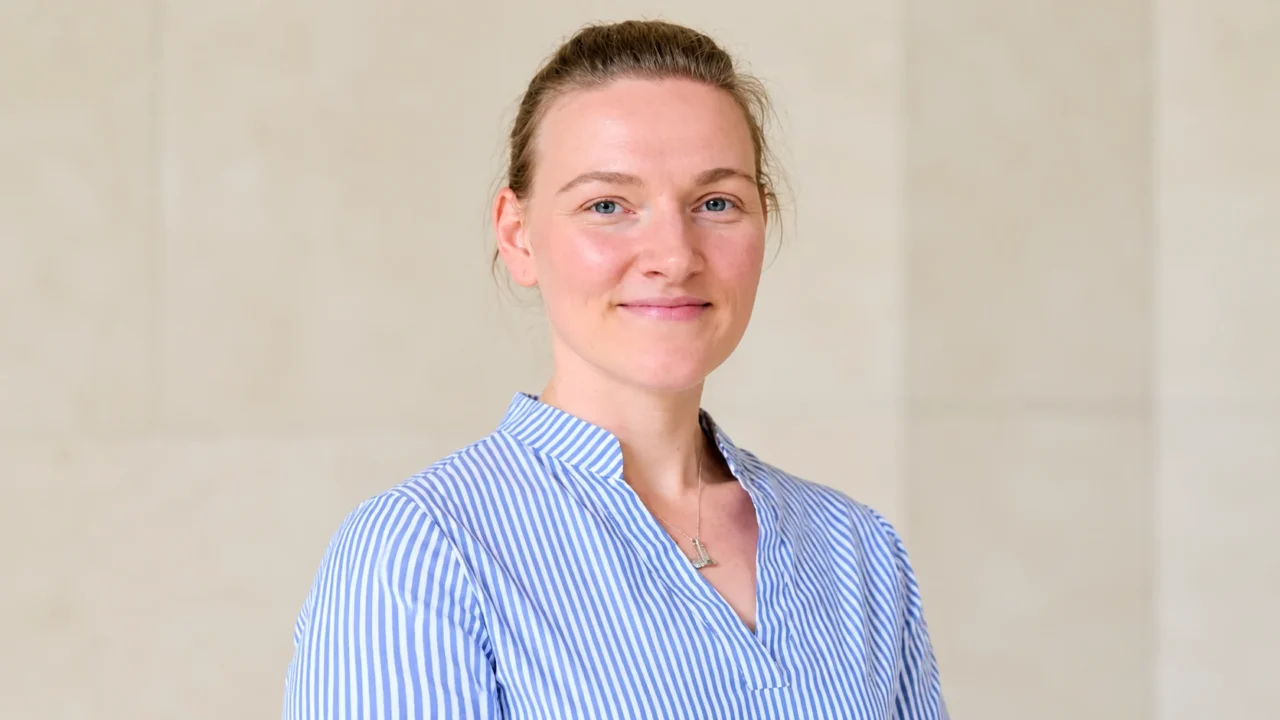
Luisa Weiss: Exploring the Role of Platelets and Extracellular Vesicles in Calcific Aortic Valve Disease
Luisa Weiss, Marie Skłodowska-Curie Postdoctoral Research Fellow at Brigham and Women’s Hospital, shared a post on LinkedIn:
“Two new studies exploring the role of platelets and extracellular vesicles in calcific aortic valve disease!
I am thrilled to share two recent papers from my Marie Skłodowska-Curie Actions funded project PlateCAV3D investigating how bicuspid (BAV) and tricuspid aortic valve (TAV) morphology influences platelet-mediated inflammation, extracellular vesicle biology, and endothelial dysfunction in aortic stenosis.
Paper 1: Circulating extracellular vesicle profiles in BAV vs. TAV disease
Using an integrated approach combining flow cytometry, super-resolution microscopy, and proteomics, we provide the first comprehensive comparison of large extracellular vesicles in patients with BAV and TAV stenosis.
Our findings reveal distinct EV profiles in BAV, including increased platelet- and leukocyte-associated EV populations, altered nanoscale characteristics, and enrichment of inflammatory pathways, highlighting their potential contribution to disease pathogenesis.
Paper 2: Platelet-endothelial crosstalk in aortic valve disease
We demonstrate that platelet-derived mediators induce valve morphology-dependent endothelial dysfunction, with BAV-derived platelet releasate triggering particularly pronounced mitochondrial dysfunction, endothelial remodeling, and inflammatory responses.
By integrating multi-omics, functional assays, and computational signaling analyses, we identify novel mechanisms linking platelet activation to valvular endothelial dysfunction and potential therapeutic targets.
Together, these studies highlight platelets and their released mediators as important contributors to aortic valve disease, providing new insights into the biological differences between BAV and TAV stenosis and opening avenues for future mechanistic and therapeutic investigations.
A huge thank you to all co-authors, collaborators, and clinical teams whose contributions made these studies possible!”
Stay updated with Hemostasis Today.
-
Nov 6, 2026, 22:29Nour Al-Mozain: The Role of Therapeutic Apheresis and Cell Therapy in Advancing Regional Practice
-
Nov 6, 2026, 22:28Moazzam Shahzad: Celebrating Mentees Receiving the 2026 ASH Abstract Achievement Award
-
Nov 6, 2026, 22:25Habib Bennaceur: Self-Sufficiency in Haemophilia Care – A Major Achievement for Panama
-
Nov 6, 2026, 22:25Alessandro Lucchesi: Engineering Disease Trajectories in Myeloproliferative Neoplasms at RiseMPN 2026
-
Nov 6, 2026, 22:24Davood Bava: A New Practical Handbook for Advances in Transfusion Medicine
-
Nov 6, 2026, 22:15Dmitrii Kalinin: Allosteric Anticoagulation – An Alternative Strategy for Safer, Next-Generation Anticoagulants
-
Nov 6, 2026, 15:11Sophia Delicou: Discussing Real World Mitapivat Case Studies at the 37th Panhellenic Hematology Congress
-
Nov 6, 2026, 14:57Rahul Thakur: Pretransplant Biomarkers Linked to Post Transplant GVHD and Survival at ASH 2026
-
Nov 6, 2026, 14:46ASH 2026 Outlines Visa Guidance and Flexible Registration for International Attendees