

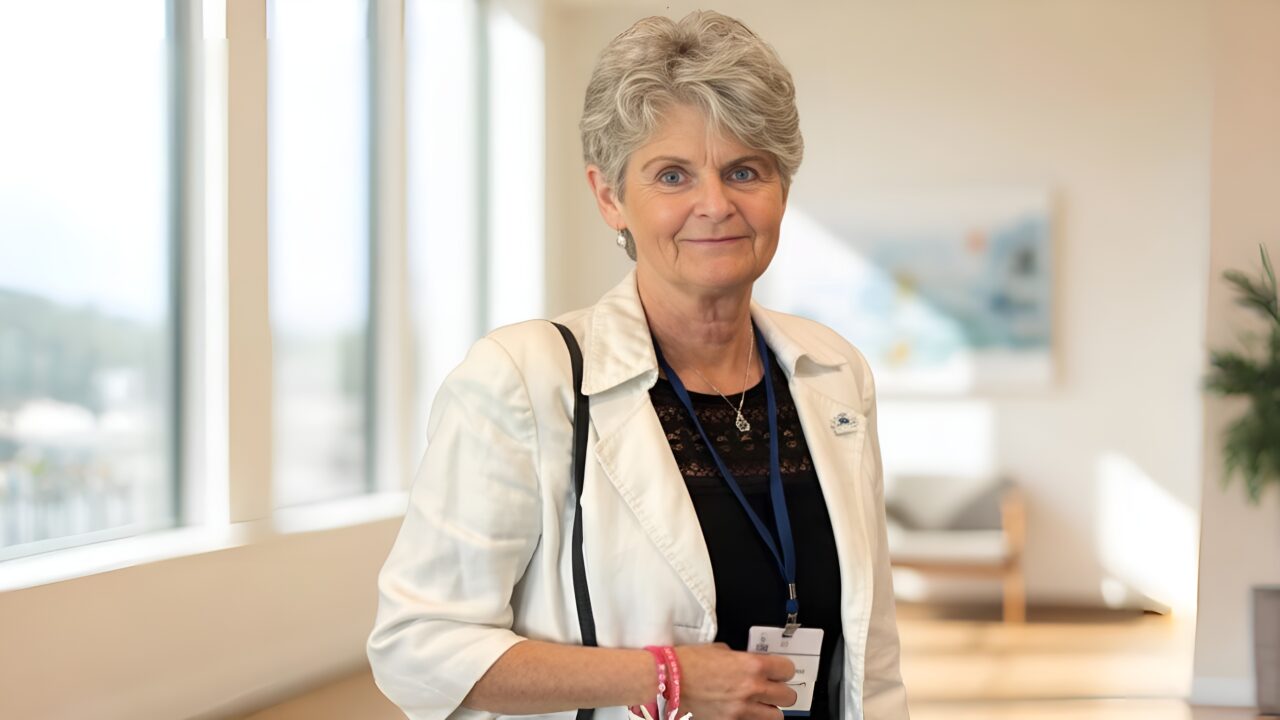
Mildred Lundgren: No Patient with HHT Should Face a Postcode Lottery for Life-Saving Care
Mildred Lundgren, Chairman of the Board at HHT Sweden, shared on LinkedIn about a recent article by Cecilia Ahlström Emanuelsson et al, published in JIM, adding:
“Rare diagnoses must not amount to a ‘postal code lottery’ where the stakes are human lives.
A landmark national registry study was recently published in the ‘Journal of Internal Medicine‘ (2026), led by researchers from Lund University and the Karolinska Institute.
For the first time, survival rates and causes of death for Swedish patients with the genetic vascular disorder HHT (also known as Morbus Osler or Osler’s disease) have been mapped.
The results reveal a painful inequality in the Swedish healthcare system:
- Shorter life expectancy: HHT patients in Sweden have, on average, a life expectancy that is 7.5 years shorter than that of the general population.
- High underdiagnosis: Only 9.3 per 100,000 Swedes have been diagnosed, meaning that more than 50% of those with the disease lack proper care and follow-up.
- Known complications: Patients die in large numbers from serious but potentially preventable complications, such as ischemic heart disease and liver diseases linked to vascular malformations.
Medical paradox and unequal care most notably, international studies from countries with centralized specialty centers (e.g., Denmark and the Netherlands) show that HHT patients there live just as long as the general population.
Systematic screening and early intervention eliminate excess mortality.
In Sweden today, we have skilled, multidisciplinary teams in Lund, Stockholm (Karolinska), Uppsala, and Gothenburg.
The expertise is there.
The problem is structural: If you don’t live in or near these regions, you’re often left out. Healthcare becomes a postcode lottery.
Fair and life-saving care should be determined by medical needs, not by your ZIP code.”
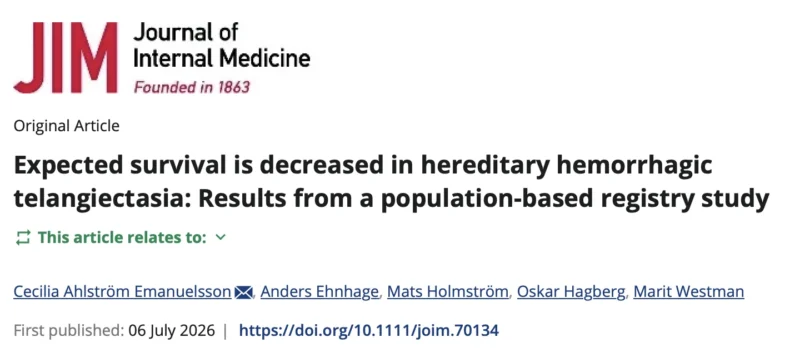
Title: Expected survival is decreased in hereditary hemorrhagic telangiectasia: Results from a population-based registry study
Authors: Cecilia Ahlström Emanuelsson, Anders Ehnhage, Mats Holmström, Oskar Hagberg, Marit Westman
Stay updated on all scientific advances with Hemostasis Today.
-
Oct 10, 2026, 17:58Archo Farzana Batool: Exploring Medical Writing Through an Article on Iron Deficiency Anemia
-
Oct 10, 2026, 17:53Assessing Frailty in Adults With Hemophilia – JTH
-
Oct 10, 2026, 17:52Fatma Sadeghi: Reducing Maternal Health Inequalities Through Nursing Advocacy
-
Oct 10, 2026, 17:50Grzegorz Hensler: How Apheresis Transformed Blood Cell Separation and Collection
-
Oct 10, 2026, 17:47Hemant K Sharma: Japan’s Universal Artificial Blood Research – A Potential Breakthrough in Transfusion Medicine
-
Oct 10, 2026, 17:40John Strouse: Learning About Bleeding Disorders and Sickle Cell Disease at FWGBD
-
Oct 10, 2026, 17:34Mae Caime: Speaking at the Annual Women’s Retreat for the Hemophilia Community in Florida
-
Oct 10, 2026, 17:30Chokri Ben Lamine: PNH beyond the Textbook Triad
-
Oct 10, 2026, 17:29Ruah Alyamany: Thrombosis and Anticoagulation in Hematological Malignancies at SOHO KSA 2026