


Mohammadreza Babaei: Anticoagulation versus No Anticoagulation after Intracranial Hemorrhage in Patients with Atrial Fibrillation
Amir Ghaffari Jolfayi, Research Assistant at Rajaie Cardiovascular, Medical and Research Institute, quoted Mohammadreza Babaei’s post on LinkedIn:
“Excited to share our latest publication in BMC Cardiovascular Disorders!
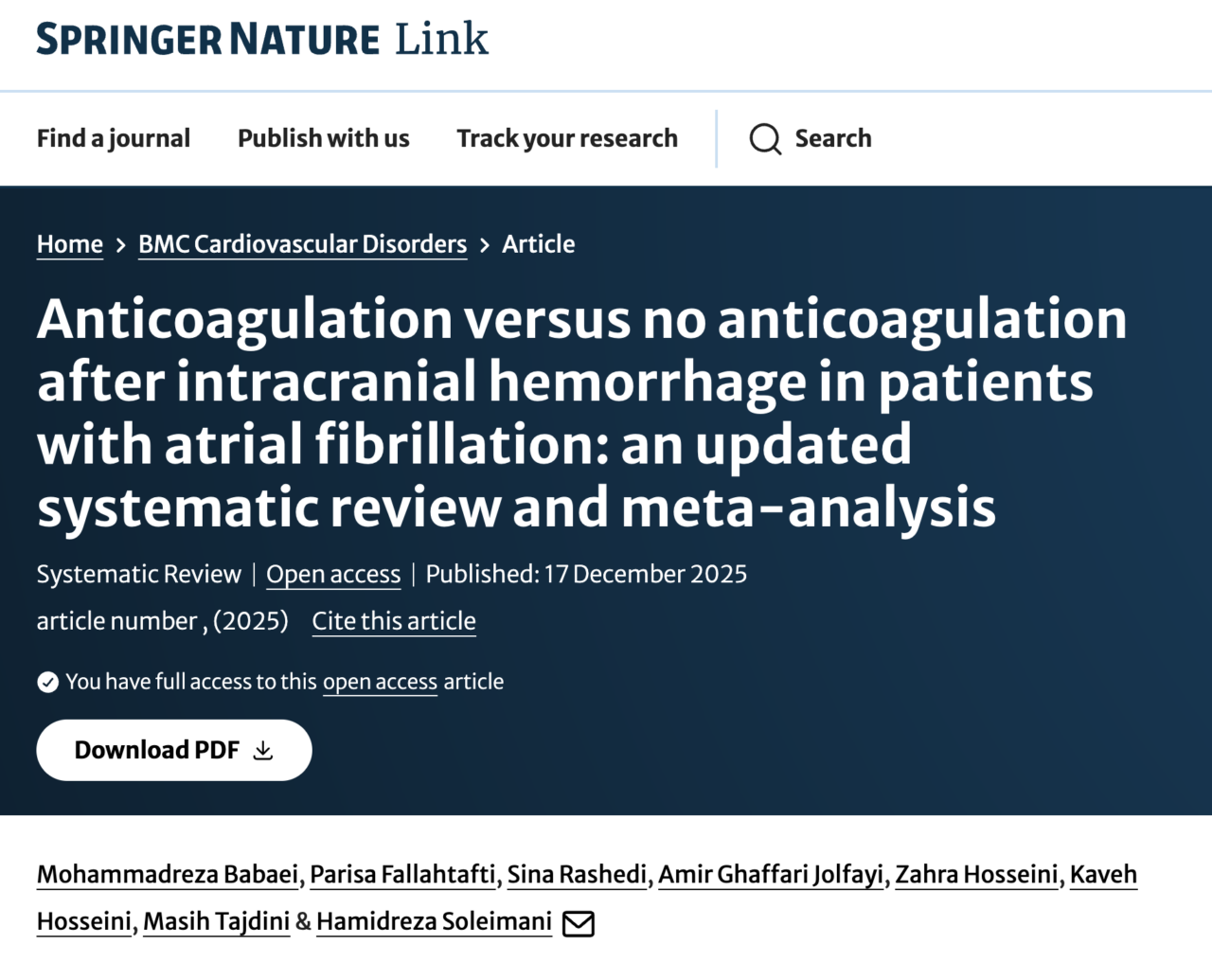
Title: Anticoagulation versus no anticoagulation after intracranial hemorrhage in patients with atrial fibrillation: an updated systematic review and meta-analysis
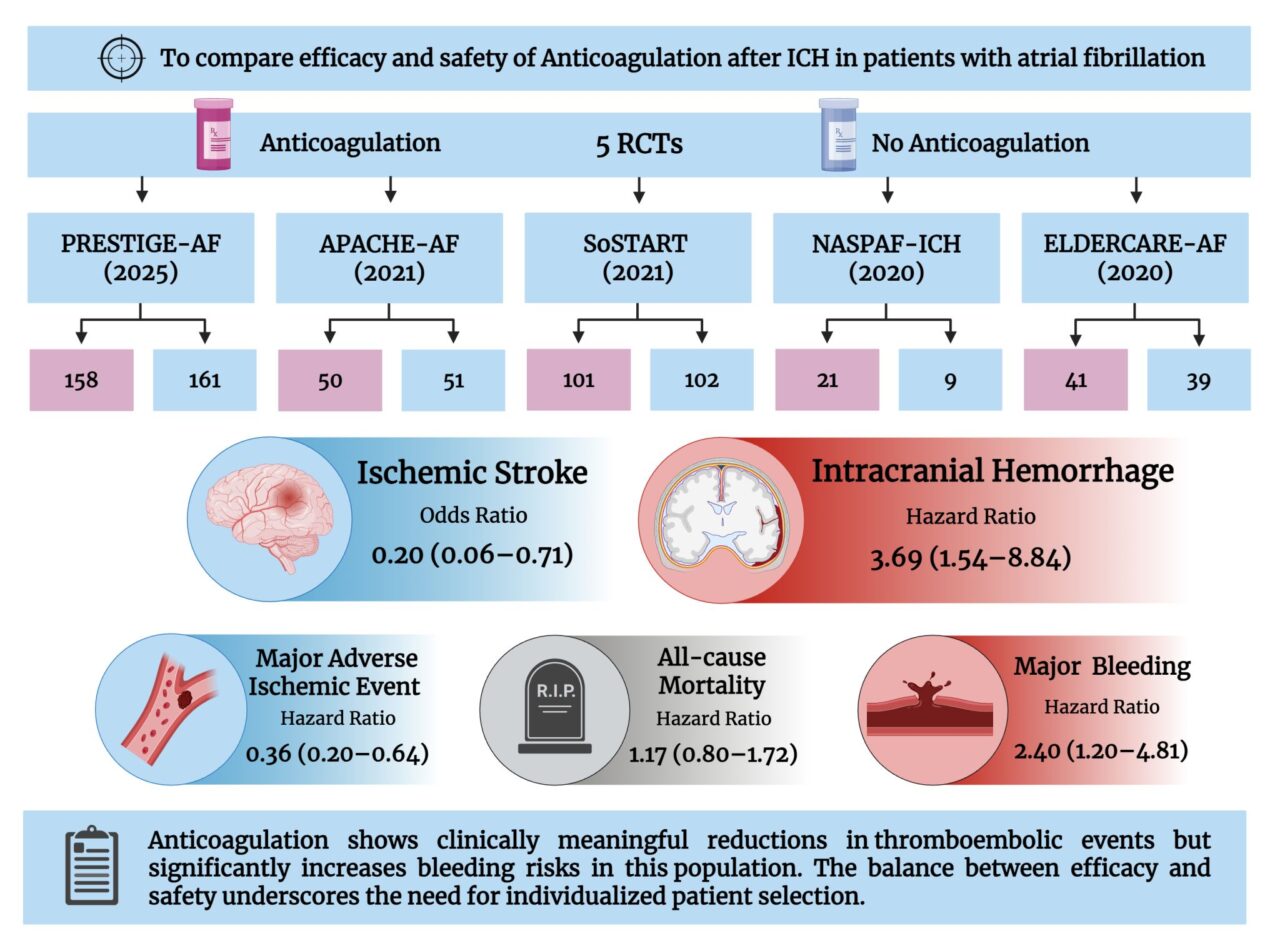
Key findings: This meta-analysis of five randomized controlled trials shows that anticoagulation reduces thromboembolic events in patients with atrial fibrillation after intracranial hemorrhage, but is associated with a notably higher risk of recurrent bleeding. It underscores the need for personalized, patient-specific decision-making to balance these risks and benefits.
Special Thanks to Mohammadreza Babaei and the team!
Read the full article here”
Title: Anticoagulation versus no anticoagulation after intracranial hemorrhage in patients with atrial fibrillation: an updated systematic review and meta-analysis
Authors: Mohammadreza Babaei, Parisa Fallahtafti, Sina Rashedi, Amir Ghaffari Jolfayi, Zahra Hosseini, Kaveh Hosseini, Masih Tajdini, Hamidreza Soleimani
Quoting Mohammadreza Babaei’s post:
“Check out our recently published article in BMC Cardiovascular Disorders, titled:
“Anticoagulation versus no anticoagulation after intracranial hemorrhage in patients with atrial fibrillation: an updated systematic review and meta-analysis”
The results of this meta-analysis of five RCTs suggest that anticoagulation provides clinically meaningful reductions in thromboembolic events, but at the cost of a significantly increased risk of bleeding in this population. These findings indicate the importance of carefully selecting patients on an individual basis when weighing the benefits and risks of therapy.
Many thanks to the team members, Parisa Fallahtafti, Sina Rashedi, and Amir Ghaffari Jolfayi for their dedication, and our professors Hamidreza Soleimani, Zahra Hosseini, Kaveh Hosseini, Masih Tajdini for their support and guidance.”
Discover the latest in Hemostasis Today.
-
Oct 10, 2026, 09:31Help Shape the New ASH Iron Deficiency Guidelines – American Society of Hematology
-
Oct 10, 2026, 09:05Wolfgang Miesbach: Moving from Bleed Control to Comprehensive Joint Health
-
Oct 10, 2026, 07:59Leila Caroline Souza Reis: Enoxaparin Dosing for VTE Prevention in Adults With Obesity
-
Oct 10, 2026, 07:41Adeeb Bazuhair: New Evidence for Catheter Directed Thrombolysis in Acute PE
-
Oct 10, 2026, 07:22Poppy Clarke: Turning Steps Into Support for Thrombosis Awareness
-
Oct 10, 2026, 07:12Hamzah Khan: The Role of Genuine Curiosity in Driving High-Impact Academic Research
-
Oct 10, 2026, 06:58Nita Radhakrishnan: Turning Evidence Into Action for Hemophilia Care in India
-
Oct 10, 2026, 06:48Nutan Kaushik: HemeNext 2.0 Brings Global Perspectives to Hematology
-
Oct 10, 2026, 06:43Suthesh Sivapalaratnam: Advancing Bleeding Disorder Care at EHC 2026