

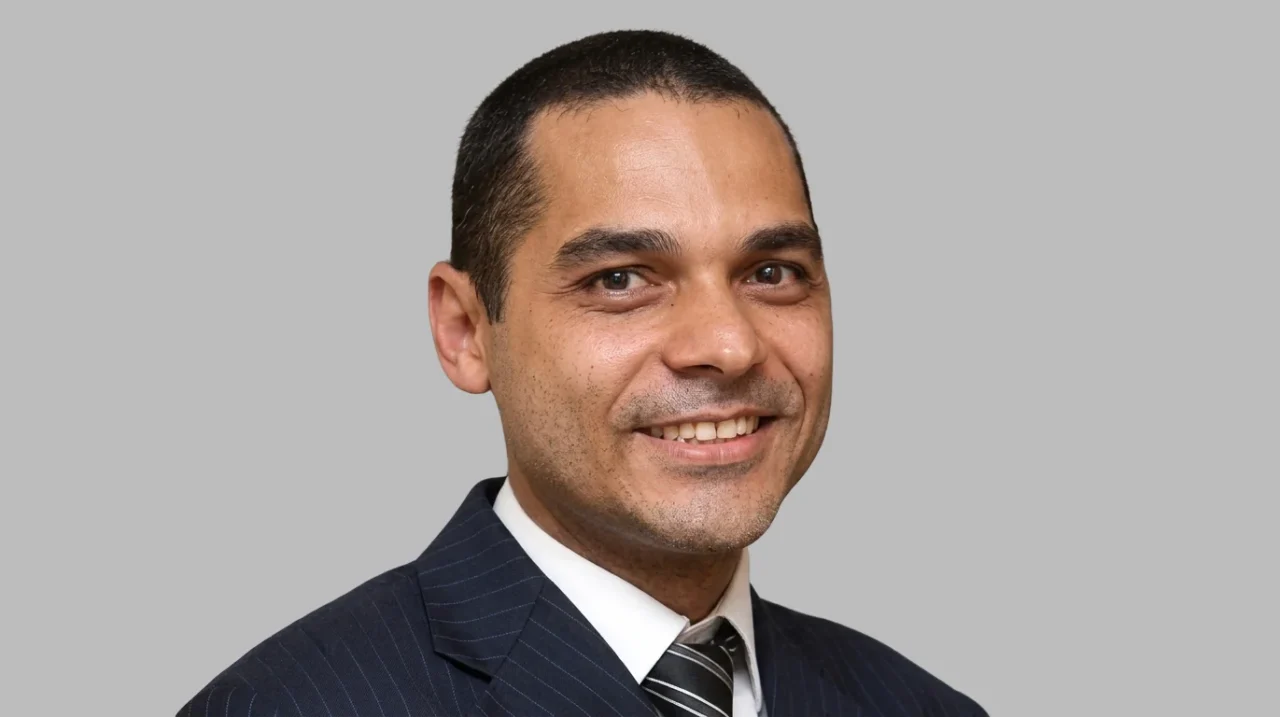
Rafael Gomes: Is Dual Antiplatelet Therapy Still Necessary After LAAO?
Rafael Gomes, Cardiologist, Echocardiographer, Ergometrist at Real Hospital Português, shared a post on LinkedIn about a recent article by Vivek Y. Reddy et al, published in JAMA, adding:
”TCTMD 2026 | SIMPLAAFY: Is Dual Antiplatelet Therapy Still Necessary After LAAO?
Following left atrial appendage occlusion (LAAO), the challenge is clear: prevent device-related thrombosis while minimizing bleeding in an already high-risk population.
The SIMPLAAFY randomized trial, simultaneously published in JAMA, provides important new evidence.
Study design
1,857 patients underwent successful WATCHMAN FLX Pro implantation (Boston Scientific) and were randomized to three antithrombotic strategies:
- Dual antiplatelet therapy for six months (n equals 624).
- Reduced-dose direct oral anticoagulant for three months (n equals 620).
- Aspirin monotherapy (n equals 613).
Primary endpoint at 6 months
All-cause death, stroke, systemic embolism, or major bleeding:
- Dual antiplatelet therapy: 6.9 percent.
- Reduced-dose direct oral anticoagulant: 5.1 percent.
- Aspirin monotherapy: 3.3 percent.
Both monotherapy strategies demonstrated noninferiority to dual antiplatelet therapy (p less than 0.001).
- Bleeding and thrombotic outcomes
Major bleeding:
- DAPT: 4.5 percent.
- Reduced-dose DOAC: 2.7 percent.
- Aspirin alone: 1.7 percent.
Ischemic stroke: 0.7 percent in all three groups.
Device-related thrombosis at 45 days:
- DAPT: 3.4 percent.
- Reduced-dose DOAC: 0.9 percent.
- Aspirin alone: 2.7 percent.
What should we take from these findings?
The results challenge the routine use of DAPT after uncomplicated LAAO.
Aspirin monotherapy was associated with the lowest bleeding rates, while reduced-dose DOAC showed the lowest observed rate of device-related thrombosis.
However, these secondary findings were exploratory, and the trial was not powered to establish equivalence between strategies for individual thromboembolic outcomes.
Importantly, the results apply to selected patients treated with WATCHMAN FLX Pro, with clinical follow-up currently limited to six months.
The key question may no longer be whether we can simplify antithrombotic therapy after LAAO, but which patients benefit most from each strategy.”
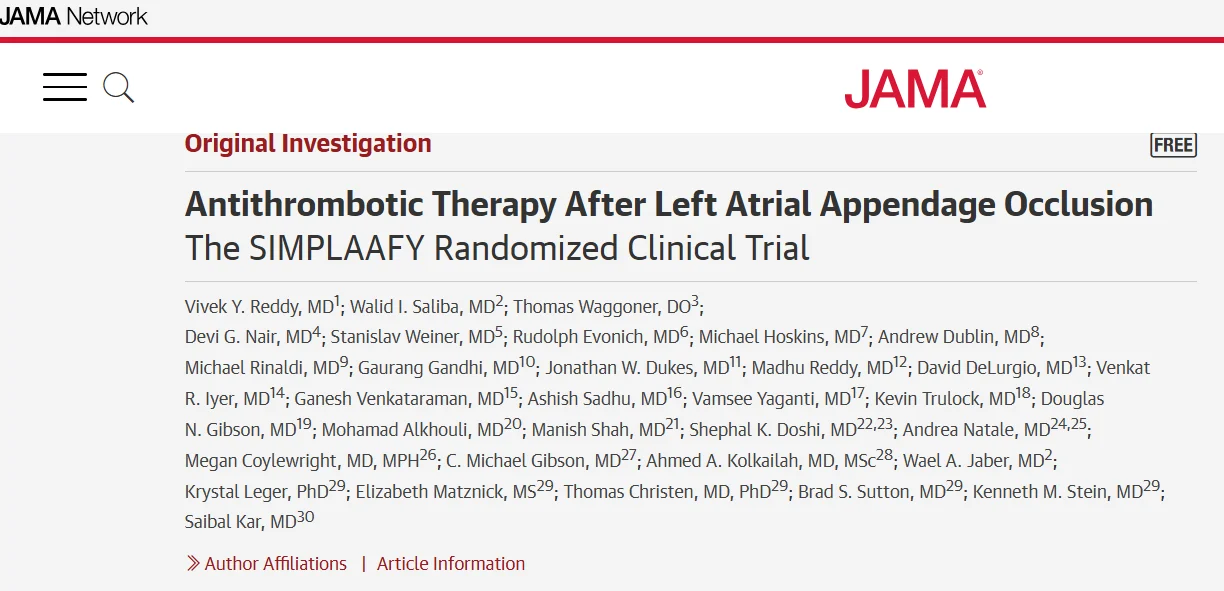
Title: Antithrombotic Therapy After Left Atrial Appendage OcclusionThe SIMPLAAFY Randomized Clinical Trial
Authors: Vivek Y. Reddy, Walid I. Saliba, Thomas Waggoner, Devi G. Nair, Stanislav Weiner, Rudolph Evonich, Michael Hoskins, Andrew Dublin, Michael Rinaldi, Gaurang Gandhi, Jonathan W. Dukes, Madhu Reddy, David DeLurgio, Venkat R. Iyer, Ganesh Venkataraman, Ashish Sadhu, Vamsee Yaganti, Kevin Trulock, Douglas N. Gibson, Mohamad Alkhouli, Manish Shah, Shephal K. Doshi, Andrea Natale, Megan Coylewright, C. Michael Gibson, Ahmed A. Kolkailah, Wael A. Jaber, Krystal Leger, Elizabeth Matznick, Thomas Christen, Brad S. Sutton, Kenneth M. Stein, Saibal Kar
Stay updated on all scientific advances with Hemostasis Today.
-
Nov 7, 2026, 16:31Arwa Z. Al-Riyami: EMR Transfusion Medicine Featured in October 2026 Issue of ISBT Transfusion Today
-
Nov 7, 2026, 16:15Mazyar Shadman: Novel BTK Inhibitors and DOACs A Multicenter Study of Bleeding Risk
-
Nov 7, 2026, 15:54Hassan Raza: Beyond the 100 Minus Age Rule in Bone Marrow Cellularity
-
Nov 7, 2026, 15:42Andrew Zapfel։ Advancing Sickle Cell Disease Care Through Training, Advocacy and Collaboration
-
Nov 7, 2026, 15:34Salih Ehsan: Iron Deficiency Beyond Conventional Ferritin Cutoffs
-
Nov 7, 2026, 15:21Shamee Shastry: Improving the Reliability and Reproducibility of the Monocyte Monolayer Assay
-
Nov 7, 2026, 14:39AI-Assisted Donor Screening and Transfusion Decision Support: A Prospective Multicentre Evaluation
-
Nov 7, 2026, 14:26Qiong Tang: Changing Perspectives on Iron Deficiency and Supplementation
-
Nov 7, 2026, 14:21Nathan Connell: Bringing VWD Education Across Borders to Improve Patient Care