

Can We Better Predict Who Is Most Likely to Have Another VTE After a First Event? – RPTH Journal
RPTH Journal shared a post on LinkedIn about a recent article by Eugenia Biguzzi, adding:
”Can we better predict who is most likely to have another VTE after a first event?
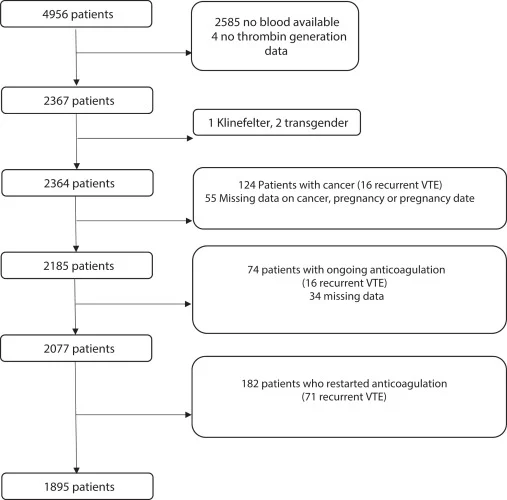
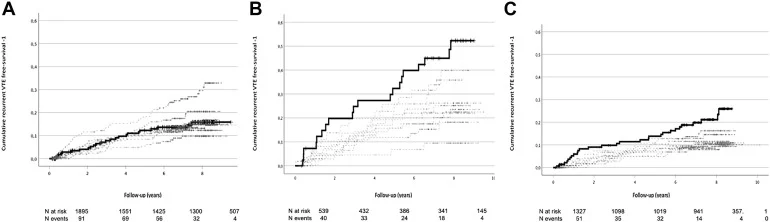
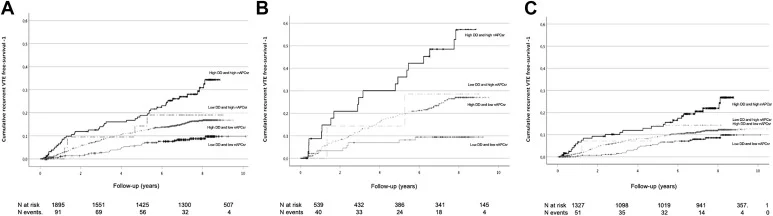
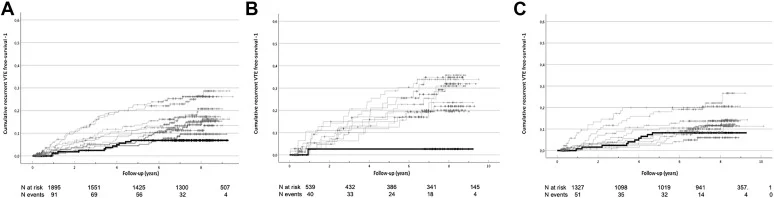
A new RPTH study suggests that combining d-dimer with thrombin generation may improve risk stratification for recurrent venous thromboembolism. In this cohort of 1,895 patients, recurrence risk was lowest in those with low d-dimer + low thrombin generation, intermediate when only 1 marker was elevated, and highest when both were elevated.
The signal was especially striking in unprovoked VTE. Patients with high d-dimer and high thrombin generation had an incidence rate of 9.80 per 100 patient-years, compared with 1.36 per 100 patient-years in those with low levels of both markers, with an adjusted hazard ratio of 8.59.
Why this matters:
Extending anticoagulation lowers recurrence risk, but bleeding risk remains the tradeoff. Tools that better separate low-, intermediate-, and high-risk patients could help guide more personalized decisions after a first VTE.
A key caveat: thrombin generation was measured with a specialized assay, which may limit immediate routine clinical use. Still, this study adds to the push toward biomarker-guided anticoagulation decisions rather than relying on broad clinical categories alone.”
Title: Recurrent venous thromboembolism: association with thrombin generation and d-dimer
Authors: Eugenia Biguzzi, Kristien Winckers, Tilman M. Hackeng, Frits R. Rosendaal, Astrid van Hylckama Vlieg
Read the Full Article on RPTH
Stay updated on all scientific advances with Hemostasis Today.
-
Oct 14, 2026, 11:58Cesare Medri: A New Learning Achievement in Haemoglobin Disorder Care
-
Oct 14, 2026, 07:36Daniel Pereira Monteiro: ASCAT 2026 A Day of Science, Connection and Community
-
Oct 14, 2026, 07:20Rachael Jackman: Understanding Models of Transfusion Medicine at AABB 2026
-
Oct 14, 2026, 07:09Dianne E. van der Wal: A New Chapter in Academia Celebrating a Journey in Research, Teaching and Platelet Science
-
Oct 14, 2026, 06:55Mahdieh Dagina Pedersen: A Meaningful Milestone in Hemophilia A Research and Oral Drug Development
-
Oct 14, 2026, 06:37Neoklis Mparis: Unilateral Adrenal Haemorrhage in Primary Antiphospholipid Syndrome During Bridging Anticoagulation
-
Oct 14, 2026, 06:00Aymen A.: LAAC vs. OAC in Patients with Atrial Fibrillation Including CHAMPION-AF and CLOSURE-AF Trials
-
Oct 13, 2026, 21:05Francisco Chacón-Lozsán: Heparin-Induced Thrombocytopenia – When an Anticoagulant Triggers Thrombosis
-
Oct 13, 2026, 21:04Aref Zribi: Isolated Tumor Thrombus and the Role of Prophylactic Anticoagulation