

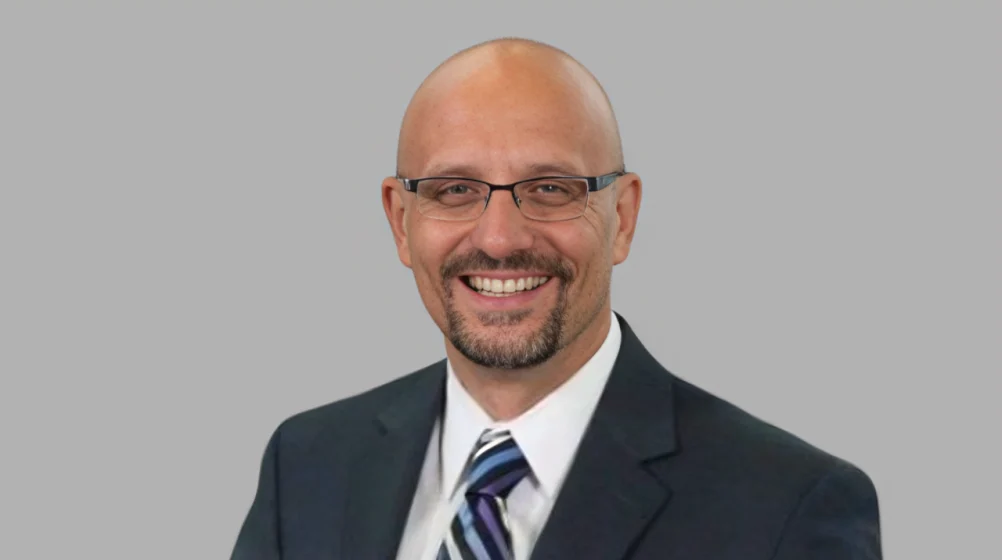
Stelios Andreadis։ Human Salivary Gland Organoids Offer New Potential for Regenerative Medicine
Stelios Andreadis, Director, Center for Cell, Gene and Tissue Engineering (CGTE) at University at Buffalo, shared a post on LinkedIn about a recent article he and his colleagues co-authored, published in Nature Communications, adding:
”This one has been cooking for a long time, and I’m especially excited to finally see it published in Nature Communications!
Our team developed a method to generate salivary gland progenitor cells from human pluripotent stem cells by recreating key steps of normal gland development.
In 3D hydrogels, these cells self-organized into salivary gland organoids, or ‘mini-organs,’ with important structural and functional features of native tissue.
Even more exciting, when transplanted into injured salivary glands in mice, the human organoids integrated into the host tissue and gave rise to all three major salivary gland cell types: acinar, ductal, and myoepithelial cells.
This work highlights the potential of these organoids not only for regenerative medicine, but also as human models for studying disease and testing therapies aimed at restoring salivary gland function after radiation treatment for head and neck cancer or in autoimmune diseases such as Sjögren’s disease.
A huge congratulations to Laura Sherwood, an NIH F31 fellow, and Ronel Samuel, now a postdoctoral fellow at the University of Pennsylvania, who spearheaded this work; Sai Harsha B. Bhamidipati, who led the bioinformatics analysis with help from Yali Zhang, Jianmin Wang, in the Song Liu laboratory at Roswell Park Comprehensive Cancer Center Park Cancer Center; and Kihoon Nam, Frank Maslow and Travis Small in the Olga Baker laboratory at University of Missouri-Columbia, who performed the transplantation studies.
Very proud of this collaborative effort and of everyone who helped bring it across the finish line.”
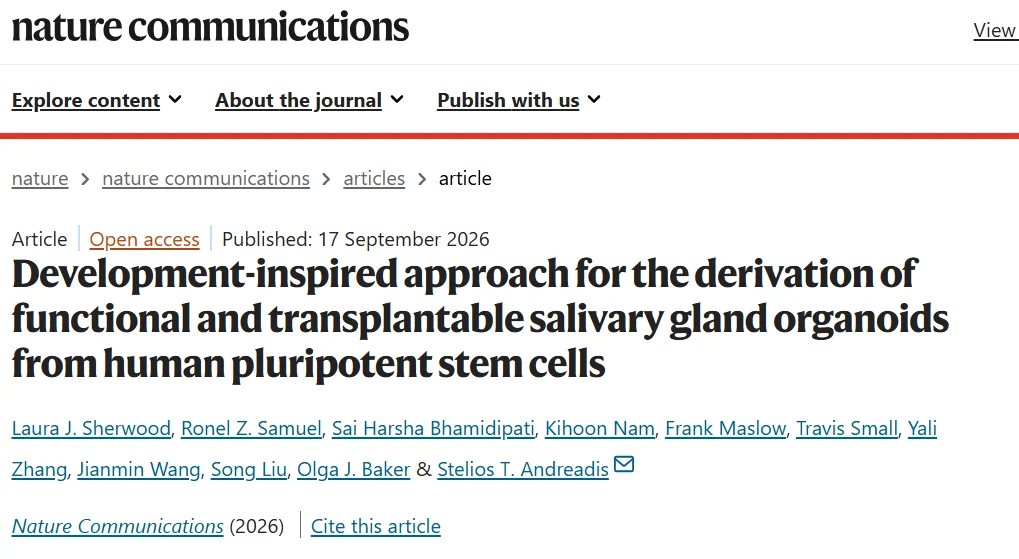
Title: Development-inspired approach for the derivation of functional and transplantable salivary gland organoids from human pluripotent stem cells
Authors: Laura J. Sherwood, Ronel Z. Samuel, Sai Harsha Bhamidipati, Kihoon Nam, Frank Maslow, Travis Small, Yali Zhang, Jianmin Wang, Song Liu, Olga J. Baker, Stelios T. Andreadis
Stay updated on all scientific advances with Hemostasis Today.
-
Sep 20, 2026, 16:42Kate Grushetzkaya: The Essential Flow Cytometry Checklist – 6 Steps to Better Data
-
Sep 20, 2026, 16:32New Episode of The Hematologist Podcast – ASH
-
Sep 20, 2026, 16:26Thomas Schinecker: A New Era for Health Innovation – Inside the Roche Genentech Innovation Center
-
Sep 20, 2026, 16:19Astha Srivastava: The Missing Megakaryocytes in Amegakaryocytic Thrombocytopenia
-
Sep 20, 2026, 16:19Heghine Khachatryan: An Elegant Example of Precision Thrombolysis – Targeting the Scaffold of Microvascular Thrombosis
-
Sep 20, 2026, 16:01Mohamed Ismail: Managing Extensive Iliofemoral and Inferior Vena Cava DVT
-
Sep 20, 2026, 15:58Can αIIbβ3 Receptor Play a Role in Platelet Production – Glanzmann’s Research Foundation
-
Sep 20, 2026, 15:46Alexsander Santiago: Evaluating Clinical Harm from Missing versus Overdiagnosing HIT
-
Sep 20, 2026, 15:28Nico Gagelmann: iMTSS to Dissect the Drivers of Post-Transplant Outcomes