


Plaque Rupture and Thrombosis
Davide Capodanno, Full Professor of Cardiology at the University of Catania, shared on X:
“Plaque rupture with thrombosis drives ACS, and thin-cap fibroatheroma is the archetypal high-risk plaque. There are consistent features of vulnerability across imaging modalities (large plaque burden, small MLA, TCFA, high LCBI, positive remodelling, etc.), with risk increasing when multiple features coexist. Yet absolute event rates remain low, consistent with pathology data showing most plaque ruptures are clinically silent.
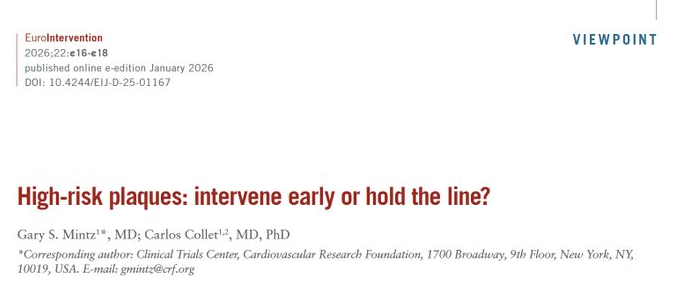
So should we prophylactically stent high-risk plaques? According to this Viewpoint, completed trials (PROSPECT ABSORB, PREVENT) suggest no durable reduction in death or MI versus optimal medical therapy—benefits are limited to fewer revascularisations, at the cost of many unnecessary PCIs. With modern medical therapy, a wait-and-see strategy appears safe, avoiding most interventions without adverse consequences. For now, data favor surveillance and aggressive medical therapy over preventive PCI.
READ THE VIEWPOINT HERE.
Stay updated with Hemostasis Today.
-
Sep 17, 2026, 08:18Anirban Sen Gupta: From Flow to Clot Insights Into Hemostasis and Thrombosis
-
Sep 17, 2026, 08:03Aya Sherif: HEMO COP – Building a Collaborative Future for Hemophilia Care
-
Sep 17, 2026, 07:50Applications Are Now Open for the 2026 WFH IHTC Fellowships
-
Sep 17, 2026, 07:37Jim Hoffman: Could NET Removal Help Restore Vascular Homeostasis?
-
Sep 17, 2026, 04:43Tom Tang: Preventing Post Thrombotic Syndrome Starts With Early DVT Prevention
-
Sep 17, 2026, 04:35Veronica Sanchez: Menopause as a Risk for Heart Disaese
-
Sep 17, 2026, 03:20Jessica Frye: Understanding VTE in Pregnancy and the Postpartum Period
-
Sep 17, 2026, 03:04Leonardo Roever: Exploring the Role of Glutamine Metabolism in Atherosclerosis
-
Sep 17, 2026, 02:36Wolfgang Miesbach: Effectiveness of Avatrombopag in ITP Treatment