


Ney Carter Borges: Targeting the Gut Microbiome to Prevent Atrial Fibrillation
Ney Carter Borges, Member Cardiologist of Global Physician Association at Cleveland Clinic Florida, shared a post on LinkedIn:
”Gut Microbiota, TMAO and Atrial Fibrillation: A New Therapeutic Horizon
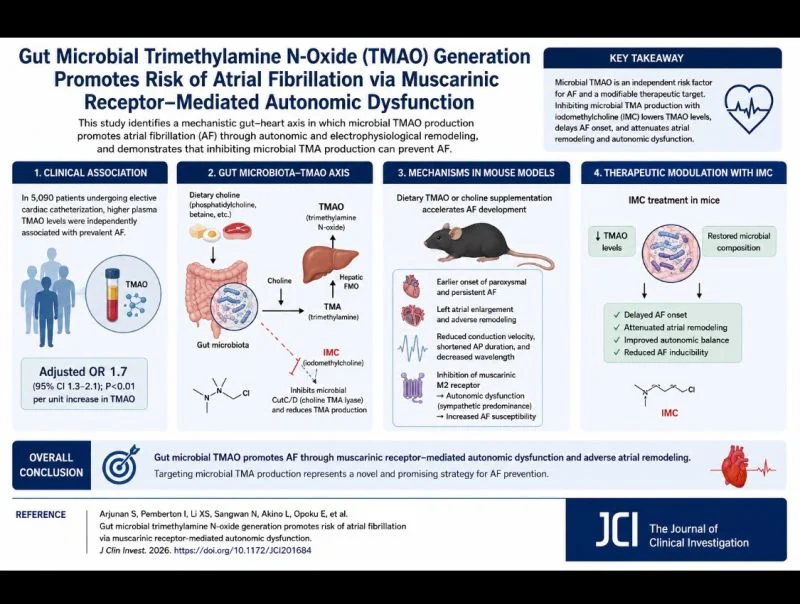
Atrial fibrillation (AF) has traditionally been viewed as the consequence of ageing, hypertension, and structural heart disease. This elegant study expands that paradigm by showing that the gut microbiome may actively participate in the development and progression of AF through the production of trimethylamine N-oxide (TMAO), a metabolite generated when intestinal bacteria metabolize dietary choline.
In a cohort of more than 5,000 patients, higher circulating TMAO concentrations were independently associated with a significantly greater prevalence of AF, even after adjustment for conventional cardiovascular risk factors.
The experimental findings provide convincing biological support for this clinical observation. Animals receiving diets enriched with either TMAO or choline developed atrial fibrillation earlier, exhibited greater left atrial enlargement, impaired electrical conduction, shorter atrial refractory periods, and increased vulnerability to sustained arrhythmias.
Rather than identifying inflammation as the principal mechanism, the investigators demonstrated that TMAO disrupts cardiac autonomic regulation by inhibiting muscarinic M2 receptors, promoting sympathetic predominance and creating an electrophysiological substrate favourable for AF initiation and maintenance.
One of the most promising aspects of the study was the successful inhibition of this pathway using iodomethylcholine (IMC), a gut-selective inhibitor of microbial TMA production. By reducing TMAO generation at its intestinal source, IMC delayed the onset of AF, attenuated atrial remodelling, and restored a healthier microbial profile without meaningful systemic exposure. This represents an innovative therapeutic concept: preventing disease by targeting microbial metabolism rather than treating its cardiovascular consequences after they occur.
Although these findings require confirmation in prospective human clinical trials, they strengthen the emerging concept of the gut–heart axis and suggest that modulation of the intestinal microbiome may become an important component of future AF prevention strategies.
Beyond introducing TMAO as a biomarker, this work opens the possibility that microbiome-directed therapies could eventually complement conventional approaches focused on rhythm control, anticoagulation, and aggressive management of cardiovascular risk factors.”
Find more posts featuring Ney Carter Borges on Hemostasis Today.
-
Sep 13, 2026, 14:37Mohammad Zamrood Khan: Hereditary Spherocytosis and Protein C/S Deficiency Case Report Submitted
-
Sep 13, 2026, 14:33Heghine Khachatryan: A Resource-Adapted Approach to Hemophilia Joint Care
-
Sep 13, 2026, 14:23Simon Fletcher: The Unmet Burden of Factor VII Deficiency
-
Sep 13, 2026, 14:10Azusa Nagao: The Evolving Burden of Haemophilia Prophylaxis
-
Sep 13, 2026, 13:50Priya Sriskandarajah: The Challenge of Thrombotic Risk in Myeloproliferative Neoplasms
-
Sep 13, 2026, 12:31Vishakha K. Kumar: ISTH Opens Public Comment Period on New Guidance
-
Sep 13, 2026, 12:13Tahsin Ara Mim: Takayasu’s Arteritis Case Report Secures 2nd Runner-Up
-
Sep 13, 2026, 11:26Tareq Abadl: When Good Samples Give Bad Numbers – Spotting EDTA Contamination in the Lab
-
Sep 13, 2026, 11:22Amanda Unsworth: Gratitude and Next Steps as Leadership Transitions at The Platelet Society