

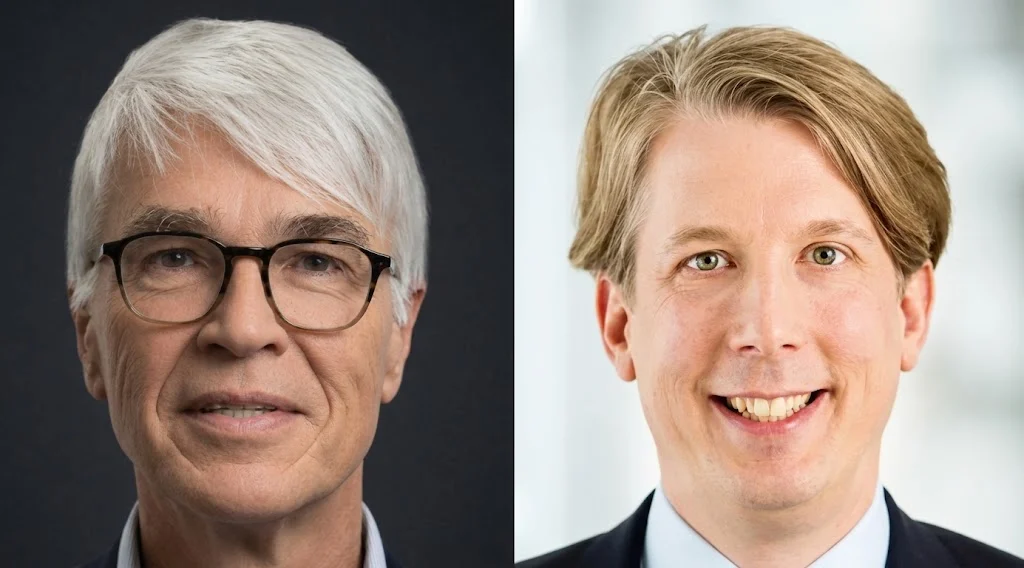
Wolfgang Miesbach: Modern Hemophilia Therapies and the Challenges of Laboratory Monitoring
Wolfgang Miesbach, Professor of Medicine at Frankfurt University Hospital, shared post on LinkedIn about a recent article he and his colleagues co-authored, published in Transfusion Medicine and Hemotherapy, adding:
“Excited to share our new open-access review in Transfusion Medicine and Hemotherapy!
From EHL factor concentrates and FVIII-mimetic antibodies to gene therapies and rebalancing agents, we have more tools than ever to improve prophylaxis and patient outcomes.
However, these therapeutic breakthroughs also introduce profound analytical challenges for our laboratories.
Conventional coagulation assays were designed for standard replacement therapies.
Today, applying them to modified molecules or non-factor therapies requires careful navigation:
Non-Factor Interferences: FVIII-mimetics (like emicizumab) artificially shorten aPTT-based tests, rendering them unreliable without specific adaptations. Meanwhile, rebalancing therapies (like fitusiran or anti-TFPIs) require entirely new monitoring paradigms.
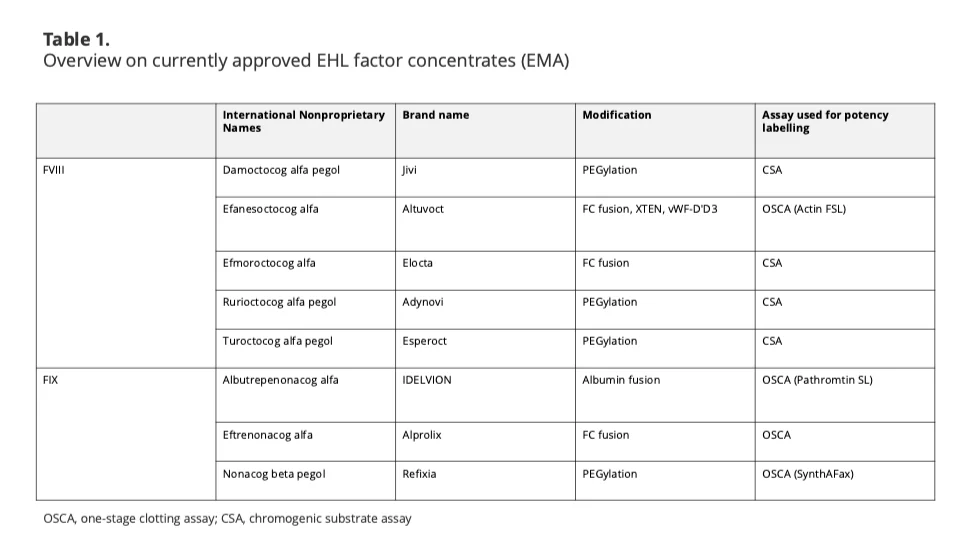
Gene Therapy Discrepancies: Transgene-derived FVIII and FIX variants often show systematic, assay-dependent discrepancies between one-stage clotting assays (OSCA) and chromogenic substrate assays (CSA). Consistent longitudinal monitoring strategies are absolutely essential for accurate follow-up.
The Role of TGAs: Global hemostatic assays, particularly Thrombin Generation Assays (TGAs), hold immense promise for the integrative assessment of a patient’s coagulation potential. However, standardization remains a hurdle we must overcome as a community.
As clinicians and researchers, close communication with our specialized hemostasis laboratories is no longer just helpful—it is critical to avoid misinterpreting data and to ensure optimal patient care.”
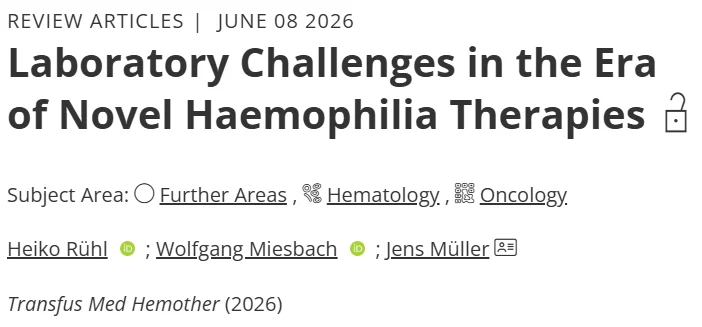
Tiltle: Laboratory Challenges in the Era of Novel Haemophilia Therapies.
Authors: Heiko Rühl, Wolfgang Miesbach and Jens Müller
Stay updated on all scientific advances with Hemostasis Today.
-
Nov 15, 2026, 23:44Pablo César Spada: Prevention of Venous Thromboembolism After Total Hip or Knee Replacement
-
Nov 15, 2026, 23:30Eshal Amir: Factor XI Inhibitors in AFib and Aortic Mortality Trends
-
Nov 15, 2026, 23:19Hamza Bashir: Adding Endovascular Therapy to Anticoagulation Cuts Moderate-to-Severe PTS in Half
-
Nov 15, 2026, 23:06Lanre Tunji-Ajayi: 2 Days of Deliberative Dialogue Hosted by the Network of Rare Blood Disorder Organizations
-
Nov 15, 2026, 23:00Fanny Delettre: Looking Back at Volunteer Blood Donor Friends Day
-
Nov 15, 2026, 20:56Victoria Adedoyin Adisa-Thomas: What I Learned About SCD During My Genetic Counselling Rotation
-
Nov 15, 2026, 20:55Martin Holst Lange: One Step Closer to a Potential New Treatment for Sickle Cell Disease
-
Nov 15, 2026, 20:53Bontha Babu: Health-Related Quality of Life Among Adults with Sickle Cell Disease in India
-
Nov 15, 2026, 20:52Miguel Ángel Herrera Rojas: A First-Line ITP Approach Presented at ASH in 2013 Now Reflected in the 2026 Guidelines