


Yara Mohamed: How Senescent Cells May Promote Thrombosis by Inhibiting Fibrinolysis
Yara Mohamed, Agricultural Biotechnology Student at Alexandria University, shared a post on LinkedIn:
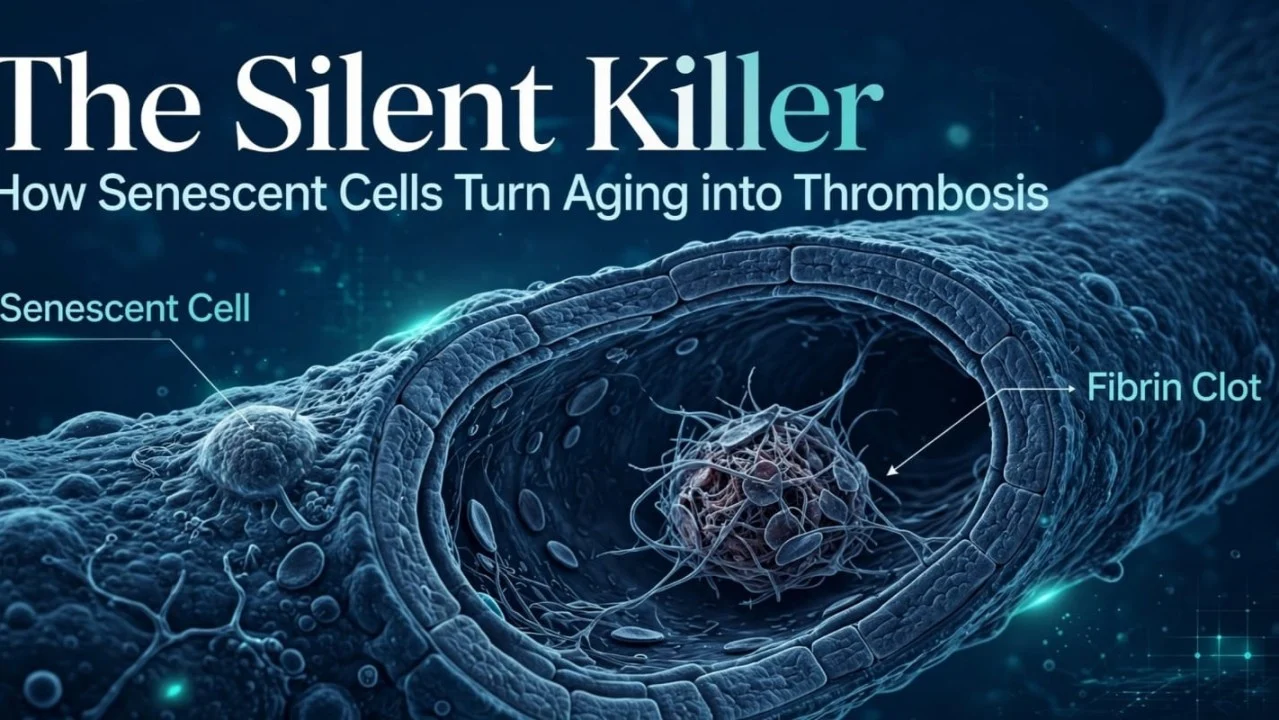
“What Are Senescent Cells?
They are damaged, aged cells that have stopped dividing.
What makes them stop dividing is one of two pathways:
- p53 – p21 pathway 1
- p16 – pRB pathway 2
And in pathway 2 there is no going back. But despite their old age and growth arrest, they don’t die.
Among the cells that become senescent: Fibroblasts (usually these cells appear larger when senescent and contain distinctive markers such as senescence-associated beta-galactosidase enzyme).
The problem with these cells is not just that they age and refuse to die, but they also secrete
SASP which is (Senescence-Associated Secretory Phenotype). These are a complex group of bioactive molecules secreted by senescent cells, including: Interleukin-6 (IL-6), Interleukin-1β (IL-1β), Interleukin-8 (IL-8), and TNF-α.
These in some cases cause disasters, including the one we will talk about: they create a localized pro thrombotic niche where a clot once formed, cannot be efficiently dissolved .
So how do these senescent cells prevent the body from dissolving clots?
First, we must understand the natural system for dissolving clots, or Fibrinolysis.
When a clot forms to protect the body from bleeding, the body sends enzymes called ‘plasminogen activators’ (tPA or uPA). They work like scissors that cut the clot network when its job is done.
But one of SASP proteinic secretions is called PAI-1 is secreted in large quantities, and this stops the action of (tPA or uPA).
In addition, senescent cells cause endothelial dysfunction because they cause chronic inflammation in the cells lining the vessels.
Have we found a solution for it?
So far, there is no solution…
But researchers now recognize that senescent cells are heterogeneous different tissues and different triggers can produce quite different senescent states. Some senescent cells can even have beneficial roles in processes such as tissue repair and cancer suppression that’s why we can’t kill them all at once .
Maybe the silent killer isn’t only their existence…it’s their accumulation over time.
References:
- Ajoolabady, A., et al. (2025). Hallmarks of cellular senescence: biology, mechanisms, regulations. Experimental and Molecular Medicine, 57, 1482–1491.
- Plasminogen Activator Inhibitor-1 Is a Marker and a Mediator of Senescence. (2017). Arteriosclerosis, Thrombosis, and Vascular Biology.
- Bochenek, M. L., Schutz, E., and Schafer, K. (2016). Endothelial cell senescence and thrombosis: Ageing clots. Thrombosis Research.
- Endothelial senescence in vascular diseases: current understanding and future opportunities in senotherapeutics. (2023). Experimental and Molecular Medicine.
- Targeting Senescence: A Review of Senolytics and Senomorphics in Anti-Aging Interventions. (2025).
- Recent Progress in Endothelial Senescence and Thrombosis: From Molecular Pathways to Therapeutic Prospects. (2026). Aging and Disease.”
Stay updated on all scientific advances with Hemostasis Today.
-
Oct 22, 2026, 18:04Basem Goueli: Blood Clots in the NFL
-
Oct 22, 2026, 17:57Syed Ahmed: Viral Triggers of Immune Thrombocytopenia and Thrombosis
-
Oct 22, 2026, 17:49Valerie Tutwiler: Bridging Engineering and Medicine to Advance Thrombosis Research
-
Oct 22, 2026, 17:41Jesus Ardila Novoa: How Patient Education Can Transform Hemophilia Care
-
Oct 22, 2026, 17:30Filipe Gonçalves: Advancing Bleeding Disorder Diagnosis Through Multidisciplinary Collaboration
-
Oct 22, 2026, 17:17Storage Pool Deficiency An Overview of a Rare Platelet Disorder – EHC
-
Oct 22, 2026, 17:10Matthew Hazell: Optimizing the Use of Rare Red Blood Cell Units
-
Oct 22, 2026, 17:03Smita Patil: New Insights Into Platelet Alpha-Granule Secretion
-
Oct 22, 2026, 16:48Ahmed Alotaibi: Rare Rh Phenotype and Severe Fetal Anaemia