

Jan Sloves: The Future of Vascular Ultrasound
Jan Sloves, CEO and Founder at Ultrasound Unlocked LLC, shared a post on LinkedIn:
”The Future of Vascular Ultrasound: Are We Thinking Big Enough?
What should vascular ultrasound be capable of achieving 10–15 years from now?
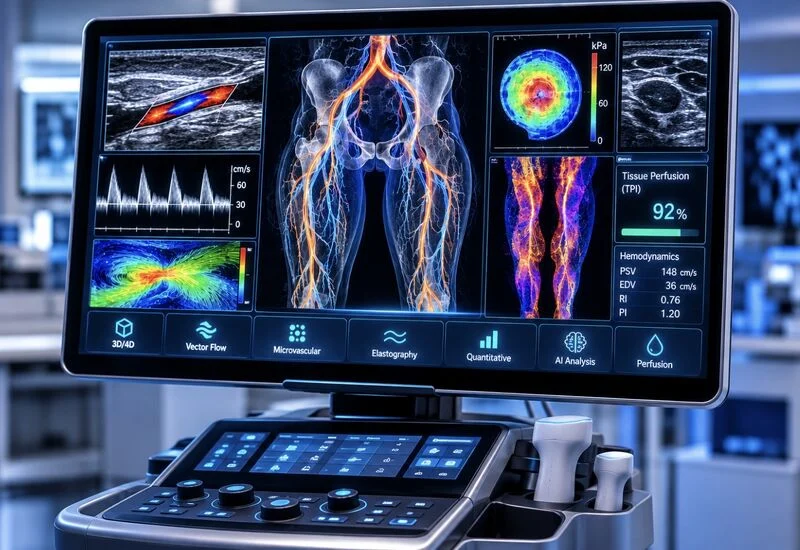
Recent research is exploring exciting advances in multi-parametric imaging, vector flow, microvascular assessment, elastography, 3D imaging and AI-driven analysis. These developments matter. But I believe the bigger opportunity lies in bringing these capabilities together into a more complete, clinically meaningful assessment.
My vision is for vascular ultrasound to combine increasingly detailed anatomical imaging with comprehensive, quantitative hemodynamic assessment and quantitative evaluation of tissue perfusion.
We should continue to advance how we identify and characterize stenoses, occlusions and other vascular abnormalities. At the same time, we should aim to understand the wider consequences of disease: how blood moves through the vascular network, the role of collateral pathways, the impact on inflow and outflow, and the adequacy and distribution of tissue perfusion.
The goal is not simply to produce better images or more measurements.
It is to build a clearer, integrated understanding of vascular structure, function and the physiological effects of disease across the vascular system.
There is one essential aspect of ultrasound I would not want this future to lose: the human operator.
Vascular ultrasound is a hands-on, dynamic examination. The operator holding the transducer explores the anatomy, interrogates flow, uses maneuvers and responds to findings in real time.
Technology should strengthen that expertise, not replace it. The next generation should give the operator more meaningful information and greater capability while keeping them central to the examination.
To vascular surgeons, cardiologists, radiologists, vascular sonographers, researchers and manufacturers: what clinical questions should vascular ultrasound be able to answer in 10–15 years that it cannot adequately answer today?
I believe the next breakthrough will come not just from seeing more, but from understanding more.
Subscribe to the only newsletter built for vascular pros.”
Stay updated with Hemostasis Today.
-
Nov 16, 2026, 13:49Bahman Rasouli: A Rare Vascular Manifestation of Recurrent Papillary Thyroid Carcinoma
-
Nov 16, 2026, 13:28Muhammad Danyal: Platelet Patterns in Hepatitis B and C
-
Nov 16, 2026, 12:52Frank Nocken: Alzheimer’s Research Expands Beyond Amyloid-Based Treatments
-
Nov 16, 2026, 12:44Stefan Prendić: How Intronic Variants Affect Rh Blood Group Antigen Expression
-
Nov 16, 2026, 12:26Samwel Mikaye: Understanding Warfarin and Its Clinical Management
-
Nov 16, 2026, 12:14Sophia Delicou: Ensuring Lifelong Health Beyond Stem Cell Transplantation
-
Nov 16, 2026, 12:06Edward Lee Carter: Has PEPPER Changed the Role of Aspirin in Arthroplasty VTE Prophylaxis?
-
Nov 16, 2026, 11:53Eduardo Ortiz Bello: The Endothelium in Hemostasis and Microcirculation
-
Nov 16, 2026, 11:51Phil Spinella: Advancing Transfusion Medicine Through Collaboration