


Samwel Mikaye: Understanding Warfarin and Its Clinical Management
Samwel Mikaye, Medical Doctor at MSK, shared a post on LinkedIn:
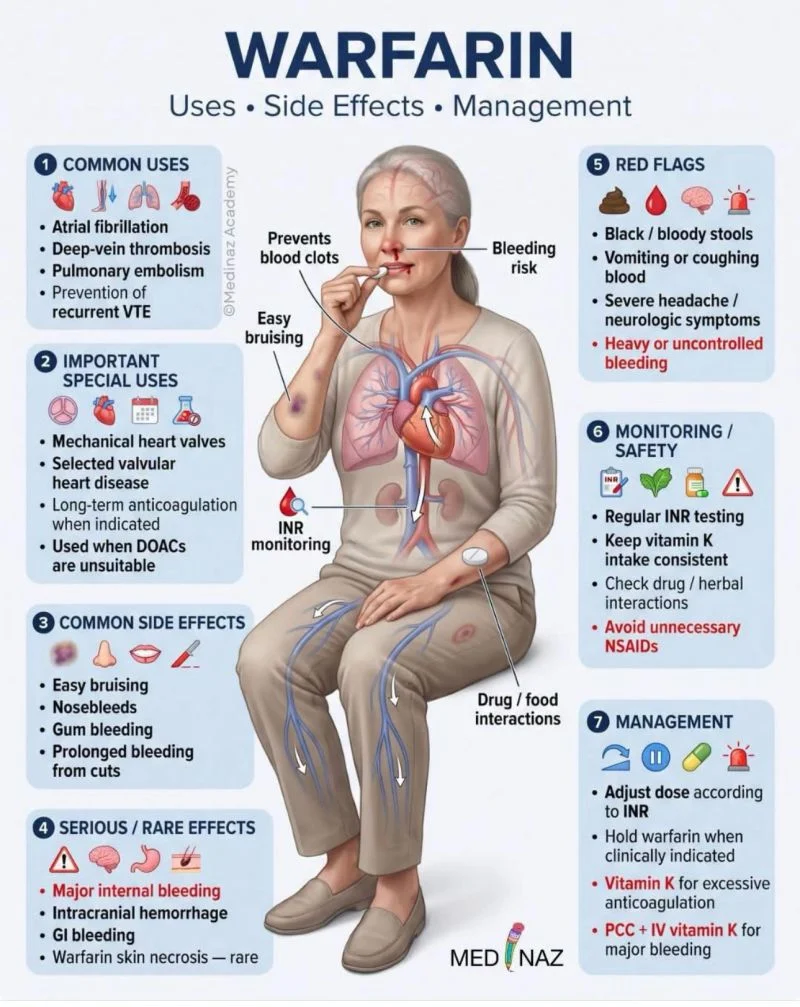
”Warfarin
Warfarin is an oral anticoagulant used to prevent and treat blood clots.
It is a vitamin K antagonist (VKA).
Mechanism of Action
Warfarin inhibits vitamin K epoxide reductase, reducing the synthesis of vitamin K–dependent clotting factors:
- Factor II (Prothrombin)
- Factor VII
- Factor IX
- Factor X
- Proteins C and S
This reduces the blood’s ability to form clots.
Common Indications
- Atrial fibrillation – prevention of stroke
- Deep vein thrombosis (DVT)
- Pulmonary embolism (PE)
- Mechanical heart valves
- Selected hypercoagulable disorders
Monitoring
Warfarin therapy is monitored using the International Normalized Ratio (INR).
Typical target INR:
- Most indications: 2.0–3.0
- Some mechanical heart valves: 2.5–3.5, depending on valve type and location
Important Adverse Effects
- Bleeding – the most important complication
- Easy bruising
- Gastrointestinal or intracranial bleeding
- Warfarin-induced skin necrosis (rare)
- Teratogenicity – generally avoided during pregnancy
Drug and Food Interactions
Warfarin has numerous interactions.
Foods high in vitamin K may reduce its anticoagulant effect. Examples include green leafy vegetables. Patients do not necessarily need to avoid them, but should maintain a consistent dietary intake.
Several drugs can increase or decrease INR, including some:
- Antibiotics
- Antifungals
- Anti-inflammatory drugs
- Antiepileptic medications
Reversal of Warfarin
For significant bleeding or urgent reversal:
- Vitamin K
- 4-factor prothrombin complex concentrate (4F-PCC) is generally used for rapid reversal when indicated.
Key Clinical Pearl
A high INR increases bleeding risk, but clinical management depends on the INR, presence of bleeding, indication for anticoagulation, and patient-specific factors.
In summary: Warfarin is an effective anticoagulant but requires regular INR monitoring, attention to drug interactions, and careful bleeding-risk assessment.
Would you like a simple patient-friendly summary or a detailed warfarin dosing and INR management guide for clinicians?
Important: Never advise a patient to stop, start, or change warfarin dosage without appropriate clinical review and INR results. If there is major bleeding, severe headache, vomiting blood, black stools, or sudden weakness, urgent medical assessment is needed.”
Other posts featuring Samwel Mikaye on Hemostasis Today.
-
Nov 16, 2026, 12:14Sophia Delicou: Ensuring Lifelong Health Beyond Stem Cell Transplantation
-
Nov 16, 2026, 12:06Edward Lee Carter: Has PEPPER Changed the Role of Aspirin in Arthroplasty VTE Prophylaxis?
-
Nov 16, 2026, 11:53Eduardo Ortiz Bello: The Endothelium in Hemostasis and Microcirculation
-
Nov 16, 2026, 11:51Phil Spinella: Advancing Transfusion Medicine Through Collaboration
-
Nov 16, 2026, 11:46Madiha Chowdhury: Behind the Scenes of Blood Transfusion Services
-
Nov 16, 2026, 11:43Nasir Al Allawi: Honouring Excellence in Haematopathology
-
Nov 16, 2026, 11:39Osman El-Maarri: Delete Two Genes from a Cell Line and It Secretes Twice as much Factor VIII
-
Nov 16, 2026, 11:37Chaza Alaji: Unexplained Bruising-Beyond Platelet Counts and Coagulation Tests
-
Nov 16, 2026, 11:33Obed Asumadu: How Can Advanced Laboratory Diagnostics Improve the Detection and Management of Haemophilia?