

Enzymatic Modifications of Protein S: Implications for Diagnostics and Anticoagulant Function
Journal of Thrombosis and Haemostasis (JTH) shared on LinkedIn:
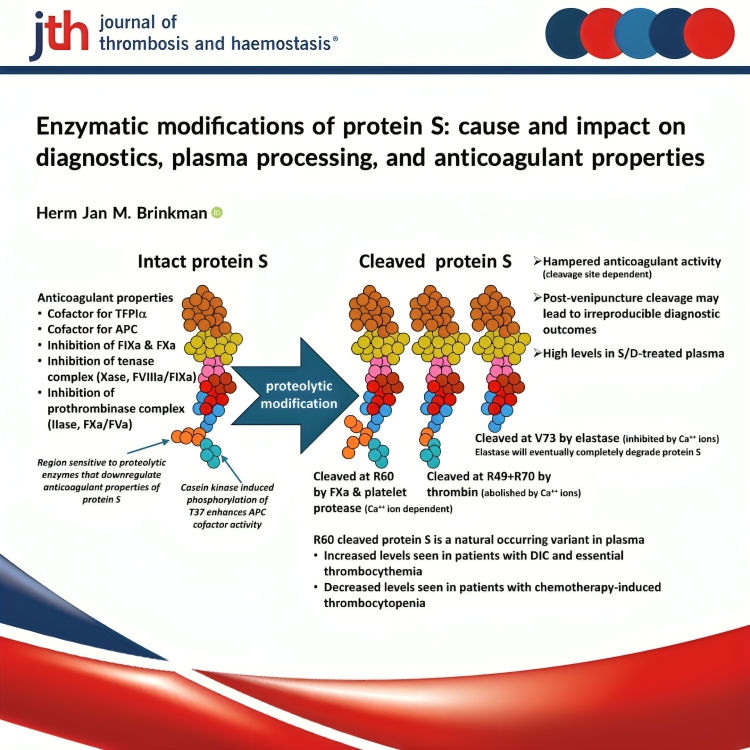
”Enzymatic modifications of protein S: cause and impact on diagnostics, plasma processing, and anticoagulant properties
This review discusses how enzymatic modifications, such as phosphorylation and proteolysis, can alter the anticoagulant functions of protein S, which is essential for downregulating coagulation.
These changes can impact diagnostic procedures, plasma product quality, and overall thrombosis risk, highlighting new opportunities for improved therapies and clinical diagnostics.
Read this paper.
Authors: Herm Jan Brinkman”
Article: Enzymatic modifications of protein S: cause and impact on diagnostics, plasma processing, and anticoagulant properties
Authors: Herm Jan Brinkman
Stay updated on all scientific advances with Hemostasis Today.
-
Oct 12, 2026, 10:36PAI-1 Inhibition as a New Strategy for Enhancing Fibrinolysis and Clot Resolution
-
Oct 12, 2026, 07:39Emmanuel J Favaloro: 100 Years of von Willebrand Disease and the Importance of Local Diagnosis and Management
-
Oct 12, 2026, 07:39Post-Stroke Fatigue Trajectories – 38% Recovered at 12 Months, While 16% Developed New Fatigue – International Journal of Stroke
-
Oct 12, 2026, 07:28Beth Sara: IBMS Specialist Portfolio Achievement and a New Role in Transfusion Practice
-
Oct 12, 2026, 07:28Abdul Mannan: PCC vs. aPCC – The Small ‘a’ That Changes Emergency Management
-
Oct 12, 2026, 07:20Mokhtar Tazik: Improving Access to Plasma Derived Medicines Through Awareness, Interest and Accessibility
-
Oct 12, 2026, 07:08Larissa Chastain: Partnering to Transform Anticoagulation Management Through INR Self-Testing
-
Oct 12, 2026, 06:57Saiful Islam: Laboratory Spot Check – Microcytic Anemias and The Thalassemia Spectrum
-
Oct 12, 2026, 06:45Nick Lenamon: Stroke Awareness at Any Age Recognizing the Signs and Acting FAST