


10 Posts Not to Miss This Week
This week’s posts capture a rapidly evolving landscape across thrombosis, hemostasis and hematology, where difficult clinical decisions are increasingly being shaped by precision diagnostics, new evidence, updated guidelines and mechanism-driven therapies.
From the high-stakes question of thrombolysis in acute ischemic stroke with an unruptured intracranial aneurysm to clopidogrel nonresponsiveness, anticoagulant-associated bleeding and heparin resistance during thrombectomy, these discussions highlight situations in which conventional approaches may not provide the complete answer.
The latest ASH guidance in immune thrombocytopenia, advances in TTP treatment, phase 3 evidence for eltrombopag plus cyclosporine A in moderate aplastic anemia and evolving strategies for secondary stroke prevention with factor XIa inhibition demonstrate how rapidly clinical practice is moving.
At the same time, emerging mutation-directed therapies in myeloproliferative neoplasms, including approaches targeting mutant CALR, point toward a future focused not only on controlling disease manifestations but potentially on modifying the underlying malignant clone.
From urgent bedside decisions to therapies designed around disease biology, these posts offer a closer look at the evidence, challenges and innovations shaping the future of hemostasis and thrombosis care
Boby Varkey Maramattom, Consultant Neurologist and Interventional Neurologist at Lourdes Hospital:
“An acute ischemic stroke in a patient who is found to have an unruptured aneurysm.
We just had a young man of 26 with an internal capsular infarct and a large ICA bifurcation partially thrombosed aneurysm on the same side.
Incidental unruptured intracranial aneurysms are found in 3.6%–6.6% of patients with ischemic stroke.
However, aneurysms rarely cause acute ischemic stroke; either through aneurysm thrombosis with distal embolization, thrombus extending into the parent artery, or arterial compression.
AHA guidance supports IV thrombolysis for aneurysms less than 10 mm, Data on thrombectomy in thrombosed aneurysm-related stroke remain sparse.
Aneurysms involving the occluded parent artery may carry greater post-IV thrombolysis rupture risk.“
Ryan O’Keefe, Internal Medicine Resident at the Hospital of The University of Pennsylvania, Creator of Point of Care Medicine:
“Daily Pearl(s):
Clopidogrel Non-responders
Clopidogrel is a prodrug requiring hepatic CYP450 enzyme activation (primarily CYP2C19).
Genetic differences can lead to a ‘nonresponder‘ or ‘hyporesponder‘ state.
In these patients, usual doses of clopidogrel won’t be effective and thus increase the risk of thrombosis after receiving a stent until there has been adequate endothelialization (which can take weeks to months).
Platelet function testing can test for reduced platelet inhibition from clopidogrel.
In such cases, future anti-thrombotic medication should prioritize alternative options like ticagrelor or prasugrel rather than re-challenging with clopidogrel.
Source: Annals of IM – Clopidogrel Nonresponsiveness Mimicking Endocarditis After PFO-Occlusion Combining Aspiration, Retrieval, and Laboratory Assessment for Diagnostic-Therapeutic Work-Up.
Learn more clinical pearls from the Point of Care Medicine Substack!“
Haseeb Raza, Consultant Cardiologist and Cardiac Electrophysiologist at Mukhtar A. Sheikh Hospital, Assistant Professor Cardiology Electrophysiology at CPE Institute of Cardiology:
“Managing bleeds on anticoagulant therapy: a practical guide for clinicians.“
Ronak H. Mistry, Hematologist, Medical Director, Perelman Center for Advanced Medicine, Assistant Professor of Clinical Medicine at University of Pennsylvania:
“The long-awaited updated ASH ITP guidelines are here!
With so many new agents for managing ITP, I’m excited for these recs to better help our patients achieve durable platelet responses and improved QOL.“
Hakan Ismail Sari, Internal Medicine and Hematology Specialist at Memorial Ataşehir Hospital:
“Treatment of Thrombotic Thrombocytopenic Purpura (TTP)
4 main methods stand out in the treatment of TTP:
- Therapeutic Plasma Exchange: The patient’s plasma is replaced using specialized apheresis devices. In immune TTP, harmful antibodies are removed, and the healthy ADAMTS13 enzyme is restored to the patient (ADAMTS13 activity must be checked before the procedure).
- Steroid (cortisone) Treatment: It is usually started right at the beginning along with plasma exchange or can be added later in unresponsive cases.
- Caplacizumab Treatment: A targeted therapy that prevents the binding of von Willebrand factor to platelets. It is mostly used alongside plasma exchange and must be continued for 30 more days after the exchange ends.
- Rituximab Treatment: A monoclonal antibody that reduces B cells, thereby lowering harmful antibody production. This increases ADAMTS13 levels, raises platelets, and helps the disease recover.
Note: In congenital TTP, plasma and the missing ADAMTS13 enzyme are administered at regular intervals.”
Kelly Anderson, Healthcare Expert:
“Factor XIa inhibition is an exciting approach to secondary stroke prevention because it aims to reduce thrombosis while potentially limiting bleeding risk.“
Mostafa Faisal, Associate Professor of Clinical Hematology and HSCT at Assiut University:
“Eltrombopag plus cyclosporine A for moderate aplastic anemia (EMAA): a placebo-controlled, double-blind, phase 3 trial.“
Rishabh Jain, Medical Oncologist at AIIMS Delhi, shared a post on X about a recent article by Isabelle Plo and William Vainchenker:
“MPNs may finally be moving from disease control to clonal eradication.
A new NEJM review highlights the biology reshaping treatment of ET, PV and myelofibrosis:
- More than 90% driven by JAK2, CALR or MPL mutations
- Driver mutations can arise decades before clinical disease
- Inflammation fuels clonal dominance, fibrosis and thrombosis
- Current therapy mainly controls counts, symptoms and thrombosis
- Next frontier: mutation-selective therapy
Most exciting:
INCA033989, anti-mutant CALR antibody: hematologic and molecular responses in more than 90% of refractory or intolerant CALR-mutant ET in early data
CALR×CD3 bispecifics and selective JAK2 V617F inhibitors are entering clinical development.
This could mark the shift from managing MPNs to eliminating the malignant clone.“
Ahmed Bennis, Professor of Cardiology at Ibn Rochd University Hospital:
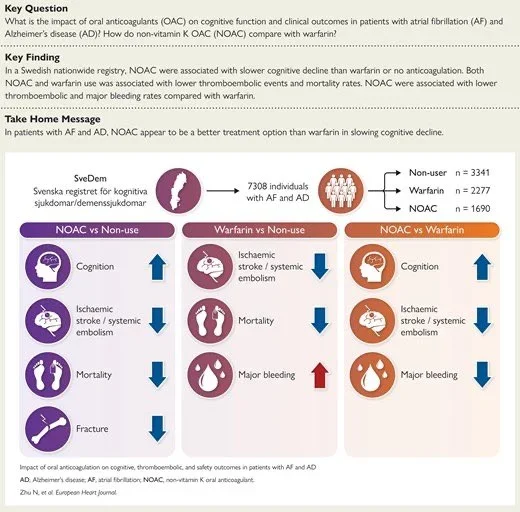
“Oral anticoagulants, cognition, and clinical outcomes in atrial fibrillation and Alzheimer’s disease.
In patients with AF and AD, NOAC use was associated with modestly slower cognitive decline and more favourable effectiveness and safety profiles.”
Mona Ranade, Clinical Associate Professor at Stanford University School of Medicine:
“Now Out!!!
Heparin Resistance During Iliocaval Thrombectomy in a Hypercoagulable Patient
Heparin resistance during venous thrombectomy: when more heparin isn’t the answer.
Our latest case highlights persistent subtherapeutic ACT despite 21,000U UFH, with thrombus re-accumulation during thrombectomy.
Recognize it early. Check anti-Xa and AT levels. Consider alternative anticoagulation strategies.”
Stay updated with Hemostasis Today.
-
Oct 8, 2026, 04:28Jeff Molter: Electrophysiological PIEZO1 Analysis Advances Diagnosis in Hereditary Xerocytosis
-
Oct 8, 2026, 04:23Barbara Adams Krolak: Women and Blood Clots Are We Missing the Warning Signs
-
Oct 8, 2026, 04:10Rutendo Muzambi: Hospital Admission Patterns and Care Disparities in Sickle Cell Disease
-
Oct 8, 2026, 03:50Olfat Berro: Redefining the Future of Haemophilia A
-
Oct 8, 2026, 03:35Tasnia Tarana: Heavy Menstrual Bleeding When the Cause Is Not in the Uterus
-
Oct 8, 2026, 03:28Kian Haseli: Electrophysiological PIEZO1 Analysis Advances Diagnosis in Hereditary Xerocytosis
-
Oct 8, 2026, 03:20Sthanu Subramanian: Leukopenia in Sepsis A Marker of Severe Disease
-
Oct 7, 2026, 16:44Amor Salah: 2026 NCS/SCCM Guidelines for Managing Antithrombotic-Associated ICH
-
Oct 7, 2026, 16:04NETs in Thrombosis: From Mechanism to Therapeutic Target