


Jim Hoffman on a Critical Question: Should We Track NETosis and Use Blood Purification in Heart Failure?
Jim Hoffman, Technical Advisor at Cygnus Technologies, LLC, reposted Shashikant R Iyengar’s post on LinkedIn:
“Do not wait until heart failure is diagnosed. The sooner you convert to a extreme low ket diet, the better. Should we be tracking persistently elevated NETosis induction and poor NET clearance with these studies, especially for patients with more advanced atherogenic vascular disease? You be the judge.
Can blood purification maintenance strategies designed to help metabolically sick patients specifically remove their elevated CRP and/or extracellular chromatin from their circulation santersus.com, substantially delay/reverse their risk of circulatory decline that can lead to organ failure and DIC, by helping boost innate efferocytotic phagocytic clearance when it is obviously underperforming and likely overwhelmed? Both chronically elevated CRP and NETs/nucleosomes are excellent prognostic indicators of multi-disease severity. These markers are also increasingly considered therapeutic targets for improving the treatment of both infectious and non-infectious diseases.
CRP Induces NETosis in Heart Failure Patients with or without Diabetes Sirois et al 2019
Case report: C-reactive protein apheresis in cardiogenic shock: case series from the C-reactive protein apheresis in acute myocardial infarction-registry Torzewski et al 2023
Elevated Levels of Circulating DNA and Chromatin Are Independently Associated with Severe Coronary Atherosclerosis and a Prothrombotic State Wagner et. al. 2014
Neutrophil extracellular traps contributing to atherosclerosis: From pathophysiology to clinical implications. Reviewed by Liu et. al 2023
Neutrophil extracellular traps regulate ischemic stroke brain injury. Campbell et. al. 2022
Evaluating histone H3.1 as a biomarker for acute ischemic stroke: insights into NETs and stroke pathophysiology https://lnkd.in/gXDKWa4f Han et. al. 2024
A Novel Assay for Neutrophil Extracellular Trap Formation Independently Predicts Disseminated Intravascular Coagulation and Mortality in Critically Ill Patients. Toh et al 2019″
Quoting Shashikant R Iyengar’s post:
“A new observational study shows that a ketogenic diet is safe and well-tolerated in patients with obesity and heart failure, leading to significant weight loss and improved metabolic markers. Mortality rates in this observational study were low and hospitalisations dropped markedly compared to the year before the diet. HDL increased while triglycerides and liver enzymes decreased, suggesting broad metabolic benefits.
‘Retrospective Review of the Safety and Effectiveness of a Low-carbohydrate Ketogenic Diet Intervention in Patients With Overweight or Obesity and Heart Failure’ ”
Title: Retrospective Review of the Safety and Effectiveness of a Low-carbohydrate Ketogenic Diet Intervention in Patients With Overweight or Obesity and Heart Failure
Authors: Garrett A. Moseley, William S. Yancy Jr., Eric C. Westman, Senthil Selvaraj, Josephine Harrington
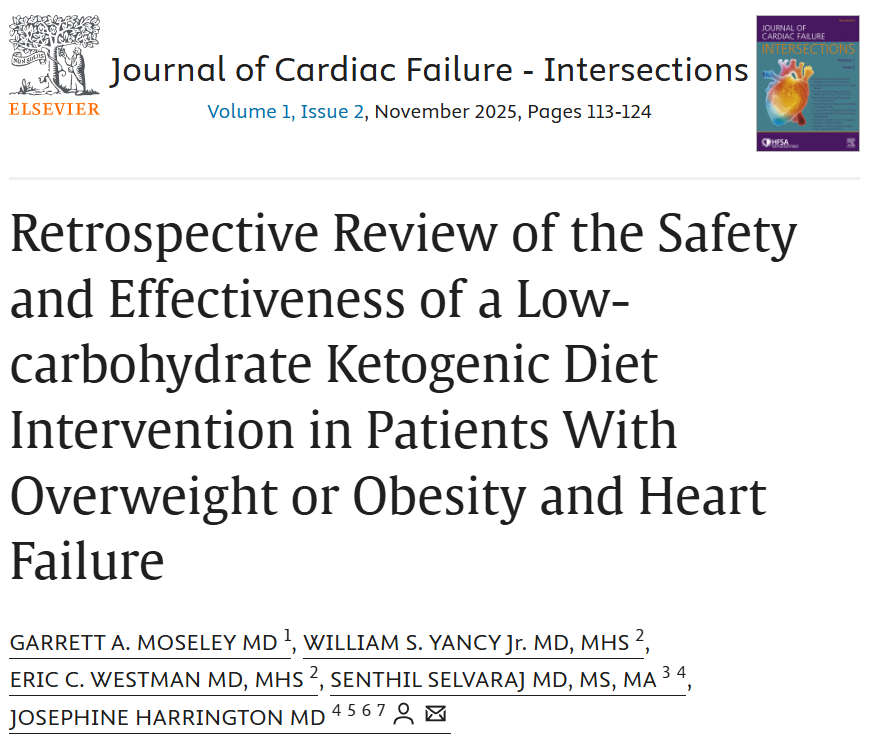
Read full paper here.
Stay informed with Hemostasis Today.
-
Oct 18, 2026, 23:31Rana Al-Hrout: MAHA – More Than Schistocytes
-
Oct 18, 2026, 17:11Owen McCarty: Understanding Prekallikrein and Its Role in Inflammation and Thrombosis
-
Oct 18, 2026, 17:04Emna Gouider Belhadjali: Don’t Miss GPAS 2026 on Bleeding Disorders
-
Oct 18, 2026, 16:53Mehran Ghasemzadeh: Microparticle-Associated Mitochondrial DNA in Stored Platelet Products
-
Oct 18, 2026, 16:38Edward Lee Carter: A 15-Minute Blood Test for Brain Hemorrhage?
-
Oct 18, 2026, 16:29Patrick Taylor: Oral vs Transdermal Estrogen and Cardiovascular Risk in Menopausal Women
-
Oct 18, 2026, 16:19Artangela Henry: A Meaningful Week at the SCDAA National Convention
-
Oct 18, 2026, 16:04Emília Araújo։ New Insights Into the Genetics of Hemophilia B Leyden
-
Oct 18, 2026, 15:43André Marcel Harris: Award-Winning Research on Texas Sickle Cell Data Collection