


B Dharani: What Is the N1 Modifiable Cause of PAD in People With Diabetes?
B Dharani, Diabetologist/ General Physician at Dharani Clinic, shared on LinkedIn:
”What Is the N1 Modifiable Cause of PAD in People With Diabetes?
Smoking.
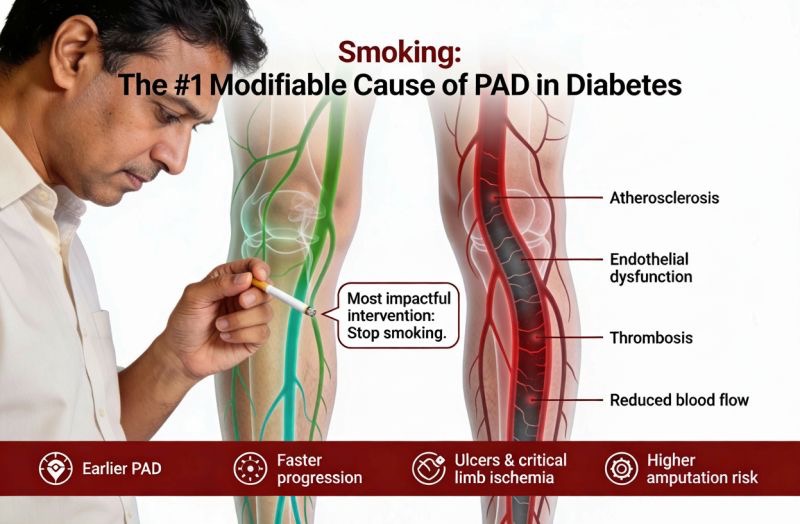
Peripheral arterial disease (PAD) is a major driver of disability, limb loss, and mortality in people with diabetes.
While several factors contribute, smoking remains the most common and powerful modifiable risk factor.
In individuals with diabetes, smoking:
– Accelerates atherosclerosis
– Causes severe endothelial dysfunction
– Increases inflammation and thrombosis
– Further reduces blood flow to already compromised limbs
The combination of diabetes plus smoking leads to:
– Earlier onset of PAD
– Faster disease progression
– Higher risk of ulcers, critical limb ischemia, and amputations
Yes—glycemic control, blood pressure, and lipids are crucial.
But no single modifiable factor worsens PAD outcomes more consistently than smoking.
Key takeaway:
If we aim to prevent PAD progression and limb loss in diabetes, smoking cessation must be prioritized, not treated as an afterthought.
Sometimes, the most effective intervention isn’t a new drug or device—it’s addressing the risk factor doing the most harm.”
Stay updated with Hemostasis Today.
-
Oct 10, 2026, 17:58Archo Farzana Batool: Exploring Medical Writing Through an Article on Iron Deficiency Anemia
-
Oct 10, 2026, 17:53Assessing Frailty in Adults With Hemophilia – JTH
-
Oct 10, 2026, 17:52Fatma Sadeghi: Reducing Maternal Health Inequalities Through Nursing Advocacy
-
Oct 10, 2026, 17:50Grzegorz Hensler: How Apheresis Transformed Blood Cell Separation and Collection
-
Oct 10, 2026, 17:47Hemant K Sharma: Japan’s Universal Artificial Blood Research – A Potential Breakthrough in Transfusion Medicine
-
Oct 10, 2026, 17:40John Strouse: Learning About Bleeding Disorders and Sickle Cell Disease at FWGBD
-
Oct 10, 2026, 17:34Mae Caime: Speaking at the Annual Women’s Retreat for the Hemophilia Community in Florida
-
Oct 10, 2026, 17:30Chokri Ben Lamine: PNH beyond the Textbook Triad
-
Oct 10, 2026, 17:29Ruah Alyamany: Thrombosis and Anticoagulation in Hematological Malignancies at SOHO KSA 2026