


Iftikhar Ullah on Early Stroke Recognition: A Life-Saving Responsibility for Physical Therapists
Iftikhar Ullah, Physiotherapist at Akbar Medical Center Peshawer, shared on LinkedIn:
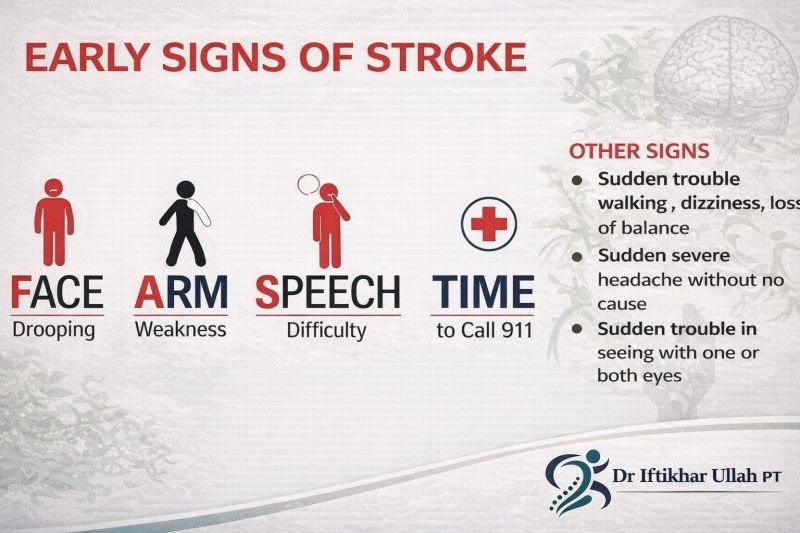
”Early recognition of stroke can be life saving and physical therapists play an important role in identifying red flags during assessment and routine patient interactions.
Common early signs of stroke include sudden weakness or numbness of the face arm or leg especially on one side of the body.
Changes in speech such as slurring difficulty finding words or inability to understand speech should always raise concern.
Visual disturbances including blurred vision double vision or sudden loss of vision may also be present.
Other warning signs include loss of balance dizziness unexplained falls severe headache with no known cause and sudden confusion.
From a physical therapy perspective these symptoms require immediate action and urgent referral.
Timely recognition and rapid medical intervention can significantly improve outcomes and reduce long term disability.
As frontline movement specialists physical therapists must remain vigilant and confident in screening for neurological emergencies.
Remember time is brain and early action saves function and lives.”
Stay updated with Hemostasis Today.
-
Oct 21, 2026, 10:33Karen Schreiber: Beyond Clinical Outcomes – The Voices of Women with APS
-
Oct 21, 2026, 10:11Tau Braun: Clots Through the Copper-Zinc Model
-
Oct 21, 2026, 09:55Cristina Figueroa Villalba: Celebrating Excellence in Transfusion Medicine
-
Oct 21, 2026, 09:43Ahmad Gharehbaghian: How Can Blood Supplies Be Sustained During a Crisis?
-
Oct 21, 2026, 09:30Adrián Dante De Angelis: Research That Opens New Possibilities for Recurrent iTTP
-
Oct 21, 2026, 09:13Jarod Horobin: Blood 2026 – Connecting Science and People
-
Oct 21, 2026, 08:35Raeeda Gheewala: VTE in Athletes – Risks Beyond the Playing Field
-
Oct 21, 2026, 08:29Andreas Kronbichler: The Changing Landscape of CV Risk in ANCA-Associated Vasculitis
-
Oct 21, 2026, 08:21Pham Quy: Taking Stroke Awareness Beyond Hospitals and Into the Community