

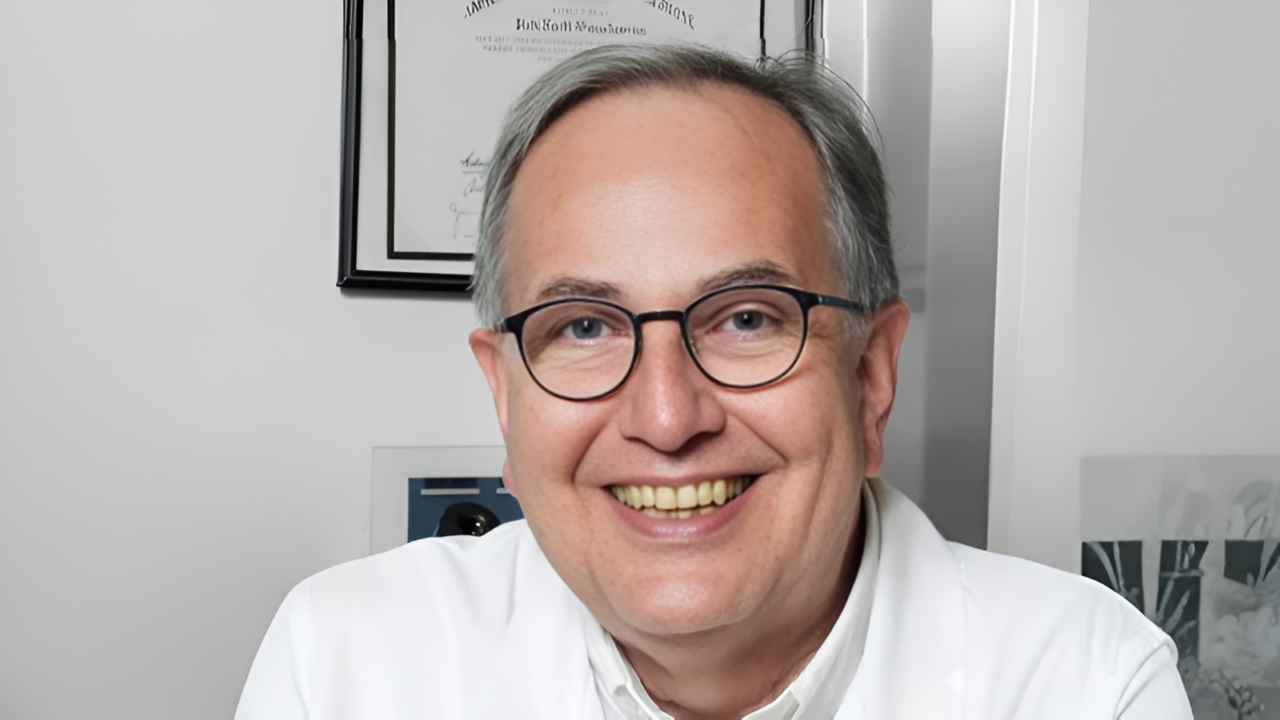
Pall T. Onundarson: Risks of Switching Warfarin to DOACs in Frail Elderly Patients with NVAF
Pall T. Onundarson, Professor Emeritus at Landspitali University Hospital, shared a post on LinkedIn about a recent article by So-Ryoung Lee et al, published in European Heart Journal:
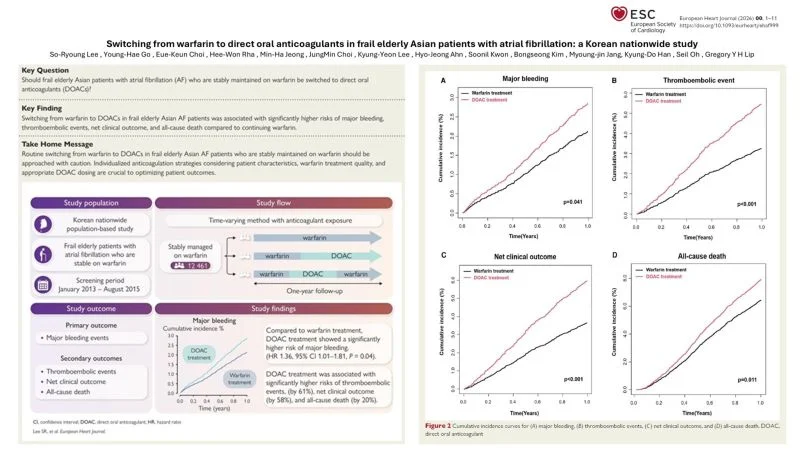
”A nationwide population-based observational study from South Korea, published in the European Heart Journal (February 27, 2026), examined frail elderly patients with nonvalvular atrial fibrillation (NVAF) who were switched from stable warfarin therapy to a DOAC. The primary outcome was major bleeding; secondary outcomes included total thromboembolism, all-cause death, and net clinical outcome (NCO).
Consistent with findings from the RCT of Joosten and colleagues in Circulation (2024), the Korean study found that switching frail, warfarin-experienced patients to DOACs was associated with higher risks of major bleeding, thromboembolism, NCO, and all-cause mortality.
Although observational, these data add to growing evidence that warfarin – and likely other VKAs – may retain an important role in selected subgroups, particularly patients who are on long-term stable therapy. In the pivotal DOAC trials for NVAF, superiority was largely demonstrated in anticoagulation-naïve patients, whereas differences were less pronounced in long-term warfarin users (Ruff et al, The Lancet 2014). In many trials and observational studies, the largest divergence in outcomes occurs early, often within the first 90 days, when warfarin-treated patients experience higher event rates.
This raises an important question: does early excess risk reflect challenges in achieving stable anticoagulation during warfarin initiation?
If so, should DOACs primarily be used during the initiation phase of oral anticoagulation, with selected patients transitioned to warfarin/VKA after stabilization, e.g. after 90 days?
These findings also prompt a broader reflection: if improved warfarin/VKA management could reduce early instability and adverse events, is there not a professional obligation to pursue such optimization? While pharmaceutical incentives naturally favor newer agents, improved management of a generic drug may still serve the interests of certain patient groups, healthcare payors, and diagnostic manufacturers. And patients should come first.”
Title: Switching from warfarin to direct oral anticoagulants in frail elderly Asian patients with atrial fibrillation: a Korean nationwide study
Authors: So-Ryoung Lee, Young-Hae Go, Eue-Keun Choi, Hee-Won Rha, Min-Ha Jeong, JungMin Choi, Kyung-Yeon Lee, Hyo-Jeong Ahn, Soonil Kwon, Bongseong Kim, Myoung-jin Jang, Kyung-Do Han, Seil Oh, Gregory Y H Lip
Read the Full Article on European Heart Journal.
Stay updated on all scientific advances with Hemostasis Today.
-
Sep 14, 2026, 23:49Heghine Khachatryan: New evidance – Antiphospholipid Antibodies and Ischemic Stroke
-
Sep 14, 2026, 23:42Eman M. Elsabbagh: Successful HCT Does Not End at Engraftment
-
Sep 14, 2026, 23:31Antonis Kattamis: Proud to Be Part of this Endeavour and Senior Author of the Pivotal Trial
-
Sep 14, 2026, 23:23Farjah Algahtani: Stroke Incidence and Risk Factors in Saudi Patients with Sickle Cell Disease
-
Sep 14, 2026, 20:53YoonHwa An: Rusfertide in Polycythemia Vera – From Clinical Benefit to Strategic Value
-
Sep 14, 2026, 20:52Andres Alberto Mercado Pompa: External Validation of Prognostic Risk Scores in Cerebral Venous Thrombosis
-
Sep 14, 2026, 20:50Balaji Kirushnan: Advancing Regional Citrate Anticoagulation in CRRT – From Experience to Implementation
-
Sep 14, 2026, 20:48Valerie Dehondt: Nutritional Anemia Is Associated With Increased Risk of Severe COPD Exacerbations
-
Sep 14, 2026, 20:46Nupur Choudhury: Exploring AI-Based Detection of Anemia Using Eye and Fingernail Images