


Raluca Simbotin: How We Care for Complex Patients Is A Measure of Healthcare System Maturity
Raluca Simbotin, Leader of Vaccines Working Group at The Romanian Association of International Medicine Manufacturers (ARPIM), Deputy Chair of AmCham Healthcare Committee, shared on LinkedIn:
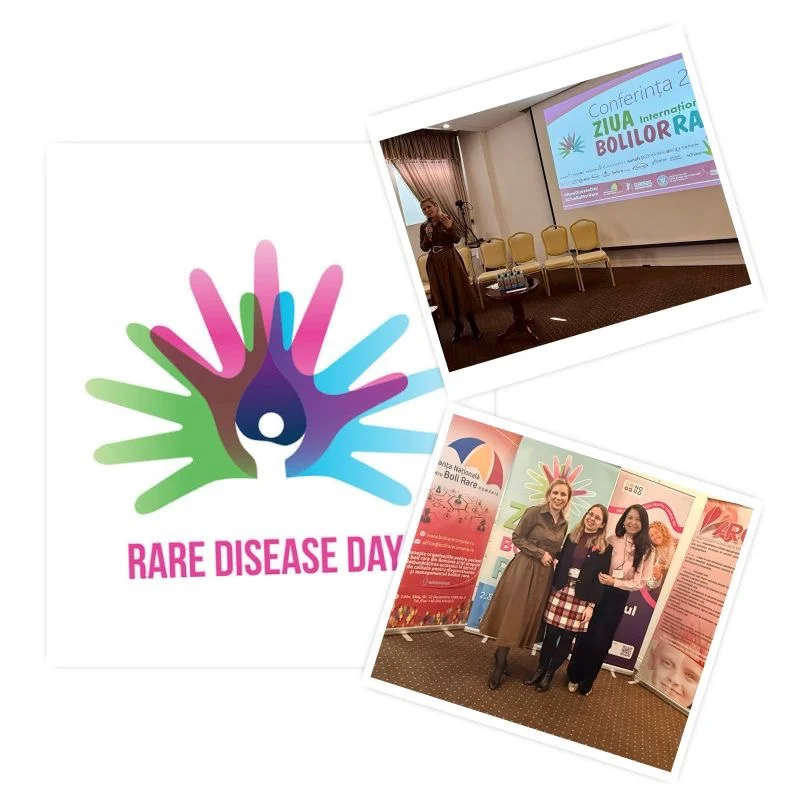
”At the National Conference dedicated to rare diseases, I addressed an issue that I consider fundamental: the way we respond to patients with complex needs reflects the maturity, coherence, and humanity of our healthcare system.
Rare diseases may affect smaller patient populations individually, but collectively their impact is significant and far-reaching.
Behind every diagnosis there are often years of uncertainty, repeated consultations, delayed answers, and families navigating a system that is not always designed for complexity.
Pulmonary arterial hypertension is a clear example.The time to diagnosis remains too long.
Access to specialized expertise is uneven. The medical, emotional, and financial burden on patients and families is substantial and ongoing.
We have the knowledge to improve outcomes.
We have the tools to act earlier.
And we have, at this moment, a favorable policy environment to move forward.
At European level, 2026 marks important progress:
- advanced discussions around a European Action Plan for Rare Diseases;
- a stronger emphasis on interoperable registries and meaningful use of health data;
- continued consolidation of European reference networks;
- targeted funding streams for research and innovation.
This European momentum creates opportunity. However, opportunity alone does not generate impact.
Implementation, alignment, and accountability do.
To move forward, we need:
- earlier and more accurate diagnosis, supported by clear referral pathways
- predictable and timely access to innovative therapies
- robust, interoperable data systems to inform policy and measure outcomes
- sustainable funding models that support the full patient journey
Rare diseases challenge systems to operate at their best.
They require coordination across institutions, disciplines, and sectors.
They demand long-term thinking rather than short-term solutions.
Progress will depend on our ability to work together policymakers, clinicians, patient organizations, and industry with clarity of purpose and shared responsibility.
The conversation must continue, but more importantly, it must translate into measurable action.”
Stay updated with Hemostasis Today.
-
Sep 30, 2026, 11:36Basit Ali: A Closer Look at CT Venography
-
Sep 30, 2026, 11:16Christina Pohlman: Could aPL Levels Help Predict Stroke Recurrence?
-
Sep 30, 2026, 10:55Rana Al Hrout: Diagnostic Approach to Hypochromic Microcytic Anemia
-
Sep 30, 2026, 01:52Javed Anees: DADA2 – When a Young Stroke Is More Than a Stroke
-
Sep 30, 2026, 01:51How a Venous Thrombus Becomes Revascularized – ISTH
-
Sep 29, 2026, 22:45Victor Agunyego: Paracetamol – The Most Common Drug We Underestimate
-
Sep 29, 2026, 22:42Nova Sinclair: Advancing the Future of Hematology – Meet Our 2027 Organizing Committee
-
Sep 29, 2026, 22:41Lorenz Räber: Intracoronary Imaging in PCI – Why, When, How, and Which Modality?
-
Sep 29, 2026, 22:31Selma Turkovic: Pleased to Deliver the Opening Presentation at Kingston Hospital